

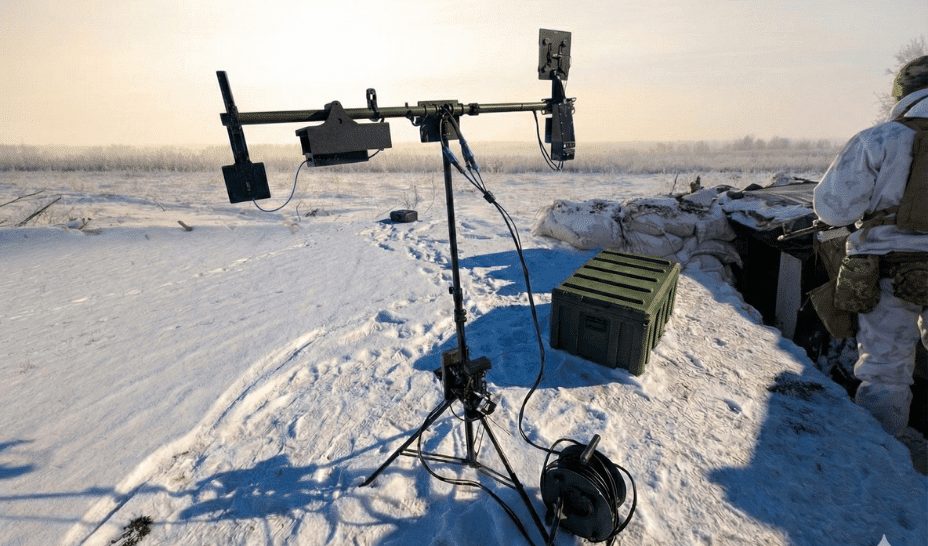
ZeroPhase, a European communications software company, has secured a €5.8 million funding round after its technology was proven in high-pressure, real-world conditions on the battlefield in Ukraine. The raise highlights a broader shift in European venture funding: investors are increasingly backing dual-use technologies—products built for civilian markets that also meet the needs of defense and emergency-response operators.
The funding story, first reported by EU-Startups, centers on a simple but powerful validation loop. In a war environment where connectivity is contested, infrastructure can be damaged, and operational security is non-negotiable, communications tools either perform or fail quickly. For startups building mission-critical software, that kind of field testing can compress years of product iteration into months, while providing credibility that is hard to replicate through pilots alone.
Why Ukraine battlefield validation matters to investors
For venture investors, battlefield use is not just a dramatic headline—it functions as an extreme form of product-market fit. Modern conflict environments stress-test three things at once: reliability, security, and usability under pressure. If a communications product can maintain performance when networks are degraded and adversaries are actively attempting interception or disruption, it signals robustness for other high-stakes settings such as disaster response, critical infrastructure operations, and public safety deployments.
Ukraine has become a proving ground for a new generation of European defense-adjacent technology. Startups working in secure comms, drones, sensors, and decision-support software have found that deployments in or around the conflict can accelerate feedback cycles, harden systems against real threats, and demonstrate value to institutional buyers. In that context, ZeroPhase’s €5.8 million round reflects both company traction and a market re-rating of resilient communications as a strategic capability.
What ZeroPhase is building: secure communications software
At its core, ZeroPhase develops secure communications software designed for environments where conventional tools may be too fragile, too exposed, or too dependent on stable infrastructure. While many consumer and enterprise messaging platforms emphasize convenience, battlefield and emergency settings prioritize different requirements: secure channels, operational control, and communications that keep working when networks are unreliable.
Although the company’s full technical stack and deployment details vary by customer context, secure communications platforms in this category typically focus on:
- Encryption and protection against interception or unauthorized access
- Resilience in low-bandwidth or disrupted-network conditions
- Administration and policy controls suited to teams operating in the field
- Interoperability needs across units, devices, and operating conditions
The commercial opportunity extends beyond defense. Governments, humanitarian organizations, and private operators in critical industries are reassessing how they communicate during crises—when cyber risk rises, infrastructure is strained, and coordination failures can be costly.
The €5.8 million round and Europe’s defense-tech momentum
The €5.8 million raise lands amid a notable upswing in European interest in defense tech and security-focused software. For years, parts of the venture ecosystem avoided the sector due to policy uncertainty, reputational concerns, or unclear exit pathways. That stance has softened as geopolitical realities have changed and as European governments and institutions have begun to encourage innovation in resilience, cyber defense, and communications.
In practical terms, defense-related procurement cycles remain complex, and startups must navigate compliance, export controls, and long sales timelines. Yet the upside is increasingly clear: if a product becomes embedded in operational workflows, contracts can be durable, renewals can be predictable, and adjacent markets—public safety, critical infrastructure, and enterprise security—can expand total addressable demand.
Dual-use positioning is becoming a strategic advantage
One of the most important dynamics behind rounds like ZeroPhase’s is the rise of dual-use positioning. Investors often prefer companies that can sell into both civilian and government markets, reducing dependency on a single buyer type. For communications software, the overlap is natural: the same features that protect a frontline unit can protect a medical response team, a utility operator, or a logistics network during a cyber incident.
That dual-use narrative also helps bridge cultural gaps in European venture capital, where some funds still have restrictions around weapons-related investments but are open to security, resilience, and infrastructure technologies.
What this signals about the future of mission-critical communications
The war in Ukraine has underscored how communications is not merely an IT layer—it is operational infrastructure. When communications fail, coordination breaks down; when communications are compromised, units can be exposed. That reality is pushing governments and operators to prioritize systems that are harder to disrupt and easier to deploy.
For startups, the bar is rising. Buyers increasingly expect:
- Clear security assurances and verifiable controls
- Deployment models that work in constrained environments
- Support and training that fit real operational tempos
- Integration with existing tools and workflows
For investors, the thesis is evolving from “nice-to-have security tooling” toward “must-have resilience platforms.” If ZeroPhase can translate battlefield credibility into repeatable deployments across allied governments and crisis-response organizations, its funding round may be an early marker of a larger European shift: treating communications resilience as a strategic asset, not a discretionary software purchase.
As European security priorities harden and procurement pathways modernize, companies like ZeroPhase are likely to face growing demand—along with heightened scrutiny over performance, governance, and real-world outcomes.