

Devastation at Bondi Beach: A Community Shaken by Violence
The serene sands of Bondi Beach, typically known for sunbathers and surfers, turned into a scene of unspeakable tragedy on a fateful Sunday evening. An event meant to celebrate the Jewish festival of Hanukkah turned into a nightmare as two gunmen, a father and son, opened fire on hundreds of attendees. The horrifying assault left 15 dead and 27 others hospitalized, marking Australia’s most horrendous mass shooting in decades.
The Attackers Unveiled
Authorities have identified the gunmen as Sajid Akram, 50, and his son Naveed Akram, 24. Although officials remain tight-lipped about many details, Naveed is under police guard in a hospital with critical injuries, while Sajid perished in a shootout with the police at the scene. The revelation that they had pledged allegiance to the Islamic State Group adds a chilling dimension to the attack, propelling it firmly into the realm of terrorism in the eyes of law enforcement.
A Tangled Web of Motives
The Prime Minister of Australia, Anthony Albanese, stated unequivocally that the attack was driven by extremist ideology. It’s believed that both Naveed and Sajid Akram acted independently, devoid of a broader network backing them. However, their devotion to the Islamic State is evident – a fact corroborated by the discovery of IS flags in their vehicle. More alarming is Naveed Akram’s 2019 entanglement with the Australian Security Intelligence Organisation (ASIO) over potential terrorist activities that never materialized.
Family Background and Pathway to Extremism
From Immigrant to Extremist
Breaking down their background, Sajid Akram moved to Australia in 1998, initially securing a student visa, later transitioning to a partner visa in 2001. Over the years, he procured Resident Return Visas post his travels abroad. His Australian-born son, Naveed, seemed to follow a path that would eventually lead to radicalization. Insight from ASIO reveals that Naveed was amidst a network of individuals suspected of plotting attacks, although at the time, he was deemed non-threatening.
The Role of Islamic State Allegiance
Reports indicate that the Akram duo’s leanings firmly took root with their IS allegiance. This allegiance was no mere passive belief – it steered their decisions, ultimately leading to tragic consequences on Bondi Beach. Disclosures from officials hint at Naveed’s ties with notorious figures like Isaac El Matari, an IS self-proclaimed commander in Australia, further illuminating the gravity of their radicalization.
The Unfolding of the Attack
Minute-by-Minute Chaos
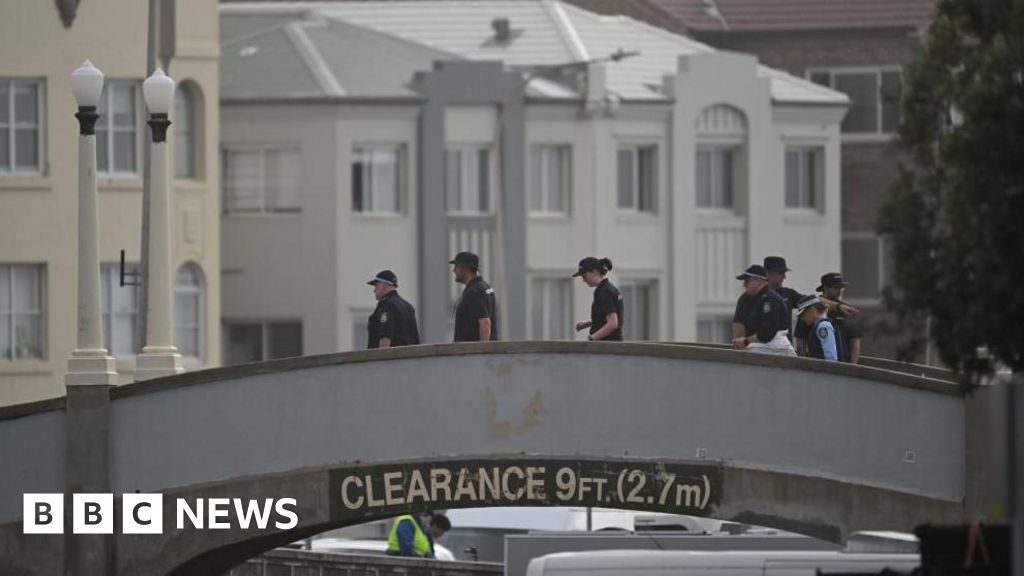
Witnesses recounted the attack’s terrifying sequence, beginning with the sudden eruption of gunfire, sending panicked attendees into disarray. Positioned on a small bridge, the gunmen unleashed a round of bullets, which were further potentiated by improvised explosive devices found later in their car. The New South Wales Police recovered six firearms at the crime scene, six of which were registered to Sajid Akram, ostensibly for recreational hunting.
Firearms Licensing and Violations
In the aftermath of the tragedy, questions arise regarding firearms licensing in New South Wales. Sajid met the eligibility criteria for a hunting license, yet the juxtaposition of lawful acquisition and violent misuse ignites debates on gun law stringency in Australia. Commissioner Mal Lanyon addressed public concern by affirming that the firearms registry undertakes rigorous scrutiny of license applicants, but the system’s apparent inadequacies in this instance cannot be overlooked.
A Community in Mourning
A Spectrum of Victims
The attack’s victims paint a heart-wrenching portrait: a 10-year-old girl, two rabbis, and even a Holocaust survivor among them. As Sydney mourns, Jewish community leaders grapple with the emotional toll and the symbolic threat against their beliefs and safety. Attendees recall the fateful event with horror, stressing that although security measures were in place, the ferocity and speed of the attack overwhelmed defenses.
Repercussions and Reflections
In the wake of the shooting, Australia faces a moment of solemn reflection. It stands unified in its grief yet divided in discussions on immigration, security protocols, and the combat against burgeoning extremism. Prime Minister Albanese’s pledge for comprehensive inquiry into the attack reassures a concerned public while laying the groundwork for future preventative measures.
Ultimately, the Bondi Beach attack is a grim reminder of the volatility extremism engenders, challenging Australia’s resilience, even as it reaffirms its commitment to unity in diversity.