

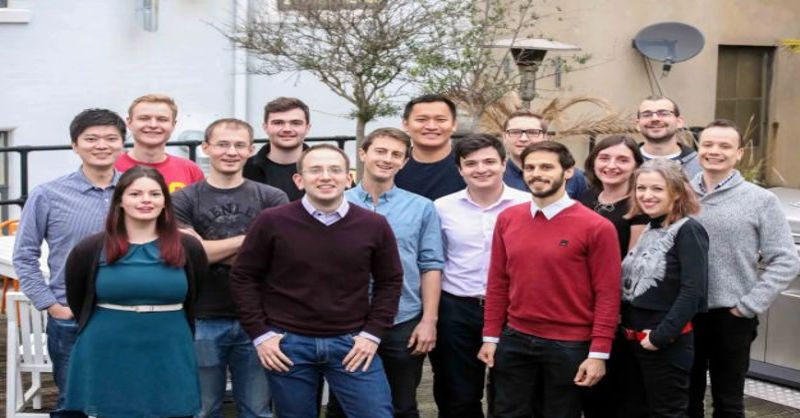
The Rise of AI-Powered Dialogue
In recent years, artificial intelligence has revolutionized multiple sectors, from healthcare to finance. However, one of its most captivating advances lies in its ability to mimic human-like interactions. Enter PolyAI, a burgeoning force in the AI sphere, recently spotlighted for securing $86 million in funding. Spearheaded by industry heavyweight Nvidia, this investment marks a pivotal moment in AI development, where machine interfaces could finally transcend uncanny valley discomfort, offering clients a seamless conversational experience akin to human interaction.
PolyAI’s Mission and Vision
Founded in 2017 by a team of forward-thinking technologists, PolyAI was established with one goal in mind: to endow machines with the ability to converse naturally. Their approach aims at transforming AI from cold, mechanical responders into friendly, personable voices. The funding, led by Nvidia – a leader in AI computing and graphics technology – suggests a mutual recognition of potential to reshape human-technology interaction.
Behind the Scenes: The Technology
Nvidia’s involvement is not merely a financial venture; it validates the technological backbone of PolyAI’s work. At the core of their systems are advanced algorithms capable of processing natural language with nuanced understanding. The new funding paves the way for PolyAI to refine these algorithms, enhancing the ability of AI systems to predict, understand, and respond to human emotions effectively.
The Human Element
What makes PolyAI truly unique is its focus on the human aspect of interaction. Beyond mere voice recognition, PolyAI’s models are trained to grasp contextual subtleties, such as sarcasm or empathy – fine-tuning responses to be not only accurate but sensitive to emotional tones. This enables applications in sectors requiring a personal touch, such as customer service, healthcare, and personal assistance.
Economic Implications
The tech industry’s interest in AI voice agents is more than academic curiosity; it signals an economic shift. Businesses are acutely aware of the efficiencies AI can introduce. By delegating routine, scripted interactions to machines, human resources can be redirected towards complex problem-solving activities. This operational shift could augment productivity and cut costs substantially, especially in labor-intensive industries like telemarketing and customer support.
Market Potential and Challenges
AI voice technology holds tremendous market potential, but it is not without challenges. Privacy concerns and data handling remain critical issues, especially as these systems gather more personal data from users. PolyAI, backed by Nvidia’s commitment to secure and ethical AI practices, must navigate these concerns carefully to guarantee user trust and continued support.
Future Prospects
Securing $86 million is merely the beginning for PolyAI. The company’s ambitions stretch towards refining their technology for diverse global markets, potentially requiring the system to adapt to different languages and cultural sensitivities. As these technologies evolve, they promise not only to replace human jobs but to complement them, presenting an augmented collaboration between humans and machines.
The Road Ahead
Looking forward, PolyAI is projected to spearhead a transformative era in communication technology, reshaping how we interact with machines. Their ongoing partnership with Nvidia provides both the financial resources and technological support necessary to explore uncharted territories in AI development. If expectations are met, we can look forward to a future where machines no longer feel like machines, but companions that enhance our daily interactions.