

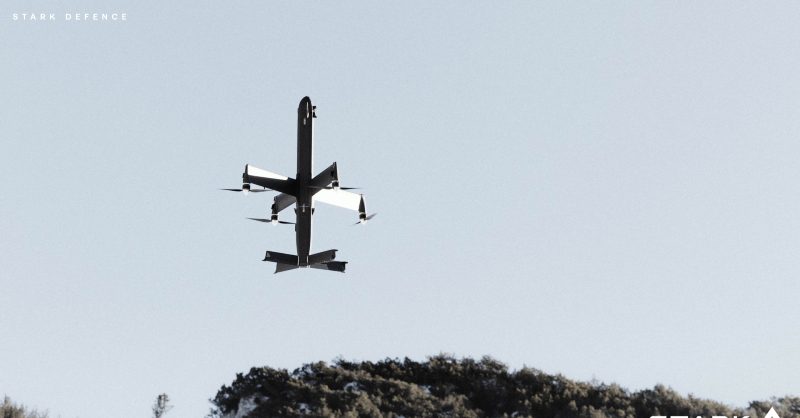
German defence technology startup Stark Defence has achieved a €1 billion valuation, entering the coveted unicorn club and underscoring the rapid rise of European defence tech and dual-use innovation. The company’s new status reflects intensifying investor interest in technologies that strengthen national security while also enabling civilian applications.
A new generation of European defence innovators
Stark Defence is part of a new wave of European startups building software-driven and modular defence systems rather than traditional hardware-only platforms. While full deal terms have not been publicly disclosed, the latest funding round values the company at over €1 billion and was reportedly backed by a mix of venture capital funds and strategic defence-focused investors.
The startup is understood to be working on advanced autonomous systems, AI-enabled battlefield intelligence and secure command-and-control platforms tailored for European armed forces and allied nations. Its products are designed to integrate with existing NATO-standard equipment, reducing deployment time and procurement friction.
Geopolitics, budgets and investor appetite
Rising geopolitical tensions, Russia’s invasion of Ukraine and renewed commitments by European governments to meet or exceed the NATO target of 2% of GDP on defence spending have created a powerful tailwind for companies like Stark Defence. Investors are increasingly looking at defence tech as a long-term growth market rather than a niche, cyclical sector.
At the same time, regulators and policymakers across the EU are pushing to ensure that critical defence technologies are developed domestically, reducing dependence on non-European suppliers. This has opened doors for agile startups that can deliver secure, interoperable systems faster than traditional prime contractors.
Implications for Europe’s defence tech ecosystem
Stark Defence joining the unicorn ranks is likely to act as a signal event for the broader ecosystem. It may encourage more founders to enter the space and more generalist VC funds to create dedicated defence and security strategies. The company is expected to use its new capital to accelerate hiring, expand R&D and deepen partnerships with both European militaries and technology suppliers.
As governments prioritise resilience, secure communications and autonomous capabilities, the success of Stark Defence highlights how software-first, AI-driven platforms are reshaping the future of defence in Europe.