

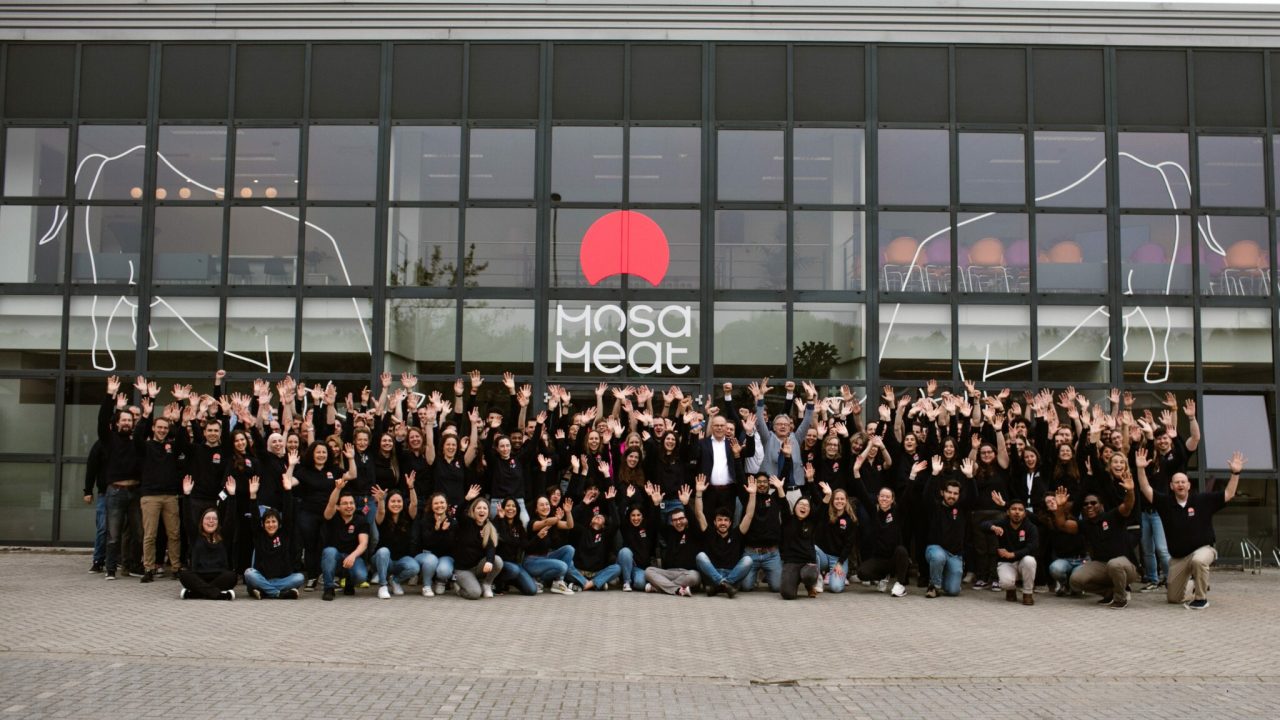
Mosa Meat, one of Europe’s best-known cultivated meat pioneers, has raised €15 million in fresh funding as Dutch rival Meatable shuts down operations. The juxtaposition underscores a tough reality for the sector: while the promise of cultivated meat remains compelling, capital markets are demanding clearer routes to scale, regulatory approvals, and unit economics.
The funding arrives as Mosa Meat highlights a milestone that has become a shorthand for the industry’s progress. The company says it has reduced the cost of its first cultivated burger—famously priced at about €250,000 when unveiled in 2013—by 99.999%. That shift signals how far the technology has come, even as commercial viability still depends on industrial-scale production and consumer acceptance.
A funding round that signals selective confidence
In a market where many food-tech startups are struggling to extend runways, Mosa Meat’s €15 million raise suggests investors are concentrating bets on players perceived to have stronger technical foundations and more credible commercialization plans. Across Europe, the cultivated meat category has faced a tougher fundraising climate, with higher interest rates and slower venture deployment pushing investors to prioritize near-term traction.
For Mosa Meat, the new capital is expected to support continued development toward scalable production, as well as preparation for regulatory pathways that can unlock sales in key markets. For the broader ecosystem, the round reinforces a “survival of the fittest” dynamic: fewer companies may remain, but those that do will be expected to demonstrate measurable progress on cost, capacity, and compliance.
Meatable’s shutdown highlights the sector’s pressure points
Meatable had been viewed as a prominent European contender in cultivated meat, and its shutdown is a reminder that scientific ambition alone does not guarantee durability. The sector’s cost structure is unforgiving: companies must fund long R&D cycles, specialized talent, and expensive bioprocess equipment—often before they are allowed to sell product in meaningful volumes.
In practice, cultivated meat startups are navigating a multi-front challenge:
- Capital intensity: scaling bioreactors, media production, and downstream processing requires large, sustained investment.
- Regulatory timelines: approvals can take years, and requirements vary by jurisdiction.
- Cost of goods: reducing growth media and process costs is essential to approach parity with conventional meat.
- Consumer perception: trust, labeling, and taste expectations can determine adoption.
Meatable’s exit does not necessarily indicate that cultivated meat is failing as a concept; rather, it shows how narrow the path is for any single startup trying to bridge science, manufacturing, and market entry at the same time.
From a €250,000 burger to industrial economics
Mosa Meat’s 99.999% cost reduction claim points to the industry’s most important battleground: cost reduction. The first cultivated burger, unveiled in 2013, was a proof-of-concept that demonstrated animal cells could be grown into edible meat. But it also highlighted the gulf between laboratory demonstration and commercial production.
Over the past decade, cultivated meat firms have focused on lowering costs through improvements in cell culture media, better cell lines, more efficient bioprocessing, and optimized production workflows. A reduction of 99.999% from €250,000 implies moving from a six-figure prototype to something far closer to consumer price points—yet “closer” is not the same as “competitive at scale.”
What still determines whether cultivated meat can compete
Even with dramatic cost cuts, cultivated meat must contend with the economics of conventional meat supply chains that have been optimized for decades. Key determinants include:
- Bioreactor scale and uptime: consistent, high-yield production is critical.
- Media inputs: reducing reliance on expensive components can materially lower unit costs.
- Downstream processing: turning biomass into familiar textures and formats adds complexity and expense.
- Facility buildout: manufacturing plants require significant upfront investment and regulatory compliance.
Europe’s regulatory and market context
Europe remains one of the most closely watched regions for cultivated meat, balancing strong scientific institutions with a stringent regulatory environment. The European Union’s novel foods framework can be rigorous, and timelines are often longer than in markets that have already granted cultivated meat approvals. For companies like Mosa Meat, progress is therefore measured not only in technical achievements but also in readiness to meet regulatory evidence standards.
At the same time, Europe’s food system faces mounting pressure from climate goals, land-use constraints, and geopolitical volatility affecting feed and energy costs. Cultivated meat has been positioned as a potential tool to reduce environmental impacts and improve resilience—provided it can be produced efficiently and win consumer trust.
What the €15 million means for the competitive landscape
Mosa Meat’s raise, paired with Meatable’s shutdown, is likely to intensify consolidation and sharpen differentiation across the category. Investors are increasingly looking for companies that can show:
- Clear milestones toward commercial scale
- Credible plans for regulatory approval
- Partnerships that de-risk manufacturing or distribution
- Evidence that products can meet taste and price expectations
For Mosa Meat, the new funding provides breathing room to keep advancing along that path. For the sector, it is a reminder that the cultivated meat race is no longer about who can demonstrate the technology, but who can manufacture it reliably, affordably, and within the rules—before the next funding window narrows again.
Dailyza will continue tracking Europe’s cultivated meat ecosystem as investors, regulators, and consumers shape which companies ultimately bring cell-cultured products from pilot plants to everyday menus.