

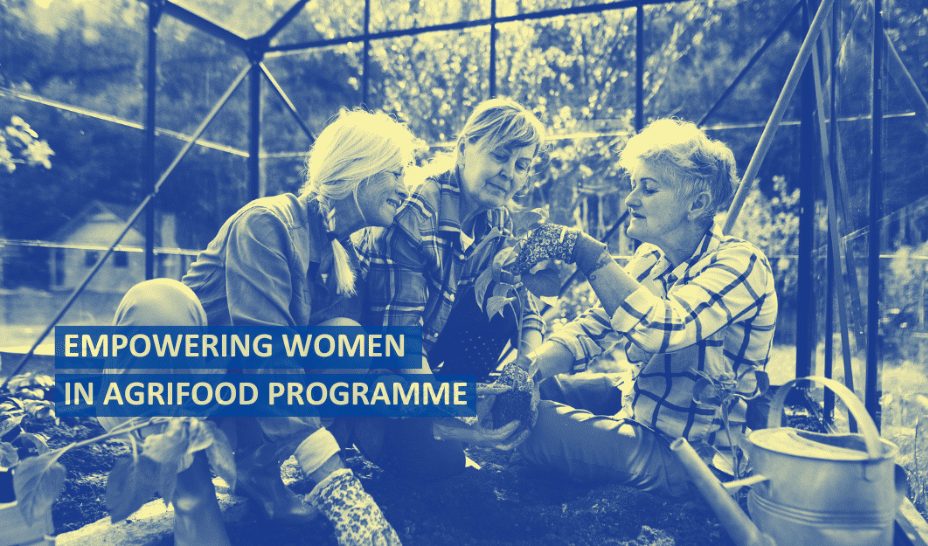
Dailyza is tracking a growing shift in European innovation: agrifood is no longer treated as a “traditional” sector, but as a frontier where food systems, climate resilience, and deep tech increasingly intersect. That’s the context behind “Empowering Women in Agrifood 2025,” an interview spotlighting Nadica Desanova, co-founder of MIMIC TECH, published by EU-Startups. The conversation lands at a moment when Europe is pushing to modernize agriculture and food production while also confronting a persistent imbalance—women remain underrepresented in leadership, investment pipelines, and technical roles across agrifood.
Why “Empowering Women in Agrifood 2025” is surfacing now
Agrifood sits at the center of multiple pressures: supply chain volatility, rising input costs, changing consumer expectations, and the need to decarbonize. At the same time, the sector is absorbing new tools—data-driven decision-making, automation, and novel approaches to production and processing. Against that backdrop, initiatives that highlight women founders and operators are increasingly framed as both an equity issue and an economic necessity.
In the EU-Startups interview, the emphasis is not only on representation but on outcomes: who gets funded, who gets visibility, and who gets to build the next generation of companies in a sector that touches public health, rural livelihoods, and environmental targets. The “2025” framing signals urgency—less about distant goals and more about measurable progress in the near term.
Nadica Desanova and MIMIC TECH: a founder story within a wider market shift
Founder profiles often become shorthand for broader market dynamics, and that’s where Nadica Desanova’s perspective stands out. As co-founder of MIMIC TECH, she represents a cohort of European builders positioning agrifood as a technology-led problem space rather than a slow-moving industry. In practical terms, that means treating farming and food production as systems that can be measured, optimized, and redesigned—while still respecting the constraints of biology, regulation, and on-the-ground operations.
Although the EU-Startups interview is framed around empowerment, it also reflects a more pragmatic reality: agrifood founders are expected to demonstrate traction in complex environments. Unlike many purely digital markets, agrifood innovation tends to involve longer validation cycles, higher operational complexity, and a need to win trust from stakeholders who are often risk-aware and margin-constrained.
The investment gap: visibility versus capital
One of the most consequential barriers for women founders in agrifood is not ambition or expertise—it’s access to capital and the networks that influence it. In European startup ecosystems, funding outcomes can hinge on warm introductions, pattern-matching by investors, and sector familiarity. Agrifood can already be a harder sell than consumer software; for women founders, that difficulty can compound when investor rooms lack diversity or domain understanding.
The interview’s focus on empowerment implicitly points to a structural issue: visibility campaigns help, but they don’t automatically translate into term sheets. For the sector to move, stakeholders typically need a combination of:
- Founder visibility that reaches decision-makers, not just audiences
- Sector-specialist investors who understand agrifood timelines and risk
- Non-dilutive funding and pilots that de-risk early deployment
- Commercial partnerships that validate solutions at scale
In agrifood, “proof” often looks like successful pilots, repeatable deployments, and measurable performance improvements—especially when solutions touch production processes, quality, safety, or resource use.
What empowerment looks like beyond slogans
“Empowerment” can become a vague word unless it is tied to concrete mechanisms. The conversation around “Empowering Women in Agrifood 2025” is most useful when it translates into operational change—how founders build companies, how teams recruit, and how ecosystems support commercialization.
Based on the themes the interview brings to the surface, empowerment in agrifood generally becomes tangible in three ways:
1) Earlier access to technical and commercial credibility
Agrifood customers—whether growers, processors, or supply chain operators—often require evidence that a solution works under real conditions. Accelerators, testbeds, and industry-backed pilots can shorten the time it takes founders to earn that credibility.
2) Better pathways into leadership and decision-making
Women are often present in agrifood workforces but less visible in executive roles. Moving the needle typically requires intentional hiring and promotion practices, mentorship, and board-level representation that isn’t tokenistic.
3) Stronger founder networks that aren’t limited to major hubs
European agrifood innovation is geographically distributed—often closer to production regions than capital cities. Programs that connect founders across regions can reduce the disadvantage faced by teams outside the biggest startup hubs.
Why agrifood innovation is becoming a technology story
The interview’s placement on a startup-focused platform underscores a broader trend: agrifood is being reclassified as a technology category. That shift matters for founders like Nadica Desanova because it influences who pays attention—investors, media, and partners—and how solutions are evaluated.
When agrifood is treated as “tech,” expectations change. Stakeholders start asking about scalability, defensibility, and data. They also start looking for measurable impact: reduced waste, lower resource consumption, higher yields, improved quality, or stronger traceability. This is where the sector’s future is likely to be decided—by companies that can show operational improvements, not just compelling narratives.
What to watch in 2025
The “2025” marker invites scrutiny: will the year bring more than panels and profiles? For Europe, the more telling indicators will be whether women-led agrifood startups see measurable gains in funding, partnerships, and leadership representation. Media spotlights like EU-Startups’ interview can help set the agenda, but the follow-through will be visible in deal flow, procurement decisions, and who gets to scale across borders.
For readers tracking the sector, the interview with Nadica Desanova is a reminder that agrifood’s next chapter is being written by founders who can bridge science, operations, and market realities—and that Europe’s competitiveness will depend on how wide it opens the door to that talent.