

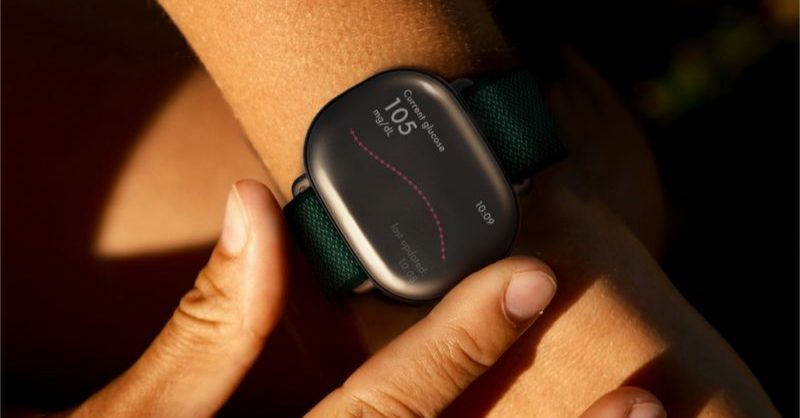
Liom, a health-tech startup betting on a needle-free future for glucose monitoring, is drawing attention with a wearable concept that aims to track blood sugar without the punctures and consumables that define today’s mainstream solutions. The pitch lands squarely in the shadow of Apple and the Apple Watch era, where wrist-based health features have reshaped consumer expectations—and where glucose monitoring has long been the most coveted, hardest-to-crack feature.
The big question isn’t whether people want easier glucose tracking. It’s whether Liom can deliver clinically reliable readings in a form factor consumers will actually wear, at a price the market will accept, while navigating regulatory hurdles that have slowed far larger players.
Why glucose is the “holy grail” of consumer health wearables
Glucose data is uniquely valuable because it sits at the intersection of chronic disease management and everyday wellness. For people living with diabetes, continuous monitoring can inform medication dosing, diet choices, and risk management. For non-diabetic consumers, glucose trends are increasingly marketed as a window into metabolic health, recovery, and nutrition—though clinicians continue to debate how actionable such insights are outside medical contexts.
Today’s dominant approach is the continuous glucose monitor (CGM): a small sensor inserted under the skin that measures interstitial glucose and transmits readings to a phone. CGMs can be transformative, but they are not “frictionless.” They require skin insertion, periodic sensor replacement, and often come with ongoing subscription-like costs.
That friction is precisely what makes needle-free monitoring so alluring—and so difficult. Any company that can measure glucose non-invasively with medical-grade accuracy stands to reshape a market that spans healthcare providers, insurers, employers, and consumers.
What Liom is promising—and what “needle-free” really implies
Needle-free glucose monitoring generally refers to techniques that attempt to infer glucose levels without penetrating the skin. Depending on the approach, this can involve optical methods, electromagnetic sensing, or other biosensing modalities that interpret signals from tissue, blood flow, or other physiological markers.
Liom’s positioning suggests a wearable-first design, aiming to fit into the habits formed by smartwatches and fitness bands. That matters: the modern wearable market rewards devices that are comfortable, stylish, and dependable in daily life. A glucose device that is accurate but bulky—or one that delivers inconsistent readings—will struggle to compete with the convenience consumers already associate with the wrist.
However, “needle-free” is not a single technical solution. The hardest part is not collecting a signal; it is separating meaningful glucose information from noise caused by sweat, skin thickness, temperature changes, motion, hydration, and individual physiology. This is where many prototypes shine in lab settings but falter in real-world use.
The accuracy bar is unforgiving
In consumer wearables, heart rate estimates can be “good enough” for fitness. Glucose is different. If a device is positioned for medical decision-making, its error margins can have real consequences. Even for wellness use, unreliable readings can push people toward unnecessary dietary restriction or false reassurance.
For Liom, credibility will hinge on transparent validation: clinical studies, comparisons against established CGMs, and clear communication about intended use—medical management versus lifestyle insights.
The Apple Watch comparison: opportunity and trap
Apple Watch has become the reference point for wearable health, not because it does everything first, but because it normalizes features once considered niche. ECG, fall detection, irregular rhythm notifications, and a growing ecosystem of health apps have set consumer expectations for what a wrist device should do.
That creates an opening for Liom: if Apple has not delivered non-invasive glucose monitoring, a startup that does could capture attention, partnerships, and potentially acquisition interest. But it also creates a trap. Competing in the “Apple Watch era” means competing against:
- Hardware polish consumers already trust and enjoy wearing
- Platform ecosystems that integrate data across apps, clinicians, and services
- Brand trust in health claims, privacy, and support
Liom doesn’t need to beat Apple at everything. It needs to win on one decisive dimension: glucose accuracy and usability—then integrate smoothly into the phone-and-watch routines people already have.
Regulation, claims, and the path to market
If Liom seeks to position its wearable as a medical device, it will face stringent regulatory requirements. In many markets, that means demonstrating safety and performance through clinical evidence and quality systems. Even if the company launches first as a wellness product, the language it uses—especially around “monitoring” and “accuracy”—will determine how regulators, clinicians, and consumer advocates respond.
For startups, this is often where timelines stretch. Hardware iteration, sensor calibration, and study design can take years, not months. The most successful entrants typically choose a clear initial use case and a realistic go-to-market plan, rather than trying to serve everyone at once.
What users will demand on day one
Beyond regulatory approval, a glucose wearable must solve practical issues that shape retention:
- Calibration burden: How often must users confirm readings with finger-stick tests or other references?
- Consistency: Does performance hold during exercise, sleep, stress, and temperature swings?
- Battery life: Can it run continuously without daily charging fatigue?
- Comfort and skin tolerance: Especially important if worn 24/7
- Data interpretation: Are insights clinically responsible, or merely charts without guidance?
The competitive landscape is crowded—and skeptical
Liom is not alone in pursuing non-invasive glucose sensing. The space has attracted startups for decades, and it has also drawn interest from major consumer electronics brands. The history is littered with ambitious claims that failed under independent testing.
That skepticism cuts both ways. It makes fundraising and partnerships harder—but it also means that credible results, if Liom can produce them, will stand out quickly. In this market, proof travels faster than marketing.
What would “disruption” look like for Liom?
True disruption would not require Liom to replace the Apple Watch. It would mean becoming the default way people access glucose insights—either as a standalone wearable that integrates with existing platforms, or as a sensor technology that gets embedded into devices consumers already wear.
In the near term, Liom’s success will likely be judged on three milestones: independent validation against CGMs, a clear regulatory strategy, and a product experience that feels as effortless as the smartwatch habits consumers have already formed. If those pieces align, the company could shift expectations for what wrist-based health tracking can realistically deliver.