

Dailyza — Israel’s security cabinet has approved the recognition of 19 new settlements in the occupied West Bank, a decision that is expected to intensify international criticism and deepen concerns about the future of a negotiated peace based on a two-state solution.
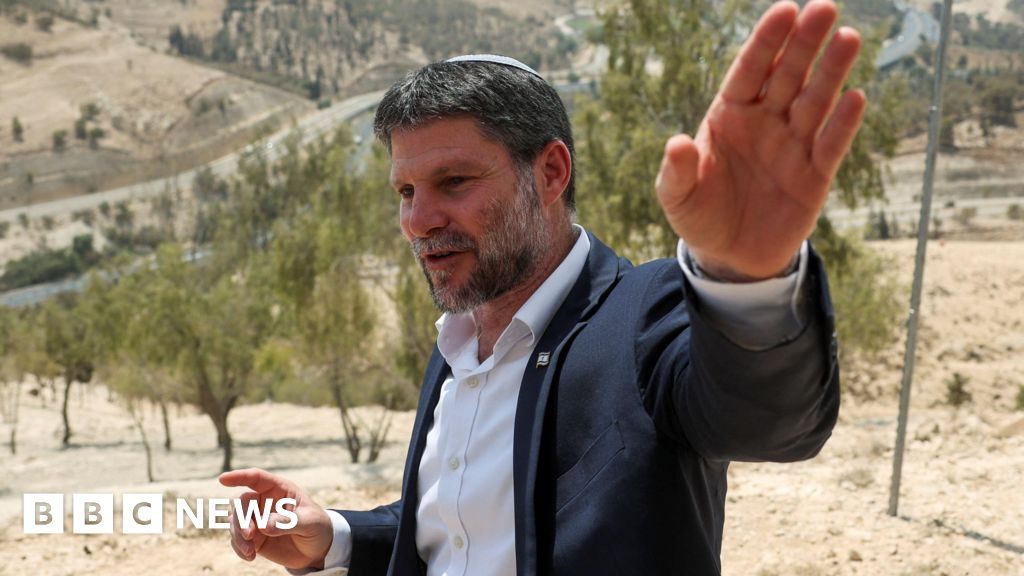
The move, advanced by far-right Finance Minister Bezalel Smotrich alongside Defence Minister Israel Katz, was framed by Smotrich as a step intended to prevent the establishment of a Palestinian state. The approval comes amid heightened violence in the West Bank since the Israel-Gaza war began in October 2023 and as the United Nations warns that settlement growth is accelerating to levels not seen in years.
What Israel approved and why it matters
According to statements attributed to Smotrich, Israel’s latest approvals bring the number of settlements recognised during the past three years to 69. The newly recognised sites include the re-establishment of two settlements—Ganim and Kadim—that were dismantled nearly two decades ago, underscoring a policy direction that critics say is aimed at entrenching Israel’s presence across the territory.
Israeli settlements in the occupied West Bank are considered illegal under international law, a position long held by much of the international community. Israel disputes that interpretation, but the legal and diplomatic controversy has been a central fault line in the conflict for decades.
The approvals arrive only days after the United Nations said settlement expansion had reached its highest level since 2017. For Palestinians, the practical impact is often immediate: more restricted access to land, increased fragmentation of communities, and heightened uncertainty around whether a contiguous and viable state could be established in the future.
Smotrich’s stated goal: blocking a Palestinian state
Smotrich, himself a West Bank settler, has repeatedly argued that Israeli building across the territory should be used to foreclose Palestinian sovereignty. He has previously described major construction initiatives as a means to “bury” the idea of a Palestinian state—language that has sharpened fears among diplomats that settlement policy is being used not only for security or housing but as a strategic tool to reshape final-status outcomes.
The concept of a two-state solution generally refers to the creation of a Palestinian state in the West Bank and Gaza, with East Jerusalem as its capital, broadly along the lines that existed prior to the 1967 Arab-Israeli war. Many international initiatives have been built around that framework, even as negotiations have repeatedly stalled.
International reaction: condemnation and warnings
Saudi Arabia condemned the decision, reflecting a wider regional stance that settlement expansion undermines prospects for peace and weakens the credibility of diplomatic pathways. The issue has also been a recurring obstacle in Israel’s efforts to broaden ties with Arab and Muslim-majority states, where public opinion remains highly sensitive to developments in the Palestinian territories.
UN Secretary-General Antonio Guterres has described Israel’s settlement expansion as “relentless,” warning that it fuels tensions, restricts Palestinian access to land, and threatens the viability of a sovereign Palestinian state. Those concerns have sharpened since October 2023, as violence in the West Bank has surged and fears have grown that hardening facts on the ground will make any political resolution harder to reach.
How settlement growth is reshaping the West Bank
Settlement expansion is not only measured in the number of sites recognised but in the scale of housing and infrastructure that follows. Israeli authorities approved 22 new settlements in May, described as the biggest expansion in decades. In August, the government also approved plans to build more than 3,000 homes in the so-called E1 project between Jerusalem and the Maale Adumim settlement—an initiative that had been frozen for decades amid international opposition.
Diplomats and analysts have long warned that E1 construction could sever territorial contiguity between Palestinian population centres, complicating efforts to establish a capital in East Jerusalem and making a coherent Palestinian state more difficult to map in practical terms.
Settlers, geography, and demographics
Roughly 700,000 settlers live in about 160 settlements in the West Bank and East Jerusalem, according to the Israeli anti-settlement group Peace Now. Palestinians seek the same territory for a future independent state, making settlement growth one of the most contentious issues in any negotiation over borders, security arrangements, and the status of Jerusalem.
Since taking office in 2022, Israel’s current government has significantly increased approvals for new settlements and advanced the legalisation process for unauthorised outposts, in some cases recognising them as “neighbourhoods” of existing settlements. Critics argue that such steps normalize expansion and blur distinctions between previously authorised construction and outposts established without formal approval.
Political pressure and shifting diplomacy
The settlement decision comes amid shifting diplomatic signals internationally. US President Donald Trump has warned Israel against annexing the West Bank, saying Israel would lose US support if it pursued such a move. While settlement recognition is not the same as formal annexation, critics say the cumulative effect can resemble de facto annexation by expanding Israeli civilian presence and administrative control.
In September, the UK—along with countries including Australia and Canada—recognised a Palestinian state in a significant, though largely symbolic, shift in policy. Israel opposed the move, with Prime Minister Benjamin Netanyahu saying a Palestinian state “will not happen.” That divergence highlights a widening gap between Israel’s current governing coalition and a number of Western partners on the end-state vision for the conflict.
What comes next
With settlement approvals increasing and international criticism mounting, the decision is likely to reverberate beyond the West Bank, affecting regional diplomacy and the already fragile security environment. On the ground, Palestinians and Israeli security forces face a volatile mix of political decisions, heightened tensions, and a conflict landscape that has been further strained since the Gaza war began in 2023.
As governments and international bodies respond, the key question remains whether accelerating settlement expansion will lock in a new status quo—or prompt renewed diplomatic pressure aimed at preserving the possibility of a negotiated Palestinian state.