

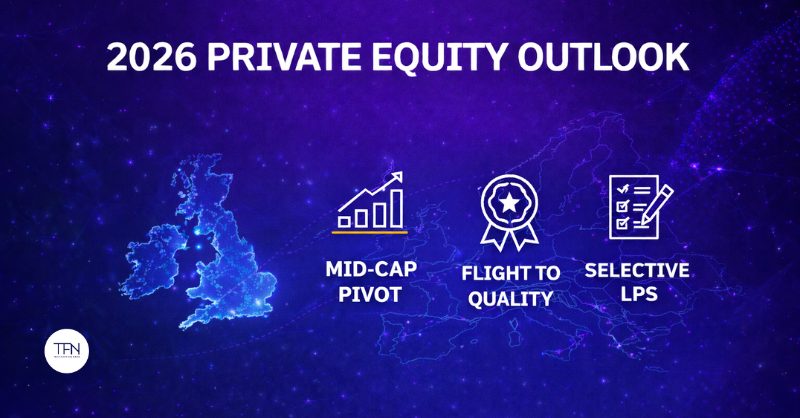
ECI expects the UK private equity market to regain momentum after a subdued 2025, with AI-enabled value creation emerging as a central lever for returns, according to comments reported by TFN. The outlook reflects a broader shift in the buyout industry: less reliance on cheap leverage and multiple expansion, and more emphasis on operational improvement, data-driven decision-making, and technology-led productivity gains.
A quiet 2025 sets the stage for a rebound
Deal activity across UK private equity cooled through 2025 as high interest rates, cautious lenders, and valuation gaps kept many processes from closing. Sponsors and management teams often struggled to agree on price expectations, particularly in sectors where public-market comparables were volatile and forward earnings visibility was mixed.
In that environment, many firms shifted focus from new acquisitions to portfolio work: stabilising margins, reshaping go-to-market strategies, and preparing businesses for eventual exits when market conditions improve. ECI’s view, as cited by TFN, is that the market is now positioned for a healthier cadence of transactions as confidence returns and sellers become more realistic on valuation.
AI value creation becomes the new playbook
While AI has been a headline topic for years, buyout firms are increasingly treating it as a practical toolkit rather than a speculative bet. ECI expects AI-led operational improvement to be a defining feature of the next phase of UK dealmaking, with sponsors underwriting value creation plans that include measurable technology outcomes.
Where AI is showing up inside portfolio companies
In practice, AI initiatives in mid-market companies tend to cluster around a handful of repeatable use cases:
- Pricing and revenue optimisation: using data models to improve discount discipline, segment customers, and increase conversion rates.
- Sales enablement: deploying AI tools that summarise customer interactions, surface next-best actions, and reduce administrative workload for sales teams.
- Customer support automation: implementing AI-assisted triage and knowledge retrieval to shorten response times and improve service consistency.
- Finance and forecasting: improving cash-flow visibility and scenario planning using automated data pipelines and predictive analytics.
- Operations and supply chain: identifying bottlenecks, reducing waste, and improving planning accuracy where data quality allows.
The common thread is that these projects can be tied to unit economics, margin improvement, or working-capital efficiency—metrics that matter directly to both lenders and exit buyers.
Why the UK market is primed for a shift from leverage to operations
In a higher-rate world, the cost of capital changes the math for buyouts. When debt is expensive and underwriting is tighter, sponsors have less room to “financial-engineer” returns. That reality has increased the premium on operational excellence and repeatable value creation frameworks.
ECI’s rebound thesis aligns with a wider industry pivot: firms are building internal operating teams, partnering with specialist consultancies, and standardising playbooks around data, technology, and talent. Within that toolkit, AI algorithms and automation are increasingly treated as infrastructure—akin to ERP upgrades or digital marketing improvements—rather than moonshot innovation.
Valuation discipline and selectivity remain central
Even with renewed optimism, a rebound does not imply a return to indiscriminate buying. UK sponsors are likely to remain selective, prioritising companies with resilient demand, strong cash conversion, and clear operational levers. In many cases, the best candidates are businesses where data is already reasonably structured, leadership teams are open to change, and the organisation can adopt new workflows without major disruption.
What this means for founders, management teams, and advisers
For founders considering a sale or minority investment, the message is increasingly clear: buyers will scrutinise operational readiness as much as headline growth. Demonstrating credible technology adoption—especially around data governance, security, and measurable productivity gains—can strengthen the equity story and reduce perceived execution risk.
Management teams should also expect more detailed diligence on technology and processes. Beyond financials, sponsors and their advisers may test the maturity of analytics, the quality of customer and operational data, and the organisation’s ability to implement change at pace. In this environment, a compelling “AI roadmap” is not a slide deck; it is a set of prioritised initiatives with owners, timelines, and KPIs.
Risks: AI hype, implementation friction, and regulation
The shift toward AI-driven value creation comes with real execution risk. Many companies underestimate the effort required to clean data, integrate systems, and redesign workflows so that AI tools actually get used. Early projects can stall if teams lack training, if governance is unclear, or if the business tries to deploy too many tools at once.
Regulatory and reputational considerations are also rising. UK and European expectations around privacy, transparency, and responsible AI use can affect procurement decisions and product design, especially in consumer-facing sectors and regulated industries. Sponsors will need to ensure portfolio companies adopt appropriate policies and controls, including cybersecurity measures and oversight of third-party vendors.
Outlook: more deals, but with a different engine for returns
If ECI’s expectations materialise, UK private equity could see a steadier flow of transactions as financing markets stabilise and valuation gaps narrow. The defining difference versus previous cycles is likely to be the source of value creation: rather than relying primarily on leverage and market multiple shifts, firms will pursue returns through operational upgrades, technology adoption, and disciplined execution.
For the UK mid-market, that could mean a more hands-on era of ownership—one in which AI is not merely a theme in investment memos, but a practical driver of productivity, customer experience, and margin resilience.
Dailyza will continue tracking how UK sponsors translate AI ambitions into measurable outcomes across acquisitions, portfolio transformations, and exits.