

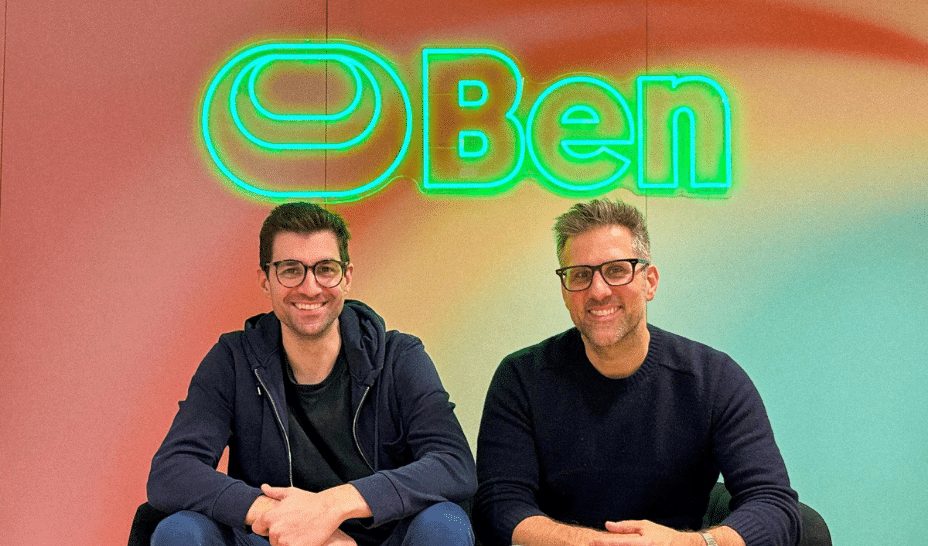
Ben, a UK-based employee benefits startup whose platform is used by companies including Deliveroo and Zalando, has secured €23.6 million in fresh funding to accelerate its expansion across Europe. The raise underscores growing investor and employer focus on modernising how organisations design, administer, and measure perks at a time when hiring, retention, and workforce expectations are shifting rapidly.
The funding will be used to scale product development, strengthen the company’s European footprint, and deepen integrations that help employers manage benefits across different countries, tax regimes, and employee needs. As more companies adopt hybrid work models and compete for talent across borders, platforms that can unify benefits administration while offering employees meaningful choice have moved from “nice-to-have” to operational infrastructure.
Why employee benefits platforms are attracting capital
Across Europe, employers are facing a complex mix of pressures: wage constraints, rising living costs in major cities, and heightened employee expectations around flexibility and wellbeing. That has pushed benefits to the centre of compensation strategy, with companies looking for ways to deliver value beyond salary while keeping administration manageable.
Modern benefits platforms attempt to solve two problems at once. First, they reduce operational burden by centralising workflows such as enrolment, eligibility, approvals, and reporting. Second, they aim to improve employee experience by offering personalisation—letting people choose what matters most to them rather than receiving a one-size-fits-all package.
In that context, employee benefits technology has become closely linked to broader HR tech and payroll ecosystems. Companies increasingly want benefits to connect cleanly with identity management, HRIS systems, and finance tools so that changes in headcount, location, or employment status automatically update entitlements and costs.
What Ben offers employers and employees
Ben positions itself as a flexible platform for employers to design and manage benefits programs while giving employees a consumer-style interface to select and use perks. For fast-growing companies—particularly those operating across multiple European markets—the challenge is not only deciding which benefits to offer, but also ensuring they remain compliant and cost-effective as the workforce evolves.
While benefits can include traditional categories such as health coverage and insurance, many employers are expanding into areas like wellbeing allowances, learning budgets, mobility support, and lifestyle perks. The operational difficulty increases when a company has teams in different countries, each with local rules and expectations. Platforms like Ben aim to provide a single system of record and a consistent experience while still accommodating local variation.
Data and measurement are becoming central
A key reason benefits platforms are gaining traction is the push for measurable outcomes. Finance teams want to see utilisation rates and cost controls; people teams want to understand whether benefits support engagement and retention. Better visibility can help employers decide which perks to keep, which to adjust, and how to target support during key moments such as onboarding or parental leave.
As benefits budgets come under scrutiny, the ability to produce clear reporting—without relying on multiple vendors and spreadsheets—has become a strong selling point. This is where the market is shifting: from offering perks as a static list to treating benefits as a managed program with feedback loops.
How the €23.6 million will be used
The €23.6 million injection gives Ben more capacity to execute on scaling priorities that typically define the next stage for European SaaS companies: expanding into new geographies, hiring across product and go-to-market functions, and strengthening partnerships with benefits providers and HR platforms.
- Product expansion: Enhancing the platform’s capabilities for multi-country benefits management, reporting, and employee choice.
- European growth: Building commercial and customer support capacity to serve employers operating across borders.
- Integrations: Deepening connections with HR and finance tools to reduce manual administration and improve data consistency.
- Provider network: Broadening the ecosystem of benefits vendors available through the platform to match employer demand.
For employers, the practical promise is straightforward: fewer fragmented vendors, less administrative overhead, and a benefits experience that is easier to communicate internally. For employees, the appeal is choice and clarity—knowing what is available, how to use it, and what it’s worth.
Competition and the broader European HR tech landscape
Ben’s raise arrives in a crowded but expanding European market where companies are trying to modernise the “total rewards” stack. The competitive set spans benefits marketplaces, wellbeing platforms, HRIS providers adding benefits modules, and payroll companies extending into adjacent services.
What differentiates vendors often comes down to three factors: the depth of local compliance support, the quality of user experience, and the ability to prove ROI through data. In Europe, localisation is particularly important—benefits norms, tax treatment, and statutory requirements can differ significantly between countries, making a one-size global product difficult to implement.
For fast-scaling employers like those in delivery, e-commerce, and tech—sectors where workforce composition can be diverse and geographically distributed—benefits technology can become part of the retention toolkit. The fact that Deliveroo and Zalando are referenced as users signals Ben’s relevance to organisations operating at scale and across markets.
What to watch next
The next phase for Ben will likely be judged on how effectively it can convert funding into durable European market share while maintaining a product that works across regulatory environments. Employers will be watching for improvements in multi-country administration, clearer reporting, and a wider range of benefits options that remain easy to manage.
As European companies continue to compete for talent and rethink how compensation is structured, benefits are increasingly viewed not as a static add-on, but as a strategic lever. With €23.6 million in new capital, Ben is positioning itself to be the system that helps employers run that lever with more precision and less friction.
Dailyza will continue tracking how the company expands its footprint and how Europe’s benefits tech market evolves as employers demand more flexibility, stronger compliance, and better measurement from their HR stacks.