

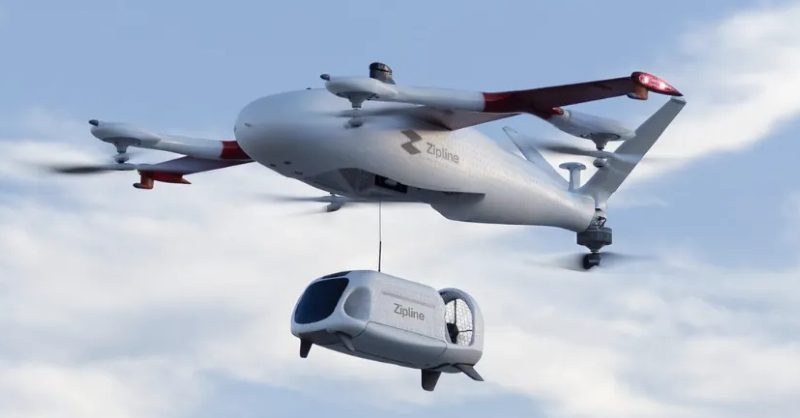
Zipline crosses 2 million autonomous drone deliveries
Zipline, the autonomous drone delivery pioneer best known for transporting medical supplies in hard‑to‑reach areas, has surpassed a major operational milestone: more than 2 million commercial drone deliveries completed worldwide. The company’s aircraft have now flown millions of miles, delivering blood, vaccines, prescriptions, consumer goods and other essential items across multiple continents.
The achievement firmly positions Zipline as one of the most scaled players in the emerging drone logistics and instant delivery market, where reliability, regulatory compliance and unit economics remain the key barriers to mass adoption.
$600 million funding round at a $7.6 billion valuation
Alongside the operational milestone, Zipline has raised approximately $600 million in new capital, lifting its valuation to around $7.6 billion. The round is understood to include participation from major growth investors, with Tiger Global among the most prominent backers, signaling continued confidence in the long‑term potential of autonomous delivery networks.
The latest injection of capital will enable Zipline to scale its infrastructure, deepen its presence in existing markets, and accelerate expansion into new sectors such as retail, e‑commerce, and urban on‑demand logistics. It also gives the company additional firepower in a competitive landscape that includes aviation incumbents, logistics giants and emerging drone-as-a-service startups.
A decade of building a global drone delivery network
Founded in 2014, Zipline built its early reputation by partnering with national health systems and global organizations to deliver life‑saving medical products to remote and underserved communities. The company’s fixed‑wing drones, launched from centralized distribution hubs, are designed to operate in challenging terrain and variable weather conditions with a high degree of autonomy.
Over the years, the company has deployed its systems in countries across Africa, including Rwanda and Ghana, and expanded into markets such as the United States and Japan. Its operations are typically integrated with hospitals, pharmacies and clinics, allowing for just‑in‑time delivery of high‑value, time‑sensitive goods.
From emergency medicine to everyday logistics
While early missions focused heavily on emergency medical logistics—such as blood deliveries for transfusions or urgent vaccines—Zipline has steadily broadened its remit. The company now works with retailers, health providers, and quick‑service brands to deliver prescriptions, groceries and consumer products directly to homes and businesses.
This shift reflects a wider industry trend in which autonomous delivery is evolving from pilot projects and humanitarian use cases into mainstream commercial services. With dense delivery routes and higher order frequency, sectors like pharmacy, grocery and restaurant delivery offer a path toward improved unit economics and sustainable margins.
Technology and safety at the core
Zipline operates a vertically integrated stack that combines autonomous aircraft, flight control software, air traffic management tools and logistics orchestration systems. Its drones are designed to fly beyond visual line of sight (BVLOS), using onboard navigation systems and ground‑based monitoring to maintain safety and regulatory compliance.
Each delivery typically follows a precise workflow: orders are received and packed at a distribution center, a drone is automatically prepared and launched, and the package is delivered via a controlled drop, often using a small parachute or tethered mechanism to ensure accuracy and gentle landing. Throughout the flight, AI-powered routing algorithms and redundant safety systems manage navigation, collision avoidance and contingency planning.
Working with regulators and airspace authorities
One of the key differentiators for Zipline has been its long‑term engagement with civil aviation authorities and regulators. Operating BVLOS at commercial scale requires robust airspace integration, detailed safety cases and ongoing data sharing.
By building a track record of safe operations across millions of flights, the company has helped shape emerging frameworks for unmanned aircraft systems (UAS) and urban air mobility. This regulatory experience is increasingly valuable as more markets look to formalize rules for drone delivery corridors and low‑altitude traffic management.
Competitive landscape and strategic positioning
The global market for autonomous logistics is intensifying, with players ranging from big tech and e‑commerce platforms to specialized aviation startups. Companies are experimenting with a wide range of form factors, from small multicopters for last‑meter delivery to larger aircraft capable of carrying heavier payloads over longer distances.
In this environment, Zipline is positioning itself as a full‑stack infrastructure provider rather than a niche pilot project operator. Its focus on reliability, regulatory approval and integration with existing supply chains is designed to appeal to large enterprises that require predictable service levels and clear compliance pathways.
Path to profitability and scale
With a fresh $600 million in capital and a $7.6 billion valuation, questions naturally turn to long‑term business sustainability. The company’s strategy hinges on increasing route density, expanding its customer base, and leveraging its data to optimize flight operations and inventory management.
As more deliveries are consolidated through its hubs, Zipline expects to lower per‑delivery costs and move closer to parity with, or even below, traditional road‑based logistics in certain regions. Partnerships with national health systems, major retailers and pharmacy chains are central to reaching that scale.
Implications for healthcare, climate and urban living
The impact of Zipline‘s network extends beyond convenience. In healthcare, faster access to blood, vaccines and medicines can significantly improve outcomes, particularly in regions where road infrastructure is weak or weather conditions make travel unpredictable.
From an environmental perspective, electric autonomous drones offer a lower‑emission alternative to many short‑distance van or motorcycle deliveries, especially in congested urban areas. As cities grapple with air quality, congestion and the growth of on‑demand commerce, drone delivery corridors could become part of broader strategies for cleaner, more efficient transport.
With more than 2 million deliveries already completed and substantial new funding secured, Zipline is moving from experimental pioneer to established infrastructure player in the emerging era of automated, low‑altitude logistics. The next phase will test how quickly this technology can move from early adopters to everyday life in cities and communities around the world.