

Xsensio secures oversubscribed €6M Series A
Swiss deeptech startup Xsensio has closed an oversubscribed €6 million Series A funding round to accelerate the development and commercialization of its pioneering Lab-on-Skin wearable biosensing platform. The round was led by global investor WI Harper Group, with participation from Privilège Ventures, the European Innovation Council (EIC), Propel(x), and Swiss Health Angels.
The fresh capital will be used to advance product industrialization, expand clinical collaborations, and prepare for market entry in key healthcare and wellness segments.
Lab-on-Skin: continuous biomarker monitoring on a chip
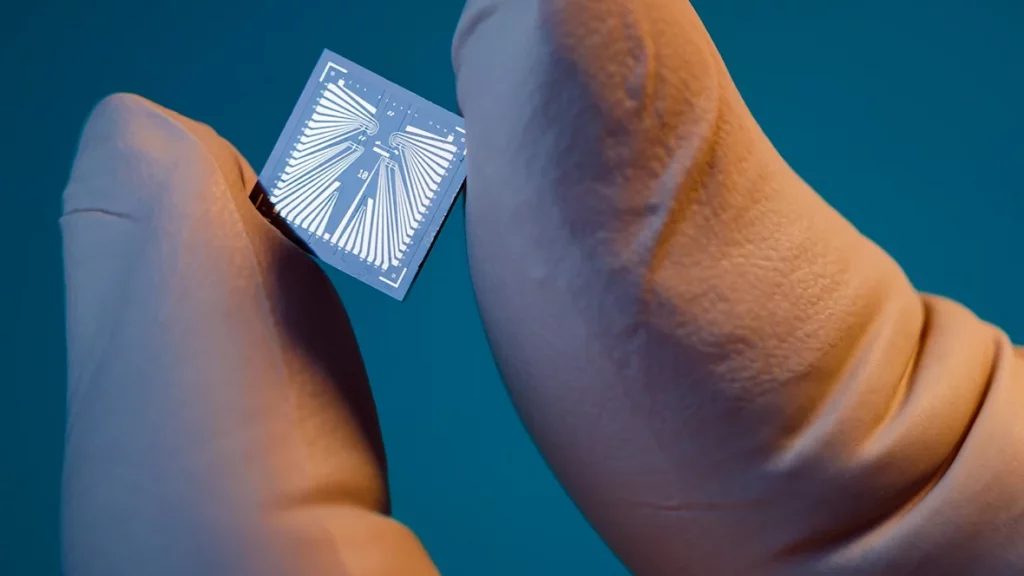
Xsensio‘s Lab-on-Skin platform integrates multiple biosensors onto an ultra-miniaturized chip that adheres to the skin like a wearable patch. The system is designed to continuously monitor a range of biomarkers — including proteins, hormones, and ions — directly from sweat or other skin-secreted fluids.
By capturing these biochemical signals in real time, the technology aims to provide a richer and more dynamic picture of a person’s health than traditional point-in-time blood tests. Potential applications span chronic disease management, cardiometabolic health, stress and hormone tracking, and remote patient monitoring.
Strategic backing for next-generation digital health
The involvement of the European Innovation Council and specialized investors such as WI Harper Group and Privilège Ventures underscores growing confidence in advanced wearable health technologies and deeptech platforms that bridge microelectronics, biosensing, and data analytics.
According to the company, the Series A funding will help move the platform from advanced prototyping into scalable manufacturing, while strengthening partnerships with hospitals, research institutions, and industry players in the broader digital health and medical device ecosystem.
As healthcare systems worldwide push toward more personalized and preventive models of care, solutions like Xsensio‘s Lab-on-Skin platform are positioned to play a central role in enabling continuous, non-invasive health monitoring outside traditional clinical settings.