

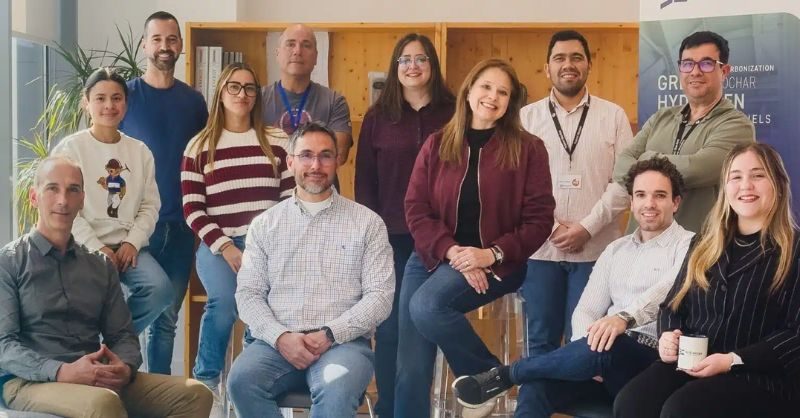
WtEnergy raises €10M to decarbonise heavy industry in Europe
Spanish climate-tech startup WtEnergy has secured a €10 million funding round to accelerate the deployment of its proprietary gasification technology, targeting deep decarbonisation in Europe’s energy‑intensive cement and chemical sectors. The investment underscores growing investor confidence in industrial clean-tech solutions capable of replacing fossil fuels at scale.
Clean fuel from waste for cement and chemical plants
WtEnergy develops advanced waste gasification systems that convert non-recyclable waste and biomass into a synthetic gas, or syngas. This low‑carbon fuel can directly substitute coal, petcoke or natural gas in high‑temperature industrial processes, significantly reducing CO₂ emissions without requiring a full redesign of existing plants.
The company focuses on large industrial clients, particularly cement producers and chemical manufacturers, which together account for a substantial share of Europe’s industrial greenhouse gas output. By integrating its technology into existing facilities, WtEnergy aims to deliver a rapid pathway to compliance with tightening EU climate regulations and carbon pricing mechanisms.
Funding to scale deployment across Europe
The newly raised €10 million will be used to expand engineering capacity, finance new commercial projects and strengthen operations in key European markets. The company plans to roll out additional full‑scale units at industrial sites, demonstrating the reliability of its gasification and renewable fuel platform under continuous, high‑load conditions.
Industry analysts view the round as part of a broader surge in investment into industrial decarbonisation technologies, from carbon capture to alternative fuels. Solutions such as those offered by WtEnergy are increasingly seen as essential to meeting the EU Green Deal objectives and the bloc’s legally binding climate targets for 2030 and 2050.
Positioning within Europe’s climate-tech ecosystem
With this funding, WtEnergy strengthens its position within Europe’s fast‑growing climate-tech ecosystem, competing in a market where industrial clients are under mounting pressure to cut emissions while maintaining competitiveness. The company’s model—turning residual waste into a cleaner energy source—also supports the EU’s shift toward a more circular, resource‑efficient economy.
As cement and chemicals remain among the hardest sectors to decarbonise, investors and policymakers will be watching closely to see whether WtEnergy can deliver scalable, commercially viable alternatives to fossil fuels across the continent.
1 Comment
It’s great to see innovative solutions like WtEnergy’s making strides in such tough-to-decarbonize industries. Using waste to produce clean fuel not only cuts emissions but also tackles waste management challenges. Hopefully, more companies follow this approach to help meet Europe’s climate goals.