

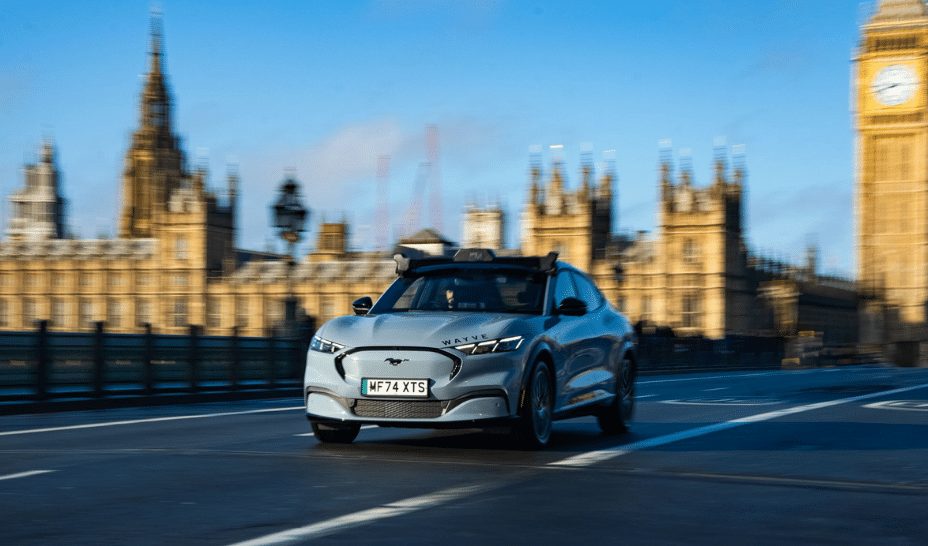
Wayve lands landmark €1 billion Series D round
UK-based autonomous driving pioneer Wayve has announced a massive €1 billion Series D funding round (approximately $1.2 billion), marking one of the largest investments to date in European autonomous vehicle technology. The new capital will accelerate the company’s vision of deploying embodied AI systems that can safely navigate complex real-world driving environments.
A new model for autonomous driving
Unlike many traditional self-driving platforms that rely heavily on pre-mapped routes and hand-coded rules, Wayve focuses on an AI-first approach. Its technology uses advanced deep learning and computer vision models trained on vast amounts of real-world driving data, enabling vehicles to learn and adapt to diverse road conditions in a more human-like way.
The company’s embodied AI stack is designed to run on standard vehicle hardware, making it attractive for large-scale deployment with automakers and fleet operators. By combining end-to-end neural networks with powerful onboard inference, Wayve aims to reduce development complexity and shorten the path to commercial rollout.
Scaling global deployment and partnerships
The fresh funding will be used to expand engineering teams, grow data collection programs, and deepen collaborations with global automotive manufacturers and mobility partners. A key objective is to validate Wayve’s technology across multiple cities, driving conditions, and vehicle platforms to prove its scalability.
Industry analysts see this round as a strong signal of investor confidence in AI-centric approaches to autonomy, especially as regulators and the market increasingly demand demonstrable improvements in road safety and driver-assistance systems. With this Series D, Wayve is positioned as one of Europe’s most heavily backed players in the race to deliver practical, commercially viable self-driving technology.
Implications for the UK and European tech ecosystem
The investment underscores the UK’s status as a leading hub for AI research and mobility innovation. It also highlights growing global competition to attract top-tier autonomous driving talent and capital, as governments and industries bet on AI-powered transportation as a cornerstone of future economic growth.