

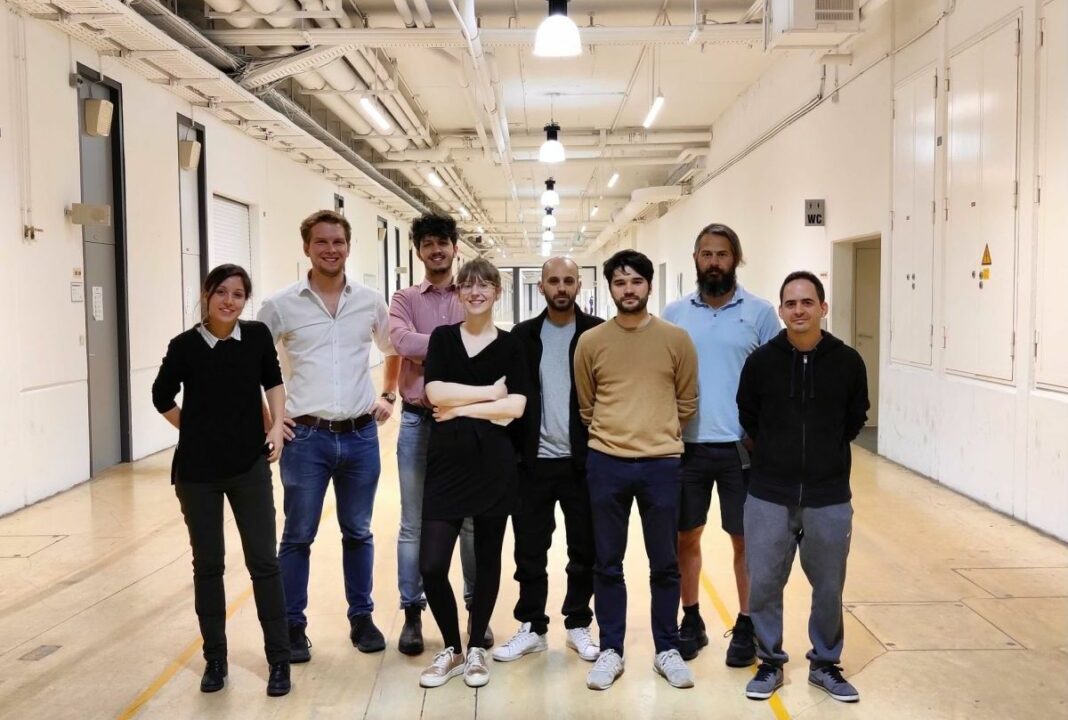
VitreaLab closes €9.4 million Series A to advance AR light engines
Vienna-based startup VitreaLab has raised a €9.4 million Series A round to accelerate the development and industrialization of its proprietary light engines for augmented reality (AR) glasses. The funding underscores growing investor confidence that high‑performance, low‑power optical components will be critical to the next wave of wearable computing.
Founded by physicists from the University of Vienna, VitreaLab specializes in using laser-based light engines and advanced photonics to deliver brighter, more efficient displays for AR headsets and smart glasses. The fresh capital will support scaling from lab prototypes to mass‑manufacturable modules aimed at consumer, enterprise and industrial markets.
Who is VitreaLab and what problem is it solving?
VitreaLab emerged from cutting-edge research in integrated photonics and laser technology, with a mission to rethink how light is generated and guided inside compact displays. Traditional AR and mixed-reality devices often suffer from limited brightness, narrow field of view and high power consumption, all of which constrain battery life and user comfort.
The company’s technology focuses on highly efficient light engines that sit at the heart of AR optics. By engineering light at the microscopic level, VitreaLab aims to deliver:
- Significantly higher brightness for outdoor and industrial use
- Improved energy efficiency, extending battery life in lightweight glasses
- More compact optical modules, enabling slimmer, more wearable designs
- Better image quality with sharper colors and reduced visual artifacts
These advances are designed to address a major bottleneck in the AR ecosystem: even as AI algorithms, sensors and processors improve, display components have struggled to keep pace in terms of performance, size and efficiency.
Details of the €9.4 million Series A round
The €9.4 million Series A financing round equips VitreaLab with the resources needed to move from R&D to productization at scale. While specific investors were not disclosed in the provided information, the round is consistent with a broader surge of European capital into deep tech and optical hardware that can underpin the next generation of immersive devices.
The new funding will primarily be allocated to:
- Expanding engineering and manufacturing teams in Vienna
- Scaling up pilot production of light engines for AR glasses
- Strengthening partnerships with AR headset makers and OEMs
- Further refining the company’s intellectual property portfolio in photonics
With this Series A, VitreaLab moves into a critical phase where it must demonstrate that its lab‑proven technology can meet the cost, reliability and volume requirements of global consumer electronics brands.
Why advanced light engines matter for AR adoption
For AR glasses to move from niche devices to mainstream products, several technical challenges must be resolved. Among them, the quality and efficiency of the display system is one of the most decisive factors for user acceptance.
Brightness and outdoor usability
Many current AR devices struggle in bright outdoor environments, where sunlight easily overpowers projected images. VitreaLab is targeting much higher luminance levels while maintaining low thermal load, a combination that could make AR glasses practical for field technicians, logistics workers and everyday consumers.
Power consumption and form factor
Display modules are among the most power-hungry components in AR glasses. By improving the efficiency of its light engines, VitreaLab aims to reduce energy consumption, enabling smaller batteries, lighter frames and longer operating times. This is essential if AR glasses are to resemble conventional eyewear rather than bulky headsets.
Image quality and eye comfort
Visual comfort is another barrier to AR adoption. Poorly optimized optics can cause eye strain, motion sickness and inaccurate depth perception. High‑precision photonics can enhance color accuracy, contrast and sharpness, while reducing artifacts such as rainbow effects or flicker. VitreaLab is positioning its technology as a way to deliver more natural, readable overlays that users can tolerate for extended periods.
Europe’s growing role in AR and photonics
The funding round for VitreaLab highlights the increasing importance of European players in the global race to build enabling technologies for AR and spatial computing. With strong academic foundations in optics and semiconductor physics, cities like Vienna are emerging as hubs for specialized hardware innovation.
European investors are increasingly backing companies that operate at the intersection of hardware, software and AI, recognizing that future computing platforms will depend on seamless integration across these layers. As large technology companies push aggressively into AR, local component specialists such as VitreaLab may become strategic suppliers or acquisition targets.
What comes next for VitreaLab
Armed with its €9.4 million Series A, VitreaLab now faces the challenge of scaling its technology from promising prototypes to robust, mass‑market components. Key priorities will likely include:
- Qualifying its light engines with leading AR headset and smart glasses manufacturers
- Meeting stringent reliability and lifetime standards required by consumer electronics
- Driving down unit costs through optimized manufacturing processes
- Continuing to innovate in photonics integration to stay ahead of competitors
If it can execute on these fronts, VitreaLab could play an outsized role in making AR glasses more practical, comfortable and visually compelling. As the industry looks beyond smartphones toward wearables and spatial interfaces, the quiet revolution happening inside the light engines of these devices may prove as consequential as any software breakthrough.
1 Comment
Exciting to see innovation in AR hardware moving forward, especially with a focus on brighter and more efficient displays. If VitreaLab can nail the balance between performance and power consumption, it could really push AR glasses into mainstream use. Looking forward to seeing how this technology develops!