

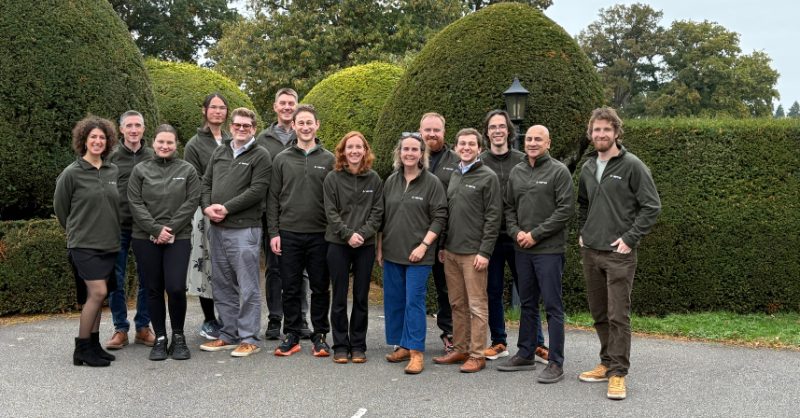
Verna turns biodiversity reporting into restoration action with $4M raise
UK-based climate tech startup Verna has raised $4 million in new funding to convert static biodiversity and nature reports into dynamic, AI-driven restoration plans. The company aims to close the gap between the growing volume of environmental disclosures and the limited on-the-ground action they currently generate.
As governments, corporations and financial institutions face mounting pressure to address biodiversity loss, most are commissioning extensive assessments, impact studies and compliance reports. Yet these documents often sit unused, offering little practical guidance on what to restore, where to start and how to prioritise investment. Verna wants to change that by turning complex ecological data into clear, spatially explicit instructions for restoring forests, peatlands and other critical ecosystems.
From static reports to AI-native restoration plans
The fresh capital will be used to scale Verna’s AI platform, which ingests existing biodiversity reports, geospatial datasets, and regulatory requirements and then generates science-based restoration scenarios. These scenarios are designed for landowners, corporates and asset managers who must comply with emerging nature-related disclosure rules while also demonstrating credible climate and nature impact.
Using a combination of AI algorithms, remote sensing, and ecological modelling, the platform can recommend the optimal mix of interventions for a given landscape. That might include woodland creation, habitat corridors, wetland restoration or peatland re-wetting, each ranked by metrics such as carbon sequestration, biodiversity uplift, water quality benefits and financial viability.
Instead of handing clients a static PDF, Verna provides an interactive, map-based interface. Decision-makers can explore different restoration scenarios, adjust assumptions, and see the projected outcomes over time. This is especially valuable for organisations under pressure to align with frameworks such as the Taskforce on Nature-related Financial Disclosures (TNFD) and the EU’s emerging Nature Restoration Law.
Why biodiversity data needs an execution layer
In recent years, demand for nature-related disclosure has surged. Financial institutions are being asked to assess their exposure to nature risk; listed companies are expected to report their impacts and dependencies on ecosystems; and landowners are navigating a rapidly evolving mix of public subsidies and private nature markets.
Yet the market is still missing what many experts describe as an “execution layer” for nature: tools that can translate high-level assessments into specific, costed projects that can be implemented and monitored over time. This is the gap Verna is targeting.
By focusing on restoration design rather than just measurement, the startup positions itself at the point where climate policy, nature finance and land management intersect. The company argues that without this kind of planning intelligence, billions of dollars earmarked for nature-positive projects risk being delayed, misallocated or under-utilised.
Serving landowners, corporates and nature investors
Verna’s platform is built for a range of users across the emerging nature-based solutions ecosystem:
- Landowners and estate managers can identify which parts of their holdings are best suited for woodland creation, habitat restoration or regenerative land use, and how these choices might unlock public funding or private nature credits.
- Corporates with large land footprints or supply-chain exposure can design portfolios of projects that contribute to net zero targets, nature-positive commitments and Scope 3 strategies.
- Investors and nature funds can use the platform to source, evaluate and structure restoration projects with transparent baselines, projected outcomes and risk profiles.
By integrating ecological science with financial and policy constraints, Verna aims to make restoration projects both environmentally credible and economically investable. The platform also supports ongoing monitoring, helping stakeholders track whether projects are delivering the promised outcomes for biodiversity and carbon.
AI and geospatial intelligence at the core
The company’s technology stack blends several key climate tech and geospatial capabilities:
- Geospatial analytics to map land cover, soil type, hydrology and existing habitats at high resolution.
- Machine learning models that infer ecological potential, such as where native woodland could thrive or where peat restoration would yield the highest climate benefit.
- Policy and subsidy engines that incorporate local regulations, national restoration targets and available funding schemes.
- Scenario planning tools that allow users to compare restoration pathways across environmental and financial metrics.
This integrated approach reflects a broader trend in climate technology, where AI is increasingly being used not just for monitoring environmental change but for orchestrating the response to it.
A timely bet on the nature and biodiversity transition
The timing of the $4 million raise is significant. The UK and EU are moving ahead with stricter climate disclosure and biodiversity reporting requirements, while global negotiations continue to shape how the private sector will contribute to the Global Biodiversity Framework. At the same time, institutional investors are exploring new asset classes built around nature-based solutions, from forest restoration to blue carbon projects.
By focusing on the translation of reports into action, Verna is betting that the next phase of the nature transition will be defined not by how much data organisations collect, but by how effectively they can turn that data into real-world restoration at scale.
For landowners and investors grappling with complex ecological, regulatory and financial variables, tools that can simplify decisions without sacrificing scientific rigour are likely to become indispensable. With fresh capital in hand, Verna is positioning itself as one of the key infrastructure providers for this emerging nature economy.