

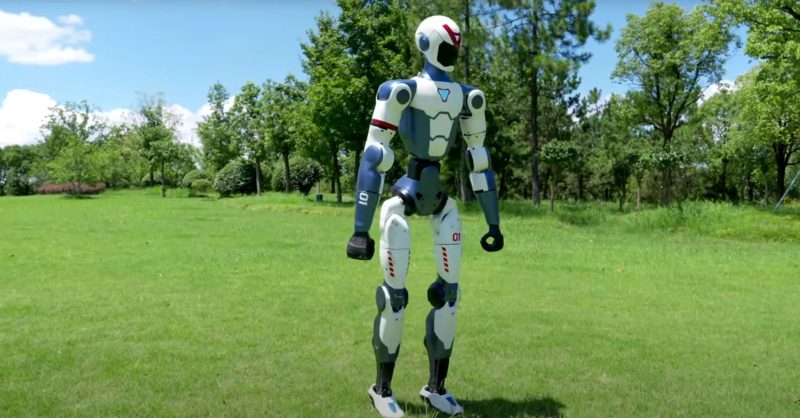
Unitree Robotics targets $610 million IPO in Shanghai
Chinese robot maker Unitree Robotics, known globally for its agile quadruped and humanoid machines, has filed for an initial public offering (IPO) in Shanghai reportedly worth around $610 million. The move comes on the heels of viral videos showing its robots performing martial arts-style routines, parkour-like maneuvers and synchronized demonstrations.
From viral martial arts videos to capital markets
Unitree Robotics gained widespread attention on social media platforms after releasing videos of its four-legged robots executing coordinated kicks, jumps and combat-inspired movements. These clips highlighted rapid progress in robotics, actuation systems and real-time motion control algorithms, positioning the company as one of China’s most visible innovators in legged robots.
The planned Shanghai listing is expected to provide fresh capital for scaling production, strengthening its R&D pipeline and expanding into commercial applications such as industrial inspection, public safety, logistics and defense-adjacent use cases. Market analysts say the IPO could also help reduce reliance on overseas funding while aligning with Beijing’s push for domestic leadership in advanced robotics and AI.
Strategic positioning in China’s robotics race
China has identified intelligent manufacturing and service robots as strategic sectors, with generous policy support for companies that can compete with global players in quadruped and humanoid designs. Unitree Robotics sits at the intersection of AI algorithms, sensor fusion and high-performance actuators, all critical components in next-generation autonomous systems.
While the company’s viral demonstrations help build brand recognition, investors are expected to focus on revenue growth, recurring software and service income, and the ability to transition from eye-catching prototypes to robust, field-deployed platforms. The IPO will be closely watched as a barometer of investor appetite for advanced robotics in China’s onshore markets and as a test of how quickly entertainment-fueled visibility can be converted into long-term commercial scale.