

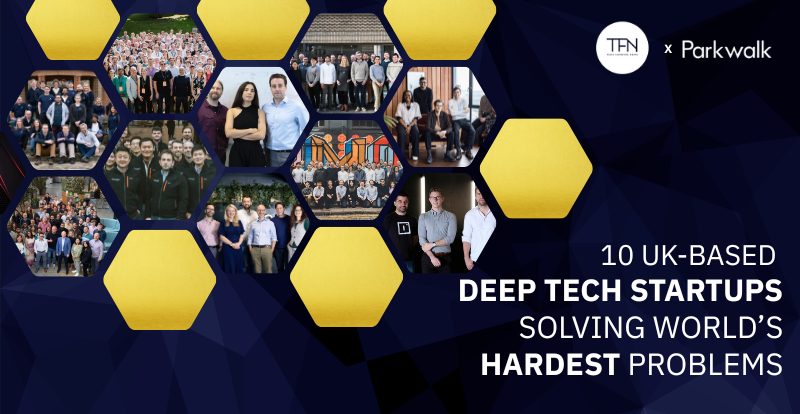
UK deep tech startups step up to solve global challenges
The UK’s deep tech ecosystem is rapidly maturing, with a new generation of startups turning frontier science into practical tools for tackling climate change, health crises and global security risks. While consumer apps and fintech once dominated the country’s startup headlines, a growing wave of founders are now building at the intersection of advanced AI algorithms, quantum computing, next‑generation semiconductors, and breakthrough materials science.
These ventures are typically spun out of leading universities, require substantial R&D investment, and often face longer paths to market than software‑only companies. Yet investors are increasingly convinced that the UK’s deep tech sector can deliver both impact and outsized returns, particularly as governments and corporates race to secure technological sovereignty in strategic domains.
What makes a startup truly “deep tech”?
Deep tech startups are defined less by the industries they serve and more by the nature of their innovation. They are usually built around defensible intellectual property, rely on significant scientific or engineering advances, and often demand years of experimentation before commercial products are viable.
In the UK, that typically means ventures emerging from research hubs such as Oxford, Cambridge, Imperial College London and the University of Edinburgh. These companies may be small in headcount but operate at the cutting edge of areas such as quantum information science, synthetic biology, advanced robotics and climate tech.
Ten UK deep tech startups to watch
1. Fusion energy for grid‑scale decarbonisation
A new class of UK fusion startups is racing to deliver commercially viable fusion power, aiming to provide virtually limitless low‑carbon electricity. Leveraging advances in high‑temperature superconducting magnets, improved plasma control and rapid simulation using AI algorithms, these companies are attempting to compress what was once a 50‑year roadmap into the next decade. Their work is closely aligned with national net‑zero strategies and has drawn substantial institutional and sovereign capital.
2. Quantum processors and secure communications
Several UK ventures are building scalable quantum computing hardware and software platforms. Using trapped ions, photonics or superconducting qubits, these startups are developing processors aimed at solving optimisation, materials discovery and cryptography problems beyond the reach of classical machines. Parallel efforts in quantum-safe encryption and quantum key distribution are positioning the UK as a contender in secure communications for governments and critical infrastructure operators.
3. AI‑designed drugs and precision therapeutics
At the intersection of machine learning and biopharma, UK deep tech companies are building platforms that use generative models to design novel molecules, predict protein structures and simulate clinical outcomes. By automating large parts of the discovery pipeline, these platforms seek to cut years and hundreds of millions of pounds from traditional drug development. Some are already partnering with global pharmaceutical groups, providing access to proprietary datasets and wet‑lab facilities to validate their in‑silico discoveries.
4. Next‑generation semiconductor and photonics platforms
With global supply chains for semiconductors under pressure, UK startups are exploring new architectures in compound semiconductors, silicon photonics and advanced packaging. These companies are targeting applications from high‑speed data centres and 5G networks to automotive radar and satellite communications. Close collaboration with UK manufacturing clusters in South Wales and the North East is helping them move from lab prototypes to pilot production.
5. Climate tech and carbon removal
Responding to the urgency of the climate crisis, a group of UK deep tech ventures is innovating in direct air capture, carbon mineralisation and ultra‑low‑carbon building materials. Using novel sorbent materials, high‑efficiency contactors and data‑driven optimisation, these startups are trying to make permanent carbon removal economically viable. Others are deploying advanced satellite imagery and remote sensing to verify emissions and monitor natural carbon sinks at scale.
6. Robotics and autonomous systems
From subsea maintenance robots to warehouse automation and agricultural drones, UK robotics startups are applying breakthroughs in computer vision, reinforcement learning and edge computing. Their systems are designed to operate in environments that are dangerous, remote or prohibitively expensive for humans, such as offshore wind farms, nuclear decommissioning sites and large‑scale logistics hubs. Many of these companies are engaging directly with industrial partners to co‑develop and test systems in live environments.
7. Secure AI and cyber‑resilience
As AI systems become embedded in critical infrastructure, several UK deep tech firms are focusing on AI safety, adversarial robustness and next‑generation cybersecurity. Their tools stress‑test models for vulnerabilities, detect data poisoning, and provide continuous monitoring for AI‑driven decision systems. This work is increasingly relevant to financial services, healthcare and defence, where regulators are tightening expectations around explainability and operational resilience.
8. Advanced materials and novel manufacturing
Another set of startups is commercialising breakthroughs in advanced materials such as graphene‑based composites, high‑entropy alloys and smart polymers. Combined with additive manufacturing and automated process control, these materials promise lighter, stronger and more energy‑efficient components for aerospace, automotive and consumer electronics. Close ties with UK Catapult centres and industrial partners are helping to validate performance at scale.
9. Synthetic biology and engineered organisms
In the life sciences, UK synthetic biology ventures are engineering microbes and cell lines to produce high‑value chemicals, sustainable fuels and next‑generation biomaterials. Using genome editing, automated lab robotics and cloud‑based design tools, they are attempting to replace petrochemical processes with programmable biology. These platforms could have major implications for agriculture, fashion, packaging and pharmaceuticals.
10. Space tech and in‑orbit services
Leveraging the UK’s growing satellite and launch ecosystem, deep tech startups are building high‑resolution Earth observation constellations, propulsion systems and in‑orbit servicing technologies. Their data platforms power applications from precision agriculture and insurance underwriting to maritime security and disaster response. The combination of hardware innovation and analytics is turning raw space data into actionable intelligence for both public and private sector users.
Funding, policy and the road ahead
The capital needs of deep tech – from specialised labs to long development cycles – are materially higher than those of traditional software startups. UK investors are responding with larger seed and Series A rounds, dedicated deep tech funds and patient capital vehicles. Government initiatives focused on R&D tax credits, technology transfer and regional innovation clusters are also playing a role in de‑risking early‑stage science‑based ventures.
For founders, the opportunity is twofold: to build globally competitive businesses and to deliver technologies that directly address planetary‑scale problems. As deep tech moves from the fringes of the UK startup scene to its centre, the companies emerging today are likely to define the country’s technological and economic profile for decades.
For readers and investors alike, the message is clear: the UK’s next wave of breakout companies is far more likely to be found in quantum labs, fusion test facilities and biofoundries than in traditional app accelerators. Tracking these deep tech pioneers offers a window into how science‑driven innovation could reshape the world’s most pressing systems – from energy and healthcare to security and the climate.