

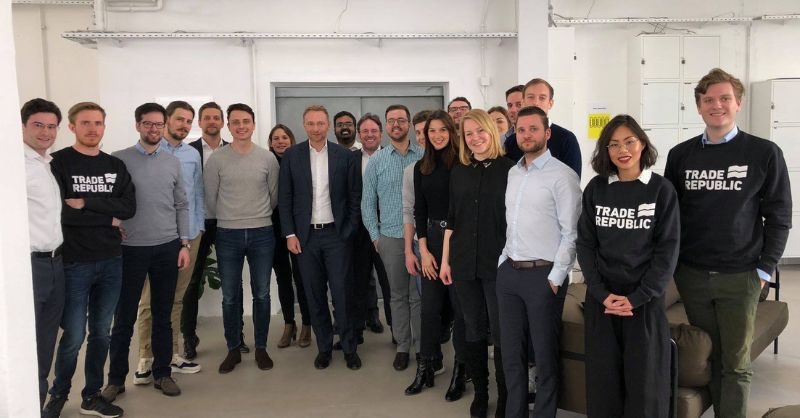
Trade Republic, the Berlin-based brokerage and savings platform, has climbed to a reported €12.5 billion valuation, reaching decacorn territory through a secondary share transaction that sources describe as a fast-moving, price-sensitive sale. The deal, first reported by TFN, underscores how Europe’s late-stage fintech market is increasingly relying on secondary transactions—sales of existing shares rather than fresh capital—to deliver liquidity for early investors and employees while keeping fundraising optional.
A decacorn milestone built on a secondary, not a primary round
Unlike a traditional funding round where a company issues new shares to raise growth capital, the reported transaction centers on existing shareholders selling stock. That matters for two reasons: it can provide liquidity without diluting the company, and it can happen even when public markets or venture funding conditions are choppy.
Secondary deals have become more common across private markets as startups stay private longer and employees wait years for an IPO window to reopen. For a consumer-facing brokerage like Trade Republic—operating at the intersection of investing, payments, and savings—liquidity events can also help retain talent, especially in a competitive European market where compensation packages often include equity.
Why the “fire sale” label is drawing attention
TFN characterized the transaction as a “secondary fire sale,” a phrase that typically implies urgency, discounted pricing, or a forced seller dynamic. In practice, the label can cover a range of realities: an early fund reaching the end of its lifecycle, an employee seeking to diversify personal finances, or a shareholder rebalancing exposure after years of paper gains.
Even when a secondary sale is negotiated at a discount to an internal preferred price, the headline valuation can still appear strong—especially if the company’s fundamentals have improved or if buyers are willing to pay for scarce access to a tightly held cap table. For Trade Republic, the reported €12.5 billion figure signals that demand for high-quality European fintech exposure remains intact, even as investors scrutinize unit economics more closely than during the 2021 peak.
Peter Thiel’s backing and what it telegraphs to the market
The reported involvement of Peter Thiel—a prominent Silicon Valley investor known for backing category-defining companies—adds a layer of signaling. In venture capital, “who” participates can be nearly as important as “how much,” particularly in later-stage deals where valuation is as much about confidence and narrative as it is about near-term revenue multiples.
Thiel-linked participation can influence how other investors, potential partners, and even regulators interpret momentum around a company. For Trade Republic, which operates in a regulated environment and competes with both European incumbents and global platforms, perceived stability and long-term conviction can translate into better hiring outcomes, stronger partnership discussions, and more negotiating leverage in future financing.
What the valuation says about Europe’s brokerage and savings boom
Trade Republic’s rise reflects a broader shift in how Europeans manage money. The past decade has seen accelerating adoption of mobile-first investing, low-fee brokerage, and hybrid products that blur the lines between current accounts, savings, and brokerage portfolios. Consumers have also become more sensitive to fees and more comfortable with self-directed investing—especially younger customers who entered markets during the pandemic-era trading surge and then learned hard lessons during the subsequent volatility.
In this landscape, platforms that can combine simple user experience with regulatory compliance, product breadth, and sustainable margins are positioned to consolidate share. A €12.5 billion valuation suggests investors believe Trade Republic can remain a long-term winner in that consolidation, whether through geographic expansion, deeper banking features, or increased monetization of assets under custody.
Secondaries as a pressure valve for employees
For employees, secondary liquidity can be a practical necessity. Equity compensation is attractive only if there is a credible path to turning it into cash without waiting indefinitely for an IPO. Structured secondary programs—whether company-facilitated or brokered by investors—help reduce the “golden handcuffs” effect and allow workers to pay taxes, buy homes, or diversify holdings.
Secondaries as a tool for funds under time constraints
For venture funds, especially those approaching the end of a 10-year lifecycle, secondaries can provide distributions to limited partners without forcing a company to raise new money or rush into public markets. In Europe, where IPO windows have been intermittent and listings can be more conservative than in the US, secondaries have become a core part of portfolio management.
What to watch next: IPO timing, regulation, and product expansion
A secondary-driven valuation milestone does not automatically indicate imminent public listing plans. However, it can reshape expectations. A higher private valuation can raise the bar for an IPO price range and influence when management decides the public markets can support the story.
Several factors will likely determine the next chapter:
- IPO window: Public market appetite for fintech listings, especially in Europe, will affect timing and pricing.
- Regulatory scrutiny: As retail participation grows, regulators may focus more on product suitability, disclosures, and marketing practices.
- Unit economics: Investors will watch how Trade Republic balances growth with profitability, particularly as customer acquisition costs fluctuate.
- Product roadmap: Expansion into banking features, savings products, or new markets could widen revenue streams and deepen customer retention.
Dailyza take: a strong signal, but the structure matters
For the European tech ecosystem, Trade Republic’s reported €12.5 billion valuation is a headline-grabbing signal that top-tier fintech platforms can still command premium pricing. But the mechanics—secondary liquidity, seller motivations, and the terms attached—matter as much as the number itself. As private markets normalize after the boom years, deals like this are becoming less about hype and more about who needs liquidity, who wants exposure, and what price clears the market.
Dailyza will continue tracking how secondary activity reshapes European venture outcomes, and whether decacorn valuations like Trade Republic’s translate into durable public-market performance when the listing window fully reopens.