

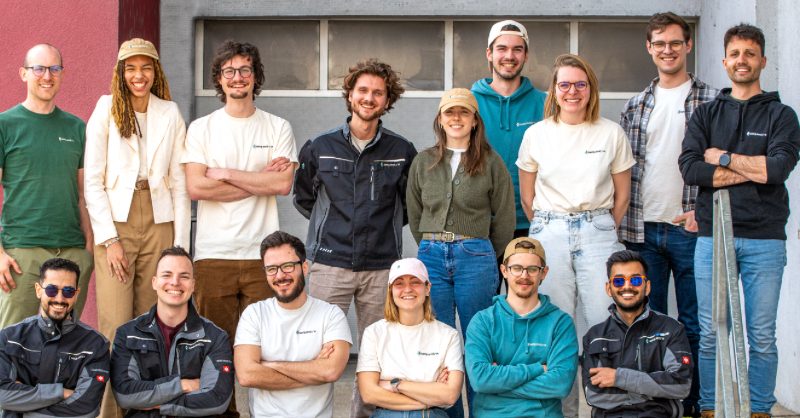
Sequestra secures fresh capital for carbon-to-stone tech
Climate-tech startup Sequestra has raised €3 million to scale a novel process that converts industrial CO2 emissions and waste streams into stone-like materials, aiming to turn one of the world’s biggest environmental liabilities into a valuable resource.
The early-stage funding round will support the development and commercial deployment of the company’s proprietary carbon mineralisation technology. By reacting captured industrial CO2 with specific waste by-products, Sequestra accelerates natural rock-forming processes, producing stable carbonates that permanently lock away carbon.
From slag and waste to permanent carbon storage
Sequestra focuses on integrating its solution directly into heavy industry, targeting sectors such as steel, cement and chemicals, where hard-to-abate emissions remain a critical climate challenge. The company’s process uses industrial residues like slag and other mineral-rich waste as feedstock, transforming them into usable aggregates and stone-like materials for construction and infrastructure.
According to the company, this approach not only delivers durable carbon sequestration, but also helps partners reduce disposal costs and create new revenue streams from previously unusable waste. The resulting materials can be used in applications such as concrete, road building and other structural products, embedding captured carbon in long-lived assets.
Scaling industrial decarbonisation and circularity
The €3 million injection will be channelled into pilot projects with major industrial partners, optimisation of process engineering and the build-out of commercial-scale facilities. By aligning with existing production lines, Sequestra aims to minimise disruption while offering a practical route to meet tightening emissions regulations and corporate net-zero commitments.
Investors are betting that combining permanent carbon removal with a clear business case for waste valorisation will give Sequestra an edge in the fast-growing carbontech and circular economy markets. If successfully scaled, the company’s model could help decarbonise some of the most polluting industries while supplying low-carbon materials to the global construction sector.