

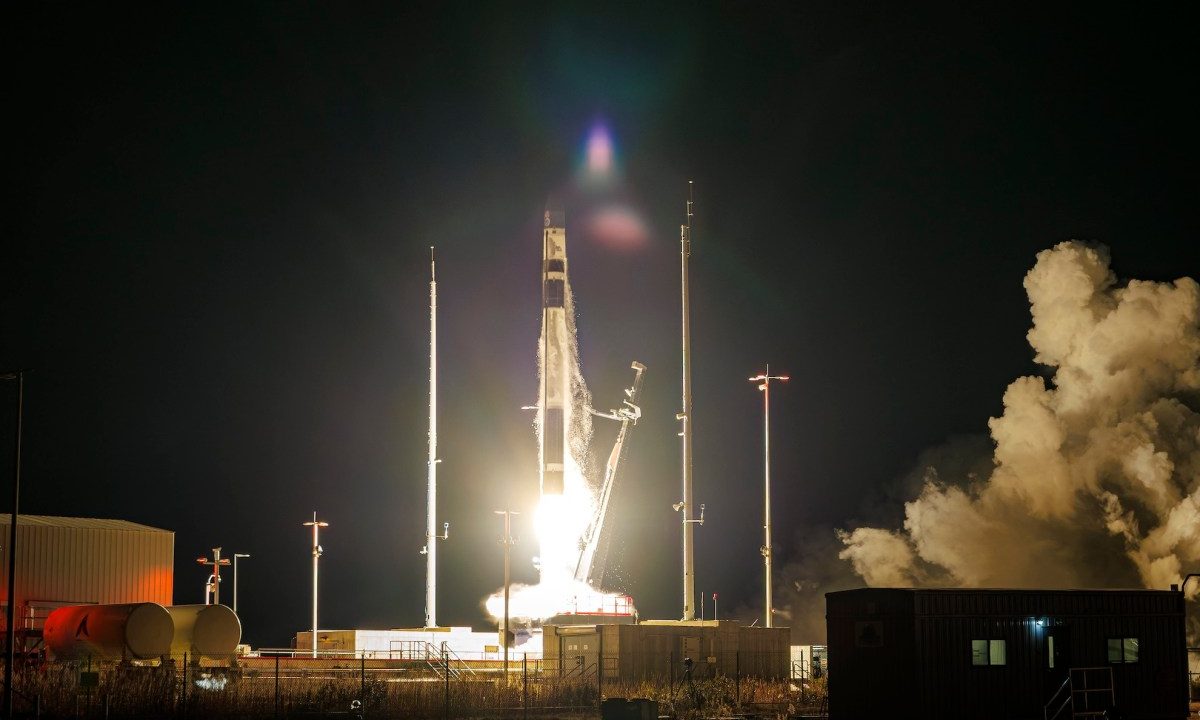
Rocket Lab has won an $816 million U.S. government contract to design and build a new batch of defense-focused satellites, marking the company’s largest award to date and underscoring its push to be seen as more than a launch provider.
The contract comes from the U.S. Space Development Agency (SDA), which selected Rocket Lab as a prime contractor to deliver 18 satellites for the agency’s Tracking Layer Tranche 3 effort. According to the company, the spacecraft will carry advanced sensors designed for missile warning, missile tracking, and broader missile defense missions in low Earth orbit.
What Rocket Lab is building for the SDA
Rocket Lab said its SDA award covers the design and manufacture of 18 satellites equipped with “advanced missile warning, tracking, and defense sensors.” The work supports the SDA’s Tracking Layer, a program intended to expand the U.S. military’s ability to detect and track threats from orbit and distribute that information quickly across defense networks.
While Rocket Lab is widely known for its Electron rocket and for building space hardware for commercial and government customers, the SDA contract highlights the company’s growing role as a spacecraft manufacturer delivering complete mission capabilities, not just components.
Tracking Layer Tranche 3: a defense priority in orbit
The Tracking Layer is part of a broader U.S. effort to deploy resilient, proliferated constellations in low Earth orbit, where many smaller satellites can provide coverage and redundancy compared with fewer, larger spacecraft in higher orbits. For missile warning and tracking, this approach is intended to strengthen detection timelines and reduce single points of failure.
Rocket Lab’s 18-satellite award positions the company inside one of the Pentagon’s most closely watched space architectures, where speed of deployment, manufacturing scale, and integration with defense networks are central requirements.
How this fits with Rocket Lab’s existing SDA work
The new $816 million award is separate from Rocket Lab’s earlier $515 million contract tied to the SDA’s Transport Layer-Beta Tranche 2 program. That initiative is designed to build a satellite communications network that can move encrypted, low-latency data through space to support military operations.
Taken together, Rocket Lab’s SDA contracts now exceed $1.3 billion in total value, reflecting a rapid expansion of its defense backlog and giving the company a larger footprint across multiple layers of the SDA’s architecture.
Transport Layer vs. Tracking Layer: different jobs, shared architecture
In simple terms, the Tracking Layer focuses on sensing and identifying threats, while the Transport Layer is built to move data quickly and securely across the constellation and down to users. The SDA’s model depends on both layers operating in concert, which is why suppliers that can deliver reliable spacecraft at scale are increasingly sought after.
Rocket Lab’s presence in both areas signals that the company is becoming a repeat vendor for the SDA, a dynamic that can matter in future tranches as the agency continues to refresh and expand its constellations.
Why the $816 million award matters for Rocket Lab
For Rocket Lab, the deal is significant not only for its size but for what it implies about the company’s strategy. The firm has been working to broaden its identity beyond “rocket company” into a diversified space prime that can deliver satellites, subsystems, and end-to-end mission solutions for government and commercial customers.
Large defense contracts can provide longer planning horizons than many commercial space projects, potentially smoothing revenue cycles and supporting investments in production capacity. They also raise the bar for compliance, security, and systems engineering, which can strengthen a supplier’s credibility across the broader aerospace market.
- Scale and repeatability: Building 18 satellites under a prime contract spotlights manufacturing throughput and program management.
- Mission-critical payload integration: Missile warning and tracking sensors require tight integration, testing, and reliability.
- Positioning for future bids: A major SDA win can be a reference point when pursuing other defense initiatives.
Broader context: defense space is reshaping the commercial market
Rocket Lab’s latest SDA win arrives amid intensifying competition among space companies seeking defense work as the U.S. government accelerates the shift toward proliferated constellations and faster procurement cycles. The SDA’s approach, in particular, has encouraged vendors to build production lines capable of delivering satellites more like industrial products than bespoke spacecraft.
Rocket Lab has also indicated it plans to pursue additional Department of Defense opportunities, including multibillion-dollar initiatives such as Golden Dome, as it continues to expand its defense portfolio.
What to watch next
Key questions now include how quickly Rocket Lab can progress from contract award to production milestones, how the SDA schedules launches and on-orbit deployment for Tranche 3, and whether Rocket Lab’s growing government backlog translates into further prime roles across other layers or future tranches.
With the $816 million award added to its existing SDA work, Rocket Lab is strengthening its role in the U.S. defense space buildout at a time when missile warning, tracking, and resilient communications are becoming central pillars of national security strategy.