

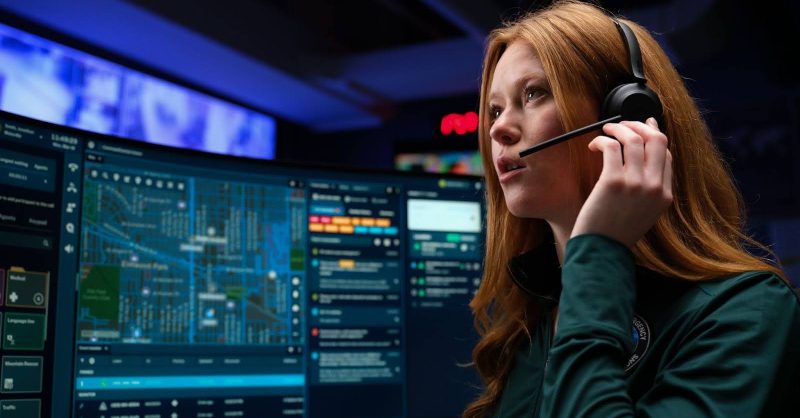
Public Safety AI Becomes a Strategic Technology Battleground
The emerging market for public safety AI is rapidly transforming how cities, law enforcement agencies and emergency services operate. As governments seek tools to manage rising urban complexity, vendors are racing to deploy AI algorithms that promise faster response times, crime reduction and more efficient use of resources.
From intelligent surveillance systems to real‑time incident analytics, the sector is drawing increasing attention from both traditional security providers and high‑growth technology startups. Investors see an opportunity in platforms that can integrate video feeds, sensor data and historical records into unified, actionable dashboards for public agencies.
Key Use Cases: From Surveillance to Predictive Policing
AI‑driven monitoring and incident detection
Modern public safety platforms rely on computer vision and machine learning to automatically detect threats, suspicious behaviour or emergencies across transport hubs, public squares and critical infrastructure. Instead of passively storing footage, cameras equipped with real‑time analytics can flag anomalies, track crowd density or identify vehicles involved in incidents.
Predictive analytics for resource deployment
Another fast‑growing segment is predictive policing and risk forecasting. By analysing historical crime data, weather, events and mobility patterns, AI models can suggest where to deploy patrols or emergency units. Proponents argue this leads to more efficient use of limited personnel and budgets, while critics warn of algorithmic bias and opaque decision‑making.
Ethics, Privacy and Regulation at the Forefront
The same capabilities that make public safety AI attractive also raise profound questions about civil liberties. Large‑scale facial recognition, long‑term data retention and automated risk scoring systems are under scrutiny from regulators, privacy advocates and citizens.
Frameworks such as the EU’s emerging rules on high‑risk AI systems and various national data protection laws are pushing vendors to incorporate stronger safeguards. These include strict access controls, audit trails, bias testing and options to disable or limit biometric identification.
Market Outlook: Collaboration Will Define Winners
Analysts expect the public safety AI market to grow sharply as cities modernise infrastructure and seek resilience against crime, natural disasters and large‑scale events. Success will depend on close collaboration between technology providers, public agencies and communities to balance innovation with accountability.
Vendors that can demonstrate transparent governance, measurable outcomes and respect for data privacy are likely to become trusted partners in this new era of AI‑enabled public safety.