

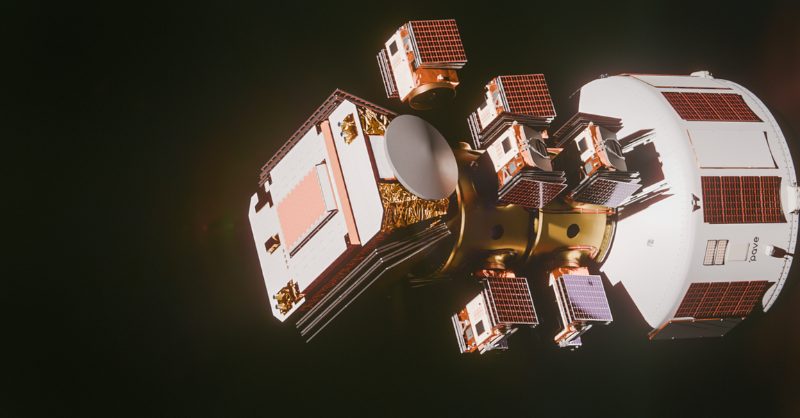
PAVE Space lands $40M seed to transform satellite logistics
Swiss startup PAVE Space has raised a landmark $40 million seed round to develop a new generation of orbital transfer vehicles designed to radically accelerate how satellites reach their final orbits. The round is led by European investors Visionaries Club and Creandum, underscoring growing confidence in space infrastructure as a core layer of the global economy.
From months to hours in orbit
Today, many commercial and government satellites wait months to maneuver from their initial drop-off point after launch to their operational orbit, relying on limited onboard propulsion and complex mission planning. PAVE Space aims to compress that timeline to mere hours using reusable orbital transfer vehicles (OTVs) that act as in-space tugs.
These OTVs are designed to collect satellites from a shared launch and deliver them precisely to their target orbits, enabling faster activation of telecommunications, Earth observation, and navigation services. Faster deployment can significantly improve revenue timing for satellite operators and enhance responsiveness for government and defense customers.
Backers bet on orbital infrastructure
Lead investors Visionaries Club and Creandum are known for backing high-growth European technology companies. Their investment in PAVE Space highlights a broader shift of venture capital into space infrastructure, moving beyond launch providers to focus on the critical in-orbit layer.
The fresh capital will be used to scale engineering teams, finalize vehicle design, and prepare initial demonstration missions. By offering a more flexible, on-demand model for satellite deployment, PAVE Space is positioning itself as a key logistics partner for the rapidly expanding low Earth orbit (LEO) ecosystem.
Implications for the satellite industry
If successful, PAVE Space‘s technology could reduce mission complexity, lower fuel requirements for satellites, and open the door to new business models such as in-orbit servicing and responsive launch. For operators, the ability to activate constellations in hours rather than months could become a decisive competitive advantage in an increasingly crowded orbital environment.