

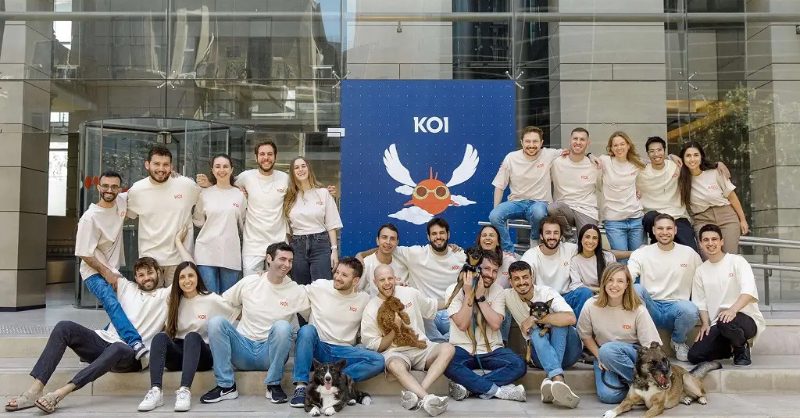
Palo Alto Networks prepares $400M move for Israeli Koi
Palo Alto Networks, one of the world’s largest listed cybersecurity companies, is reportedly nearing a roughly $400 million acquisition of Israeli security startup Koi, according to people familiar with the talks. The deal, if completed, would mark the company’s first major Israeli transaction since the tenure of former chief executive Mark McLaughlin and the later, highly influential era of former president Nir Zuk, the celebrated Israeli-born co‑founder who helped shape the company’s early technology roadmap.
The prospective acquisition underlines how strategic Israel’s innovation ecosystem remains to global cloud security and AI-driven threat detection, even amid geopolitical tension and a more cautious global funding environment.
First Israel deal in the post‑Zuk phase
While Palo Alto Networks has long had engineering, R&D, and customer operations in Israel, the reported move for Koi would be its first headline-making Israeli deal since the departure of key founding figure Nir Zuk from day‑to‑day leadership. Zuk, who previously worked at Check Point and helped pioneer next‑generation firewalls, played a central role in the company’s early M&A strategy and in cultivating ties with Israeli founders.
Industry observers see the potential acquisition as a signal that the company’s current leadership under CEO Nikesh Arora is ready to re‑engage more aggressively with Israel’s deep pool of cyber talent, particularly in areas like cloud-native security, zero trust architectures, and AI-powered analytics.
Who is Koi and why does it matter?
Though Koi remains relatively under the radar compared with Israel’s best-known unicorns, sources in the local ecosystem describe it as a fast‑growing security startup focused on protecting modern, distributed infrastructure. Its technology is believed to sit at the intersection of cloud workloads, API security, and data observability, offering enterprises real‑time visibility into how sensitive information flows across microservices and multi‑cloud environments.
For a platform vendor like Palo Alto Networks, integrating such capabilities could help close gaps between its existing network security, endpoint protection, and cloud security posture management (CSPM) offerings. Customers increasingly want unified views of risk rather than fragmented tools, and acquisitions like Koi are a way to accelerate that consolidation.
Strategic fit within Palo Alto’s platform vision
Over the past several years, Palo Alto Networks has repositioned itself from a pure firewall company to a broad security platform, investing heavily in SASE (Secure Access Service Edge), XDR (Extended Detection and Response), and AI algorithms that correlate signals across the enterprise. A company like Koi can strengthen that strategy in three critical ways:
- Deepening visibility into cloud-native applications and microservices.
- Enhancing runtime protection for workloads running in containers and serverless environments.
- Feeding richer telemetry into Palo Alto’s AI-driven analytics engines to detect sophisticated threats faster.
For security buyers, the appeal lies in reducing the complexity of managing dozens of point solutions while still keeping pace with rapidly evolving attack techniques.
Why Israel remains a cybersecurity powerhouse
Israel has long been a central node in the global cybersecurity landscape, producing category-defining companies in network defense, application security, and threat intelligence. Many founders and engineers come from elite military intelligence units, bringing deep expertise in offensive and defensive cyber operations.
For multinational vendors like Palo Alto Networks, acquiring in Israel is not just about technology; it is also about talent. Teams in Tel Aviv, Beersheba, and other hubs are known for rapid experimentation, strong cryptography skills, and an ability to productize complex security concepts for large enterprises.
Signals for the wider M&A and VC market
A roughly $400 million price tag for Koi would send an important signal to investors and founders after a period of valuation resets and slower deal flow. It would show that strategic buyers are still willing to pay substantial premiums for differentiated cloud security and AI security capabilities, even if late‑stage funding rounds have become more conservative.
For venture capital firms backing Israeli startups, a successful exit to Palo Alto Networks could help unlock new fundraising and encourage more seed‑stage bets on ambitious security concepts, from post‑quantum cryptography to identity threat detection.
Competitive landscape: race for cloud and AI security
The potential Koi deal also reflects the intensifying competition among large security vendors. Rivals such as CrowdStrike, Fortinet, Check Point, and Microsoft are all racing to offer end‑to‑end platforms that secure users, devices, networks, and cloud environments with embedded AI algorithms.
As enterprises shift workloads to public cloud and adopt generative AI tools, the attack surface expands dramatically. Adversaries are already exploiting misconfigured APIs, unsecured data lakes, and vulnerable machine learning pipelines. Vendors that can combine deep visibility with automated response stand to capture a disproportionate share of future security budgets.
By moving on Koi, Palo Alto Networks appears intent on staying ahead of that curve, adding specialized capabilities rather than relying solely on organic R&D.
What comes next
The transaction has not yet been formally announced, and terms could still change or negotiations could falter. Neither Palo Alto Networks nor Koi has publicly commented on the reported talks. However, the scale of the rumored price and the strategic logic behind the pairing suggest that both sides see substantial value in a combination.
If completed, the acquisition would reinforce Israel’s status as a cornerstone of global cybersecurity innovation and confirm that leading platform vendors are still willing to make bold bets, even in a more disciplined market. For customers, it would likely translate into tighter integration of cloud-native security features within Palo Alto’s portfolio and a more unified approach to defending modern digital infrastructure.
For the broader industry, the Koi deal would underscore a simple reality: in the era of AI-driven cyber threats and sprawling cloud architectures, strategic M&A remains one of the fastest ways for incumbents to keep pace with the frontier of security innovation.