

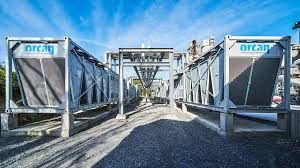
Orcan Energy steps into the AI infrastructure bottleneck
As the global race to scale AI infrastructure accelerates, a new constraint is emerging as the decisive brake on progress: energy. Hyperscale data centers, which power advanced AI models and cloud services, are increasingly delayed not by access to chips or capital, but by limited grid capacity and long lead times for traditional power equipment.
German clean-tech company Orcan Energy is positioning its technology as a pragmatic answer to this bottleneck. Instead of relying solely on new grid connections or large-scale generation projects, the company focuses on turning existing waste heat into usable electricity, adding capacity where it is needed most.
Turning waste heat into scalable power
Orcan Energy develops modular waste-heat-to-power systems that can be integrated into industrial facilities, power plants and increasingly, energy-hungry AI data centers. By capturing low- and medium-temperature waste heat that would otherwise be released into the environment, its units generate additional power without extra fuel consumption.
This approach directly addresses two challenges facing AI operators: constrained grid access and rising energy costs. Because the systems are containerized and standardized, they can typically be deployed far faster than new grid infrastructure or large on-site generation, helping data center operators add incremental megawatts of capacity on shorter timelines.
Why AI growth is colliding with the power system
The rapid adoption of generative AI and large foundation models has driven a surge in demand for compute, forcing hyperscalers to expand existing campuses and build new ones across Europe, North America and Asia. However, utilities in many regions warn that available capacity is already committed, and new grid connections can take years.
At the same time, supply chains for key power generation equipment—including transformers, turbines and high-voltage components—are stretched. This combination means that even well-funded AI projects risk delays simply because they cannot secure reliable, sufficient power.
Positioning waste heat as a strategic AI asset
By reframing waste heat as an asset rather than a by-product, Orcan Energy offers AI operators a way to enhance energy efficiency, reduce carbon emissions and unlock additional power without waiting for full-scale grid upgrades. For utilities and policymakers, such technologies provide a bridge solution that can support digitalization and decarbonization goals simultaneously.
As competition in AI intensifies, the companies that can secure and optimize their energy supply will gain a decisive advantage. Technologies that convert waste heat into power are likely to become a core element of the next generation of AI-ready data center design.