

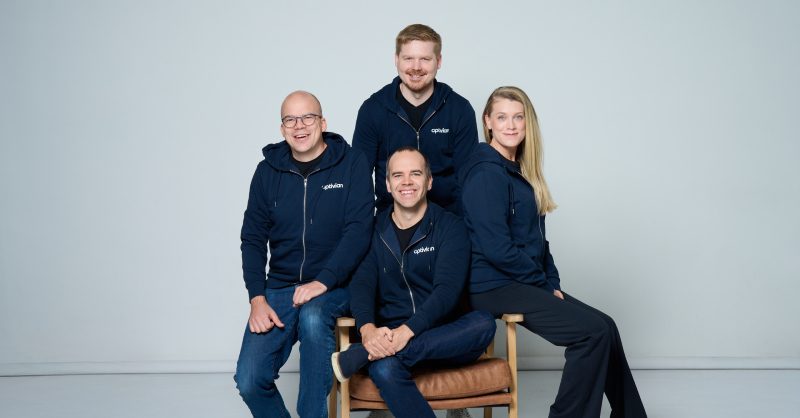
Optivian secures $2.3M to automate end-to-end sales
Finnish startup Optivian has raised $2.3 million in early-stage funding to build a new generation of autonomous AI agents capable of performing the work of entire B2B sales teams. The company aims to replace fragmented tools and manual workflows with a single, continuously operating digital sales workforce.
AI agents designed to replace traditional sales teams
Optivian is developing software agents that can manage the full sales funnel: from prospecting and lead qualification to outreach, follow-up, and even deal closing. Instead of sales representatives juggling multiple CRMs, email tools, and analytics dashboards, the platform is intended to let businesses deploy AI-driven agents that work around the clock.
The startup leverages advanced natural language processing, AI algorithms, and integration with existing CRM platforms to personalise communication at scale. These agents can analyse buyer intent, adapt messaging in real time, and coordinate multi-channel campaigns without human intervention.
Funding to accelerate product and market expansion
The $2.3 million injection will be used to expand engineering capacity, enhance the underlying AI models, and grow commercial operations across Europe and North America. The company is targeting fast-growing SaaS firms and mid-market enterprises that are under pressure to increase revenue efficiency while controlling headcount.
Investors are betting that rising customer acquisition costs and the rapid maturation of generative AI will push more companies toward automation-first sales strategies. By positioning its agents as a substitute for traditional teams rather than just another sales enablement tool, Optivian is entering a competitive but rapidly expanding segment of the AI-driven sales automation market.
Implications for the future of commercial work
The model proposed by Optivian raises broader questions about the future of white-collar roles. As autonomous agents take on complex, relationship-driven tasks, businesses may shift human sales professionals toward strategic account management and product-led growth, while leaving repetitive outreach and qualification to software. If successful, this approach could reshape how B2B sales organisations are structured over the next decade.