

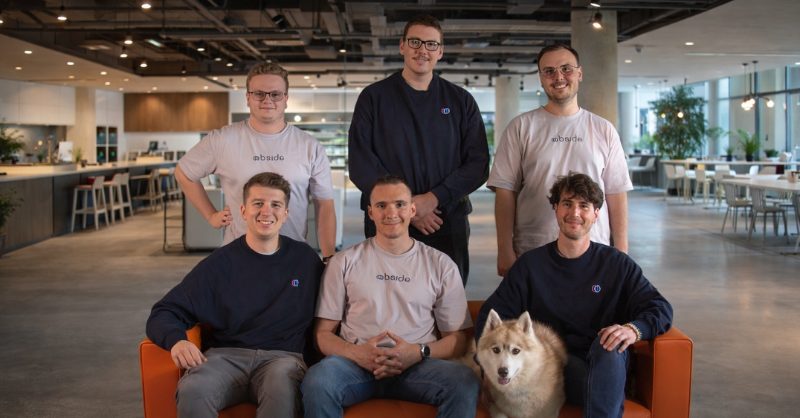
Obside closes €500K round to democratise automated stock trading
European fintech startup Obside has secured a €500,000 funding round to make algorithmic trading and automated stock strategies accessible to everyday investors, not just hedge funds and professional traders. The fresh capital will support product development, regulatory compliance and go-to-market efforts as the company positions itself at the intersection of fintech, retail investing and no-code automation.
Bringing algorithmic trading to the masses
For years, algorithmic trading has been dominated by institutional players with access to specialised engineers, proprietary data feeds and high-performance infrastructure. Obside aims to level that playing field by offering a platform where users can design, test and deploy automated trading strategies without writing a single line of code.
The startup’s core product combines a visual strategy builder with integrated brokerage connections and risk controls. Users can link their existing brokerage accounts, define rules based on price movements, technical indicators or portfolio allocations, and allow the system to execute trades automatically according to those rules.
Instead of relying on manual trading or copying social trading signals, investors can formalise their own logic: for example, buying a stock when it breaks a moving average, rebalancing a portfolio monthly, or automatically taking profits at predefined thresholds. Obside then translates those rules into executable trading algorithms that run continuously in the background.
No-code tools, backtesting and risk management
Visual strategy builder for non-programmers
The platform’s no-code interface is designed for investors who understand markets but not necessarily programming. Through drag-and-drop components, users can construct workflows that resemble flowcharts: conditions, triggers and actions. Each block corresponds to a trading rule, such as entering a position, adjusting a stop-loss or closing a trade when volatility spikes.
This approach mirrors the broader rise of no-code platforms in software development and workflow automation, but applied to the world of capital markets. It allows more people to experiment with systematic trading, where decisions are rule-based rather than emotional or impulsive.
Historical backtesting before real money is at risk
One of the biggest risks in retail algorithmic trading is deploying untested strategies directly into live markets. Obside addresses this by integrating robust backtesting tools. Users can run their strategies against years of historical price data to see how they would have performed under different market conditions, including bull runs, crashes and sideways periods.
Performance metrics such as drawdown, risk-adjusted return, win-loss ratio and trade frequency are surfaced in dashboards, helping investors refine their logic before committing capital. Paper trading and sandbox modes further allow users to simulate live execution without risking real funds.
Embedded risk controls and compliance focus
Retail investors often underestimate risk when experimenting with leverage, derivatives or highly volatile stocks. Obside builds in guardrails such as maximum position size, portfolio-level risk limits, automatic stop-losses and daily loss caps. These controls are designed to reduce the chance of catastrophic losses from a single faulty rule or market shock.
The company is also investing part of the €500,000 round into strengthening its regulatory compliance posture, including alignment with MiFID II rules in Europe, robust data protection practices and clear disclosures around the risks of automated trading. By framing itself as an infrastructure layer that sits on top of regulated brokerages, Obside seeks to balance innovation with investor protection.
Why investors are backing retail automation now
The funding comes amid a broader shift in how individuals interact with financial markets. Over the past decade, the rise of zero-commission trading, mobile-first brokerages and social investing has dramatically expanded retail participation. Yet while access to markets has improved, access to professional-grade trading tools and disciplined strategies has lagged behind.
Investors in Obside are betting that the next wave of innovation will focus less on cheap execution and more on smarter, automated decision-making. By turning discretionary trading habits into codified rules, platforms like Obside promise more consistent behaviour, reduced emotional bias and the ability to run multiple strategies in parallel.
The €500,000 round, though modest by late-stage standards, is meaningful for an early-stage fintech player focused on infrastructure and product refinement. The capital will help the company expand engineering headcount, improve integrations with major brokers and enhance its user education initiatives.
Education as a core pillar of adoption
Because algorithmic trading can be complex and intimidating, Obside plans to invest heavily in educational content and community-building. Tutorials, strategy templates and explainer materials on topics like risk management, position sizing and portfolio diversification will be integrated directly into the platform.
Community features are expected to include the ability to share strategies, clone public templates and discuss performance characteristics with other users. While the company must navigate regulatory boundaries around investment advice, curated learning resources and transparent analytics can help users make more informed choices.
Competitive landscape and future roadmap
Obside enters a competitive arena that includes traditional trading platforms, specialised quant tools and emerging robo-advisors. Its differentiation lies in targeting users who want more control than a passive robo-portfolio offers, but who lack the technical background required by professional quant software.
In the near term, the startup is expected to focus on equities and exchange-traded funds, with potential expansion into options, forex and crypto assets where regulations allow. Deeper API integrations with brokers, more advanced data analytics and additional machine learning-driven insights are also likely to feature on its roadmap.
As retail investors continue to demand more sophisticated tools, the success of Obside will hinge on its ability to combine institutional-grade automation with intuitive design and strong safeguards. The new €500,000 injection gives the startup runway to prove that everyday investors can safely harness the power of automated trading when given the right infrastructure.