

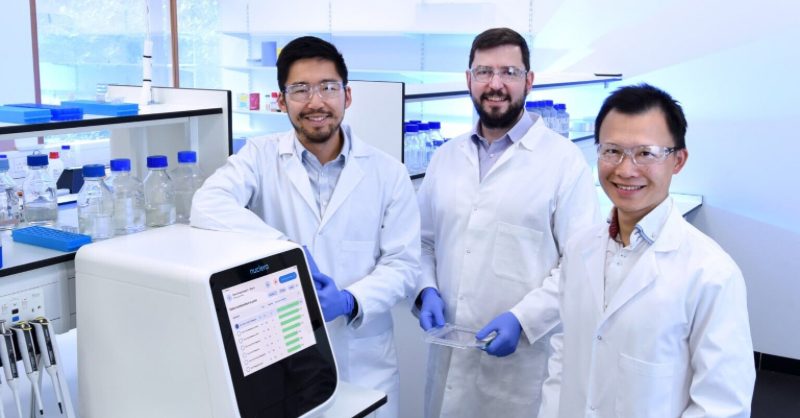
Nuclera secures fresh $12M to accelerate drug discovery
Nuclera, an emerging UK-based biotech startup, has raised an additional $12 million as part of its Series C financing round, reinforcing investor confidence in its mission to radically shorten the time it takes to discover and develop new drugs. The fresh capital will support the company’s proprietary platform for rapid protein production and on-demand access to biological materials that are central to modern drug discovery workflows.
A new push to compress drug discovery timelines
Traditional drug discovery is slow, expensive, and resource intensive. Researchers often wait weeks or months for custom proteins, enzymes, and other biological reagents before they can even begin critical experiments. Nuclera aims to collapse that waiting period into days or even hours by integrating advanced microfluidics, synthetic biology, and automated lab instrumentation into a cohesive platform.
By securing this additional $12 million in Series C funding, the company is doubling down on its core objective: to give scientists near-instant access to functional proteins and biological targets, thereby compressing the early stages of drug development and enabling more rapid iteration on promising therapeutic candidates.
How Nuclera’s technology fits into modern biopharma
The global biopharmaceutical industry is under pressure to deliver new treatments faster, especially in areas such as oncology, rare diseases, and infectious diseases. A significant bottleneck lies in the production and characterization of proteins and other biomolecules that serve as drug targets or therapeutic agents.
Nuclera is building a platform that brings this capability directly into the hands of researchers. Instead of outsourcing protein expression and purification to specialized facilities, scientists can rely on Nuclera’s integrated system to generate the proteins they need on demand. This approach reduces:
- Lead times for obtaining novel or complex proteins
- Dependency on external contract research organizations
- Overall experimental costs at the early discovery stage
In practice, Nuclera’s technology is designed to plug into existing drug discovery pipelines, supporting applications such as target validation, assay development, high-throughput screening, and early-stage biologics engineering.
Strategic use of the new Series C funding
The additional $12 million in Series C capital will be directed toward several strategic priorities that are critical for scaling the company from a promising startup into a mainstream platform provider for the life sciences sector.
Scaling product development and engineering
A key focus will be accelerating the engineering roadmap for Nuclera’s hardware and software stack. This includes refining the company’s automated instruments, enhancing the reliability and throughput of its microfluidic systems, and expanding the range of proteins and biomolecules that can be produced on the platform.
Investment will also go into strengthening the underlying bioinformatics and data analytics layers, enabling researchers to better design constructs, optimize expression conditions, and interpret experimental results more efficiently.
Expanding commercial reach
Beyond technology development, the new funding will help Nuclera scale its commercial operations. The company is expected to grow its sales and customer success teams, targeting pharmaceutical companies, biotech startups, academic labs, and contract research organizations that are looking to compress their discovery timelines.
By building a broader footprint in key markets such as North America, Europe, and Asia-Pacific, Nuclera aims to position its platform as a standard component in modern drug discovery infrastructure.
Why investors are backing Nuclera’s vision
The additional $12 million extension to the Series C round signals a strong vote of confidence from existing and potentially new investors. The funding reflects growing recognition that improving the speed and flexibility of early-stage discovery can have an outsized impact on the economics of pharmaceutical R&D.
Investors see clear value in technologies that reduce the risk and cost associated with advancing new drug candidates. By enabling rapid, iterative experimentation, platforms like Nuclera’s can help researchers discard non-viable leads earlier and double down on more promising therapeutic approaches.
This is particularly relevant as the industry embraces modalities such as biologics, gene therapies, and RNA-based medicines, all of which depend on complex protein engineering and characterization workflows.
Positioning within the competitive biotech tools landscape
The market for advanced lab automation and biotech tools has grown rapidly over the past decade, with multiple players focusing on DNA synthesis, protein engineering, and high-throughput experimentation. Nuclera is carving out a niche by tightly integrating hardware, consumables, and software into a single, user-friendly platform that emphasizes speed and accessibility.
Rather than requiring specialized expertise or large infrastructure, Nuclera’s model is designed to bring sophisticated protein engineering capabilities into standard research environments. This democratization of access aligns with broader trends in the sector, where tools that were once confined to elite labs are becoming widely available to smaller biotech companies and academic groups.
Implications for the future of drug discovery
As pharmaceutical and biotech companies seek ways to respond faster to emerging health threats and unmet medical needs, the ability to rapidly test hypotheses and iterate on drug candidates becomes a core competitive advantage. By focusing on compressing the time between idea and experiment, Nuclera is positioning itself as an enabling technology provider for the next generation of therapeutics.
The new $12 million in Series C financing strengthens the company’s runway to execute on this vision. If Nuclera can successfully scale its platform and demonstrate consistent, reproducible performance across diverse research settings, it stands to become a key player in reshaping how early-stage drug discovery is conducted worldwide.
For researchers and companies alike, the promise is clear: faster access to critical biological materials, more efficient experimentation, and ultimately, a more agile path from scientific insight to potential treatment.