

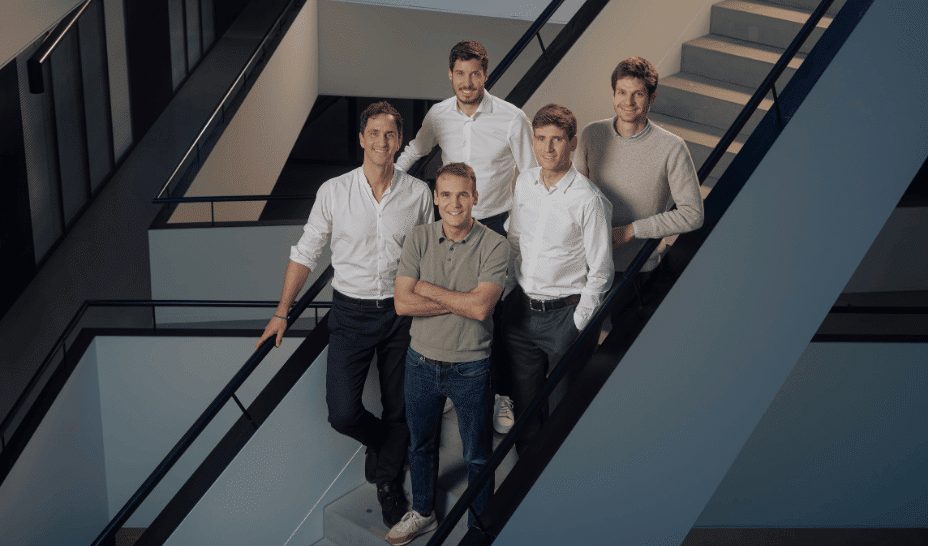
Dailyza reports that Swiss-based Neural Concept has raised €85 million in fresh funding, spotlighting a growing investor appetite for industrial AI that can shorten product development cycles and reduce costly trial-and-error in engineering. The round also underscores the company’s expanding ecosystem, with Nvidia, Siemens and Microsoft named as partners—three heavyweight signals that “AI for engineering” is moving from promising pilots to scaled deployment across manufacturing.
A funding round aimed at industrial-scale AI
The €85 million raise positions Neural Concept among Europe’s better-capitalized industrial AI players at a time when manufacturers are under pressure to innovate faster, meet tighter sustainability requirements, and navigate volatile supply chains. While consumer AI often grabs headlines, industrial applications are where many enterprises expect measurable returns: fewer physical prototypes, faster simulation cycles, and improved performance in complex systems such as aerodynamics, thermal management, structural strength, and energy efficiency.
In practical terms, the funding is expected to accelerate product development, expand commercial reach, and deepen research into AI models that can learn from engineering data—especially simulation results—without sacrificing the accuracy and reliability required for safety-critical industries.
Why Nvidia, Siemens and Microsoft matter
Partnerships with Nvidia, Siemens and Microsoft are strategically significant because they map to the three pillars industrial AI companies must win: compute, workflow integration, and enterprise-grade cloud distribution.
-
Nvidia is central to high-performance AI training and inference, particularly for compute-heavy engineering workloads. Industrial AI models often require substantial GPU resources to train on large datasets and to deliver fast predictions that can be used inside iterative design loops.
-
Siemens brings credibility and reach into engineering and manufacturing software ecosystems, where adoption depends on fitting into established toolchains for CAD, CAE, simulation, and product lifecycle management. For many customers, the question is not whether AI works in isolation, but whether it integrates into existing engineering processes.
-
Microsoft adds a pathway to enterprise procurement and scalable deployment through cloud infrastructure and commercial channels. For industrial clients, security, compliance, uptime, and global availability can be as decisive as model performance.
Together, these partnerships suggest Neural Concept is positioning itself not merely as a point solution, but as a layer that can sit inside mainstream engineering environments—where the largest budgets and longest-term contracts typically live.
What Neural Concept’s technology targets
Neural Concept operates in the fast-growing field of AI-assisted engineering, often associated with generative design, surrogate modeling, and AI-accelerated simulation. Traditional engineering simulation can be computationally expensive and time-consuming, particularly when teams must evaluate thousands of design variations. AI approaches aim to predict outcomes faster, enabling engineers to explore wider design spaces earlier in the process.
This is especially relevant for industries where small performance gains translate into large commercial or environmental benefits. In automotive and aerospace, for example, marginal improvements in drag reduction can compound into fuel savings and emissions reductions. In electronics and industrial equipment, better thermal performance can improve reliability and extend product life. In energy systems, optimized components can increase efficiency and reduce operating costs.
From prototypes to production workflows
A key challenge in industrial AI is moving beyond impressive demos to robust production workflows. Engineering organizations demand traceability, repeatability, and confidence intervals—particularly when outputs influence decisions that affect safety, certification, and warranty risk. Companies adopting AI tools also need governance around data quality and model drift, as engineering data evolves over time with new materials, manufacturing methods, and regulatory constraints.
This is where partnerships and funding can make a difference: scaling implementation teams, building integrations, and supporting customer success programs can be as important as improving model accuracy.
Why investors are backing industrial AI now
The timing of the round aligns with broader market forces. Manufacturers are attempting to digitize engineering and operations, while also confronting rising costs and competitive pressure to shorten time-to-market. AI tools that reduce simulation time or cut the number of physical prototypes can deliver tangible savings, which is attractive during periods of tighter capital discipline.
At the same time, advances in AI algorithms and the availability of GPU compute have made it more feasible to apply machine learning to physics-informed problems. Engineering datasets—often generated through simulation—can be structured in ways that are well-suited to modern AI techniques, provided companies can manage data pipelines and integrate outputs into decision-making systems.
Europe’s position in deep tech and engineering software
Neural Concept also highlights Europe’s strength in deep tech tied to industrial capabilities. The continent has a dense base of advanced manufacturers, automotive suppliers, industrial automation leaders, and engineering talent. That creates both a demanding customer base and a rich environment for building products that solve real operational problems.
However, scaling remains the perennial challenge. Many European startups must expand internationally early, competing with well-funded US players and navigating long enterprise sales cycles. A round of this size can provide the runway needed to invest in global go-to-market efforts while continuing to innovate.
What to watch next
With €85 million in new capital and partnerships spanning compute, industrial software, and cloud infrastructure, the next phase for Neural Concept will likely be judged on execution: customer adoption at scale, deeper integrations into engineering workflows, and measurable outcomes such as reduced development time, improved product performance, and lower prototype costs.
For the wider market, the deal is another sign that industrial AI is entering a more mature era—one where funding headlines matter less than deployment, reliability, and the ability to deliver engineering results that stand up to real-world constraints.