

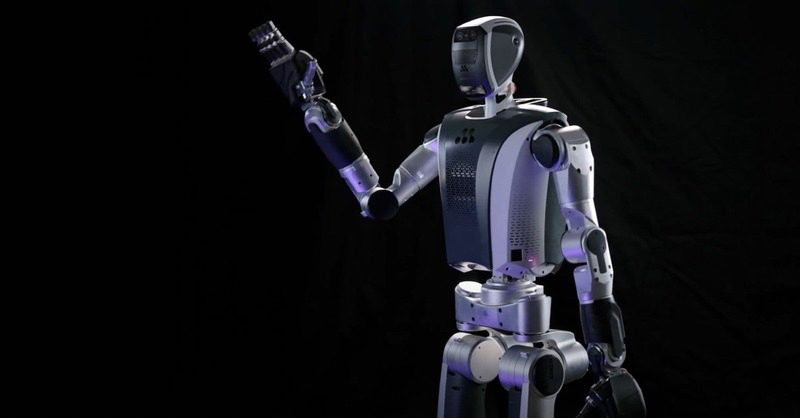
Mobileye 3.0 vision unveiled alongside Mentee Robotics acquisition
Mobileye, a global leader in advanced driver-assistance systems and autonomous driving technologies, has introduced a new strategic phase that co-founder and president Amnon Shashua calls “Mobileye 3.0.” As part of this vision, the company has acquired Israeli startup Mentee Robotics, a move that signals an ambitious expansion from vehicle-focused autonomy into broader, AI-driven robotics.
The announcement underscores Mobileye‘s intent to leverage its core strengths in computer vision, sensor fusion, and AI algorithms beyond traditional automotive use cases. By bringing Mentee Robotics into its portfolio, the company is positioning itself at the intersection of autonomous mobility and next-generation robotics, a market increasingly shaped by advances in edge computing and generative AI.
Who is Mentee Robotics and why it matters for Mobileye
Mentee Robotics is an emerging robotics company focused on intelligent, autonomous machines designed to operate in complex real-world environments. Its work spans robot perception, navigation, and human–robot interaction, areas that complement Mobileye‘s existing capabilities in autonomous driving and advanced driver-assistance systems (ADAS).
Strategic fit with Mobileye’s core technology stack
Over the past decade, Mobileye has built one of the most sophisticated stacks for interpreting the road environment using camera-based perception, lidar, and radar, all orchestrated by proprietary AI chips and neural networks. These assets, originally developed for cars, trucks, and robotaxis, can be adapted for mobile robots operating in warehouses, campuses, urban spaces, and industrial sites.
By acquiring Mentee Robotics, Mobileye gains a dedicated team and technology base focused on robot locomotion, manipulation, and task execution. This combination opens the door to robots that can navigate crowded environments using the same level of situational awareness that Mobileye systems already provide on highways and city streets.
Inside the “Mobileye 3.0” strategy
Amnon Shashua has framed “Mobileye 3.0” as the company’s next evolutionary step, moving beyond being a component supplier for automakers into a broader platform for autonomous systems. Earlier phases focused on scaling ADAS and then on higher levels of vehicle autonomy. The new phase extends that logic to any machine that must perceive, decide, and act safely in dynamic environments.
From cars to general-purpose autonomous agents
The core concept behind Mobileye 3.0 is that the same foundational technologies that keep vehicles in their lanes, detect pedestrians, and plan safe trajectories can power a new generation of autonomous agents. These agents may take the form of delivery robots, service robots in public spaces, or industrial machines operating alongside humans.
With Mentee Robotics, Mobileye is gaining expertise in robot control and embodied AI, which focuses on how intelligent systems interact physically with the world. This is a natural complement to Mobileye‘s heritage in perception and decision-making. The combined roadmap is expected to emphasize:
- Highly efficient on-device AI inference for real-time decision-making
- Advanced mapping and localization in indoor and outdoor spaces
- Safe human–robot collaboration in workplaces and public environments
- Scalable software platforms for fleets of autonomous robots and vehicles
Market implications for autonomous mobility and robotics
The acquisition comes at a time when the boundaries between autonomous vehicles and robotics are rapidly blurring. Logistics operators, retailers, and industrial firms are exploring robots for last-mile delivery, inventory management, and routine inspection tasks. At the same time, cities and regulators are grappling with how to integrate a growing variety of autonomous systems into public spaces.
Competitive landscape and ecosystem impact
Global technology leaders are racing to build integrated stacks that span both vehicles and robots. By aligning its automotive-grade safety and reliability standards with Mentee Robotics‘ innovation in mobile robots, Mobileye is signaling that it aims to be a central player in this emerging ecosystem.
Industry observers expect the deal to accelerate the deployment of robots that meet stringent functional safety and regulatory requirements, similar to those governing advanced driver-assistance systems. This could give Mobileye an edge in markets where trust, safety certification, and long-term support are decisive factors.
What the acquisition means for automakers and partners
For automakers already working with Mobileye on ADAS and autonomous driving, the “Mobileye 3.0” strategy offers potential new avenues for collaboration. Vehicle manufacturers increasingly see value in offering integrated services that extend beyond the vehicle itself, such as autonomous delivery solutions, yard logistics, and on-site robotics.
By integrating Mentee Robotics technologies into its platform, Mobileye can support partners that want to deploy cohesive fleets of autonomous vehicles and robots operating under a shared data, mapping, and control infrastructure. This unified approach could reduce development costs, simplify maintenance, and speed up time-to-market for new autonomous services.
Outlook: Mobileye’s broader push into AI-powered autonomy
The unveiling of “Mobileye 3.0” and the acquisition of Mentee Robotics highlight how rapidly the field of AI-powered autonomy is evolving. What began as a focus on driver-assistance features has expanded into a wider ambition: deploying intelligent, connected machines that can safely share spaces with people at scale.
As Mobileye integrates Mentee Robotics‘ expertise, the company is expected to detail more concrete product plans, including reference designs for autonomous robots, software development kits for partners, and new data services that span both vehicles and robots. The move reinforces the company’s role as a key architect of the next era of autonomous mobility and intelligent robotics.
For now, the message from Amnon Shashua and the leadership team is clear: “Mobileye 3.0” is not just an incremental update, but a strategic pivot toward a future where cars and robots share a common, AI-driven brain—and where Mobileye aims to be at the center of that transformation.