

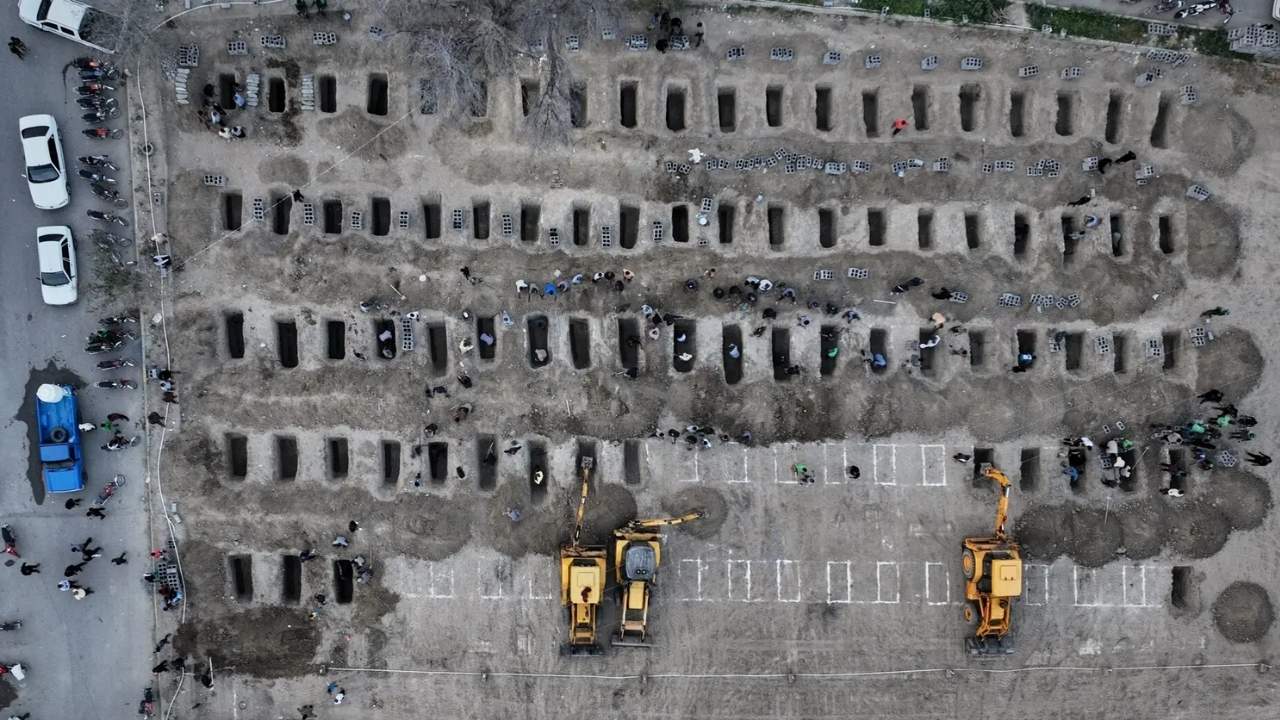
An investigation into the deadly February 28 strike on an Iranian elementary school suggests the tragedy was likely a target misidentification by American forces.
The February 28 bombardment of the Shajarah Tayyebeh elementary school in the southern municipality of Minab has emerged as the most lethal civilian incident since the onset of the recent military engagements involving the United States, Israel, and Iran. While no faction has officially claimed responsibility for the attack, emerging evidence points toward a severe operational error during a broader military campaign.
According to a comprehensive analysis of satellite imagery and verified media by The New York Times, the educational facility suffered catastrophic damage from a precision strike. This event occurred simultaneously with an assault on an adjacent naval installation operated by the Islamic Revolutionary Guards Corps. Local health officials and state media networks in Tehran reported that the casualty count has reached at least 175 individuals, with a significant number of children among the deceased.
To evaluate the extent of the damage, recent satellite visuals were acquired from the commercial provider Planet Labs, which corroborated the timeline of the destruction. The images revealed that multiple highly accurate munitions struck at least six military structures within the I.R.G.C. compound, completely leveling four buildings. The adjacent school building exhibited identical precision impact patterns on its roof.
Official Responses and Ongoing Investigations
Following the incident, government representatives have remained notably cautious. During a recent press briefing at the White House, press secretary Karoline Leavitt stated that the administration was not aware of conducting the specific strike on the school, noting that the Department of War is currently examining the circumstances surrounding the event. Similarly, Defense Secretary Pete Hegseth confirmed that an active investigation is underway.
Addressing the possibility of Israeli involvement, military spokesperson Nadav Shoshani indicated that he possessed no information regarding allied operations in that particular region during the specified timeframe.
However, military briefings have placed American assets directly in the vicinity. Dan Caine, chairman of the Joint Chiefs of Staff, outlined that allied forces were executing operations across southern Iran during the initial phase of the conflict. He specifically noted that the U.S.S. Abraham Lincoln strike group was actively degrading naval capabilities along the Strait of Hormuz, a critical maritime chokepoint near Minab.
Expert Consensus Points to Misidentification
Military and legal experts reviewing the visual evidence have drawn sobering conclusions. Wes J. Bryant, a former U.S. Air Force analyst with expertise in civilian harm mitigation at the Pentagon, assessed the satellite data and concluded that the structural damage was indicative of flawless targeting execution. He suggested that the tragedy under the Trump administration was most likely the result of target misidentification, wherein strike planners were unaware of the heavy civilian presence.
Historical topographical data provides crucial context for this potential error. Imagery from previous years indicated that the school was once integrated into the broader naval base network. Although the structure was physically partitioned off from the military compound by late 2016, outdated intelligence may have contributed to the targeting decision.
Legal scholars have raised significant concerns regarding the operational protocols employed during the strike. Beth Van Schaack, an academic at the Center for Human Rights and International Justice at Stanford University, argued that given the sophisticated surveillance capabilities available, military planners should have detected the recreational fields and identified the facility as a school. Furthermore, Janina Dill, a specialist in the laws of war at Oxford University, emphasized that attacking forces hold a strict legal obligation to continuously verify the status of their targets, warning that negligence in this area constitutes a severe breach of international law.