

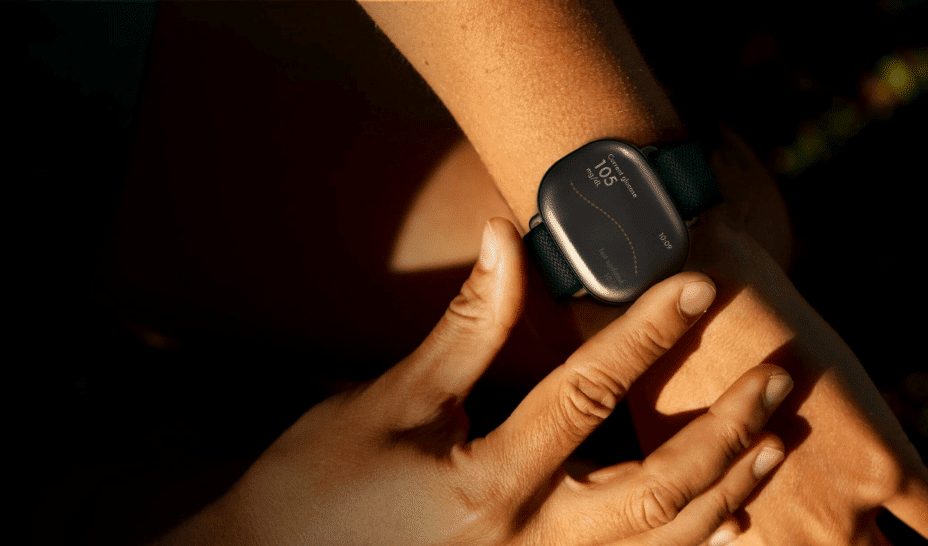
Liom, a Schwyz-based innovator in non-invasive biomarker monitoring, has announced a new wearable designed to track glucose without the need for finger-prick tests. The company says the device is built to support continuous insights into metabolic health while reducing the friction that often comes with traditional glucose checks.
The announcement positions Liom within a fast-moving segment of digital health: wearables that promise clinically meaningful measurements without invasive sampling. If validated at scale, non-invasive glucose monitoring could broaden access for people who want better day-to-day visibility into glucose trends, including those managing diabetes as well as consumers interested in metabolic performance.
Why non-invasive glucose monitoring is a high-stakes race
Glucose is one of the most sought-after signals in modern health tracking because it reflects how the body responds to food, stress, exercise, sleep, and medication. Today, most continuous glucose monitoring relies on minimally invasive sensors inserted under the skin. Those systems can be highly effective, but they still involve consumables, skin irritation for some users, and recurring costs.
Liom’s focus on a wearable that avoids needles targets a long-standing industry challenge: delivering reliable glucose readings through the skin with accuracy that stands up to real-world conditions. The field is crowded with ambitious prototypes and bold claims, but only a small number of solutions have demonstrated repeatable performance in diverse populations.
What Liom says its wearable is designed to do
In its announcement, Liom described the device as part of a broader platform for biomarker monitoring, with glucose as a headline use case. While the company has not publicly detailed all technical specifications in the provided announcement excerpt, the framing suggests an emphasis on continuous, user-friendly tracking that fits into everyday routines.
For users, the practical promise is simple: fewer barriers to seeing glucose patterns over time. For clinicians and researchers, the promise is more complex—turning non-invasive measurements into dependable signals that can inform decisions, coaching, and potentially earlier detection of metabolic risk.
Beyond glucose: the biomarker monitoring angle
Liom’s positioning around non-invasive biomarker monitoring matters because glucose alone rarely tells the full story. Many health outcomes are influenced by a constellation of signals—hydration, inflammation proxies, stress markers, and cardiovascular indicators. Companies that can build a robust sensing and analytics stack may be able to expand from a single metric to a broader health dashboard over time.
How the market is shifting toward continuous, consumer-friendly health data
Wearables have moved from step counting to more sophisticated physiological insights, driven by improved sensors, better on-device processing, and advances in AI algorithms that can interpret noisy biological data. At the same time, consumer expectations have changed: people increasingly want continuous feedback rather than occasional snapshots.
Non-invasive glucose monitoring sits at the intersection of consumer wellness and regulated medical technology. That creates both opportunity and pressure. The opportunity lies in scale—if a device can deliver credible readings, it could reach far beyond insulin-dependent users. The pressure lies in proof—accuracy, repeatability, and transparency are essential for trust.
What matters next: validation, regulation, and trust
The biggest question for any non-invasive glucose wearable is performance in the real world. Glucose estimation through the skin can be influenced by temperature, sweat, motion, skin tone variability, hydration, and individual physiology. A product announcement is an early step; the market typically looks for rigorous clinical validation and clear communication about intended use.
Clinical evidence and performance benchmarks
For stakeholders evaluating Liom’s progress, key indicators will likely include:
- Published or independently reviewed clinical studies demonstrating accuracy against reference measurements
- Performance across diverse user groups and everyday conditions
- Clarity on whether the device is intended for wellness insights or medical decision-making
- Consistency over time, including calibration needs and sensor drift
Regulatory pathway and product claims
In Europe and other major markets, the difference between a wellness wearable and a medical device is defined by claims, risk profile, and regulatory classification. If Liom intends the wearable to support clinical decisions, it may face a more demanding regulatory route, including requirements around safety, quality systems, and post-market surveillance.
Even for wellness positioning, consumer-facing health products are increasingly expected to provide evidence-based claims and clear limitations. The companies that communicate uncertainty responsibly tend to earn longer-term credibility.
Why this announcement matters for Switzerland’s health-tech ecosystem
Switzerland has become a notable hub for medtech and life sciences, benefiting from strong research institutions, precision engineering, and a dense network of healthcare stakeholders. A Schwyz-based company pursuing non-invasive glucose monitoring underscores how innovation is spreading beyond traditional metropolitan clusters.
If Liom can demonstrate robust performance, it may contribute to the region’s reputation for clinically grounded digital health innovation—especially in a category where hype has often outpaced results.
What to watch for in the coming months
Following the announcement, attention will likely turn to product timelines, partnerships, and validation milestones. Observers will be looking for signals such as pilot programs, clinical collaborations, and transparent reporting of accuracy metrics. The competitive landscape is intense, but demand remains strong because the user benefit—glucose insights without needles—is widely understood and highly motivating.
Dailyza will continue tracking Liom’s next updates, including any clinical data releases, regulatory developments, and details on how the wearable will be positioned for consumers and healthcare use.