

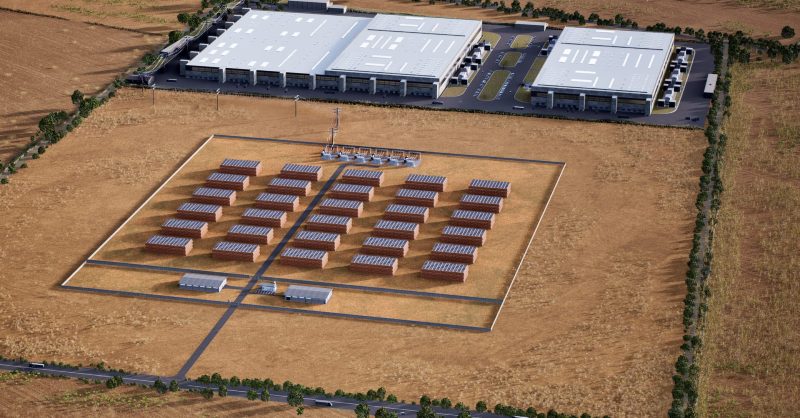
Last Energy, a nuclear energy startup focused on compact reactors, has raised $100 million to accelerate deployments designed to supply round-the-clock electricity to power-hungry AI data centers. The financing underscores how quickly the market for reliable, low-carbon power is tightening as generative AI and cloud workloads push electricity demand higher and expose the limits of grid capacity in key regions.
The news, first reported by TFN, positions Last Energy among a growing group of companies betting that smaller, factory-built nuclear units—often discussed under the umbrella of small modular reactors (SMRs)—can be built faster than traditional plants and placed closer to industrial customers. For data center operators, the pitch is simple: stable baseload power with minimal carbon emissions and fewer interruptions than renewables alone can provide.
Why AI is rewriting the power playbook
The surge in AI training and inference has changed the energy conversation across the tech sector. Modern data centers already require significant power for servers and cooling, but AI clusters can intensify that load and run continuously. That creates a premium for electricity that is not only clean, but predictable—an attribute that matters when uptime is tied directly to revenue and contractual service-level agreements.
In many markets, new grid connections can take years due to permitting delays, transformer shortages, and transmission constraints. At the same time, corporate climate commitments are pushing operators toward low-carbon energy procurement. These pressures are driving interest in on-site or near-site generation options, including gas with carbon offsets, renewable portfolios paired with storage, and now nuclear.
Last Energy’s bet: smaller reactors, standardized builds
Last Energy is pursuing a model centered on repeatable, standardized reactor designs intended for faster construction and deployment. The broader SMR thesis is that manufacturing and modularization can reduce cost overruns that have historically plagued large nuclear projects. Rather than building one-off mega plants, companies aim to replicate the same unit across multiple sites, learning and improving with each build.
For data centers, the appeal goes beyond carbon accounting. Nuclear generation can provide steady baseload output that reduces exposure to volatile power prices and grid congestion. If paired with appropriate interconnection and safety planning, a dedicated nuclear supply could also simplify long-term capacity planning for operators facing uncertain future demand.
What “mini reactors” mean in practice
While “mini reactor” is a popular shorthand, projects in this category still involve substantial engineering, regulation, and capital. Even smaller units must meet strict nuclear safety standards, secure fuel supply arrangements, and navigate local siting requirements. The timeline to operation depends heavily on the regulatory pathway and the maturity of the design.
What the $100M financing signals
Raising $100 million in the current funding climate suggests investors see a credible near-term market for nuclear-backed power contracts, particularly from hyperscalers and colocation providers. It also reflects a broader shift: energy is becoming a strategic constraint for AI growth, not just an operating expense.
Capital at this stage typically supports engineering work, supply-chain development, hiring, and early project development—activities that are essential before large-scale project finance can be secured. For nuclear startups, demonstrating a clear path through licensing, construction, and commissioning is often the key to unlocking the next, much larger rounds of funding.
Competition is heating up as Big Tech seeks firm power
AI data centers are increasingly seeking “firm” clean energy—power that is available on demand, not dependent on weather. That demand is attracting a range of solutions:
- Renewables paired with batteries, which can cover short-duration gaps but may struggle with multi-day reliability needs at scale.
- Natural gas generation, which is dispatchable but faces emissions scrutiny and long-term climate risk.
- Geothermal and hydro, which are site-limited and often constrained by development timelines.
- Nuclear, which offers low-carbon baseload but must overcome regulatory complexity and public perception challenges.
In that context, Last Energy’s funding round is part of a wider race to secure dependable electricity for the next wave of compute expansion. The winners may be the companies that can combine technical credibility with a practical project delivery model—one that utilities, regulators, and customers can trust.
Key hurdles: licensing, timelines, and public acceptance
Nuclear projects face unique barriers. Even with standardized designs, licensing and safety approvals can take significant time, and supply chains for specialized components can be tight. Siting decisions can also trigger community concerns around safety, waste management, and security—issues that require transparent engagement and robust oversight.
Another challenge is alignment with data center build cycles. Data center projects can move from planning to operation faster than most nuclear timelines. That mismatch means nuclear developers may need to secure long-term commitments well in advance, or integrate their offerings into phased campus expansions where power demand ramps over time.
What to watch next
For Last Energy, the next milestones that will matter most are concrete project announcements, progress through regulatory steps, and evidence of bankable customer demand—such as long-term power purchase agreements tailored to data center requirements. Investors and customers will also look for clarity on costs, construction schedules, and how the company plans to scale manufacturing and deployment.
As AI continues to expand, the question is shifting from whether the world can build enough compute to whether it can build enough clean electricity to run it. Last Energy’s $100 million raise is a sign that nuclear—once viewed as too slow or too complex for tech—has moved back into the center of the data center power conversation.