

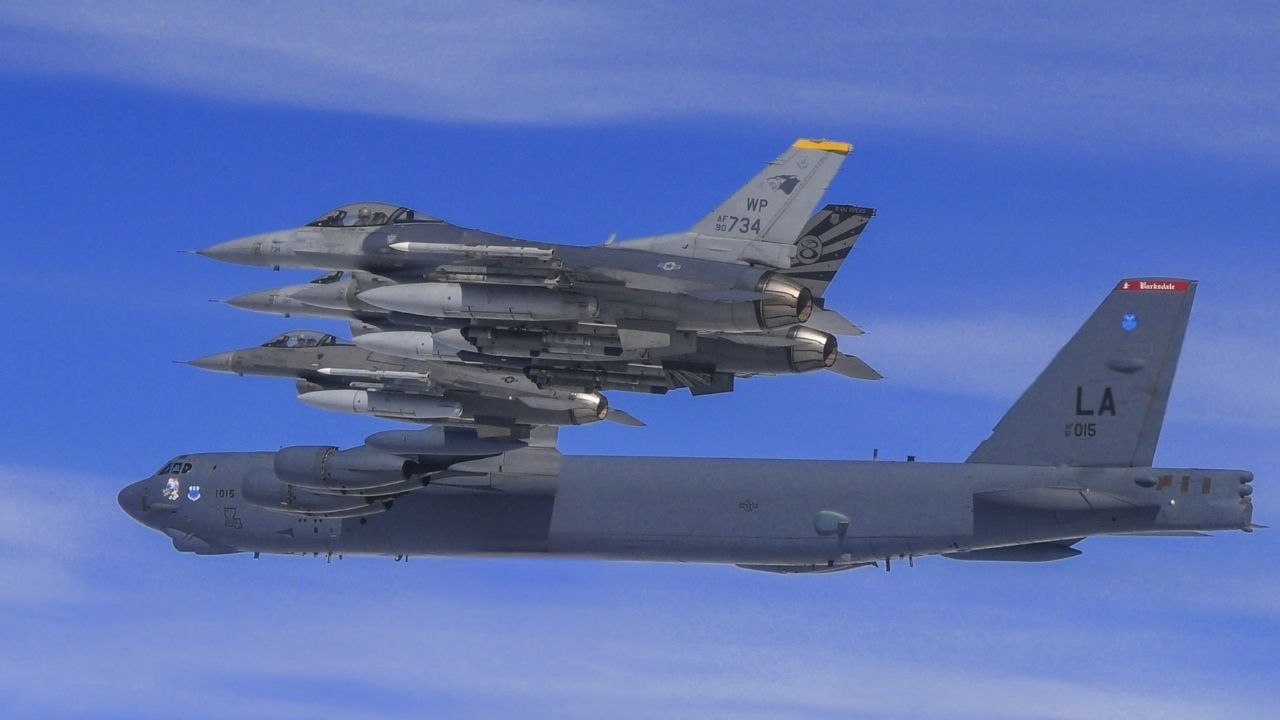
Tokyo and Washington conduct joint fighter jet exercises over the Sea of Japan, demonstrating rapid response capabilities as regional security threats from Pyongyang and Beijing continue to mount.
TOKYO — In a direct display of alliance cohesion, Japan announced on Thursday that it had successfully conducted joint military drills with the United States over the Sea of Japan. The aerial exercises, confirmed by Japan‘s Joint Staff, come at a time of heightened anxiety in East Asia, following a series of provocative maneuvers by neighboring powers in recent weeks.
A Show of Aerial Supremacy
According to the official statement released by the Ministry of Defense in Tokyo, the drills involved Japan Air Self-Defense Force (JASDF) F-15 fighter jets flying in tactical formation alongside US Air Force aircraft stationed in the region. The exercise focused on “complex tactical movements” and rapid interception protocols, designed to test the readiness of both nations to respond to sudden airspace violations.
Military analysts note that the specific location of the drills—the Sea of Japan (also known as the East Sea)—is strategically significant. It serves as the primary buffer zone between the Japanese archipelago and the Korean Peninsula, a corridor frequently used by North Korea for ballistic missile testing.
Responding to Regional Threats
While the Joint Staff described the operation as routine training to “enhance the deterrence and response capabilities of the Japan-US alliance,” the timing suggests a specific geopolitical signal. The drills follow reports from earlier this week indicating increased naval activity by China and Russia in the surrounding waters.
“The security environment surrounding Japan has become increasingly severe,” a defense official stated. “It is imperative that we demonstrate our will and ability to defend our territories alongside our only treaty ally.”
The ‘Free and Open’ Mandate
The exercise reinforces the long-standing commitment of both Prime Minister Shigeru Ishiba‘s administration and the White House to a “Free and Open Indo-Pacific.” As China continues to expand its military footprint in the East China Sea, Washington has prioritized these interoperability exercises to ensure that US forces can integrate seamlessly with the Japanese Self-Defense Forces in the event of a conflict.
Beijing has historically criticized such drills, labeling them as destabilizing actions that fuel a “Cold War mentality.” However, with North Korea threatening to launch a new surveillance satellite before the end of 2025, allied forces remain on high alert.
1 Comment
It’s reassuring to see the US and Japan working closely together to maintain stability in the region. With tensions rising, these joint drills send a clear message about their commitment to security and quick response. Hopefully, this will help deter any aggressive moves moving forward.