

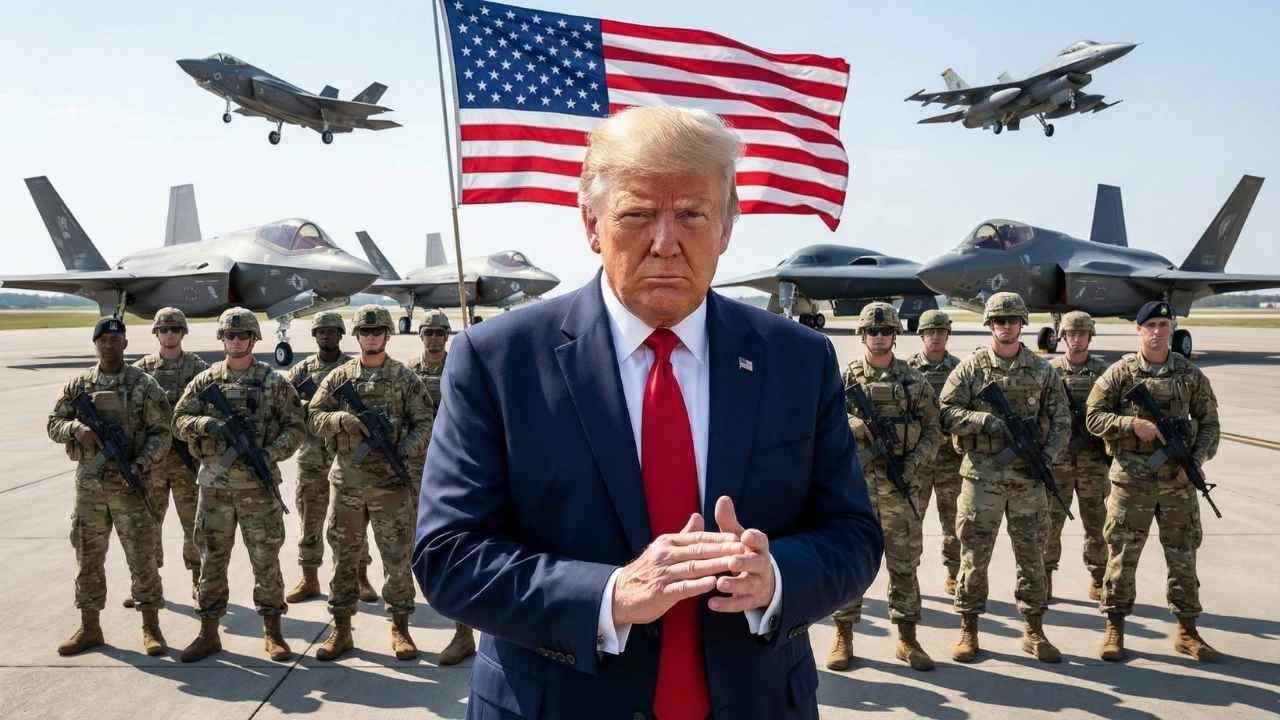
President Trump’s escalation of the Greenland purchase idea into a “National Security” ultimatum is forcing the EU into unprecedented resistance, potentially fracturing the historic Western alliance.
When Donald Trump first floated the idea of buying Greenland in 2019, it was dismissed globally as an absurdist real estate fantasy. By January 2026, however, the laughter has stopped. Leaked White House memos indicating a new, aggressive strategy to establish de facto US control over the Danish autonomous territory have plunged Transatlantic relations into their deepest crisis since the Cold War.
Not Ice, But Rare Earths
The driving force behind Trump‘s fixation is not glacial real estate, but the strategic treasure buried beneath it. Greenland holds some of the world’s largest untapped reserves of Rare Earth Elements (REEs)—critical components for everything from electric vehicle batteries to F-35 fighter jets.
The “America First 2.0” doctrine views dependence on China for these materials as an unacceptable vulnerability. By pressuring Denmark, Washington aims to secure Greenland as an exclusive industrial resource hub, signaling that allied sovereignty is now secondary to US supply chain security.
Europe’s rude Awakening: Strategic Autonomy
For decades, the European Union has relied on the US security umbrella. This move, viewed in European capitals as a diplomatic assault on a member state’s territory, is forcing a rapid recalculation. Analysts suggest this could be the psychological tipping point for genuine European “Strategic Autonomy.”
Leaders in Paris and Berlin are reportedly characterizing the move as a “hostile takeover attempt.” This distrust is reviving dormant discussions about a unified EU Army, as faith in NATO’s “all for one” principle erodes when the threat comes from the leading member itself. Unlike 2019, Copenhagen is no longer alone; Brussels is preparing to declare Greenland‘s status a collective EU “red line.”
A ‘Competitive West’
If the Trump administration uses economic leverage to force Denmark’s hand, the historical consequences could be profound. The unified “Western Bloc” could dissolve into a “Competitive West,” where Europe charts a “Third Way” rather than aligning automatically with Washington against Beijing. Furthermore, increased US assertiveness in the high north will inevitably trigger counter-moves from Russia, transforming the Arctic into the globe’s next major theater of tension.
Ironically, Trump‘s pressure may succeed where decades of internal debate failed: unifying the EU against a common external threat—one that tragically comes from the West, not the East
1 Comment
This situation really highlights how resource competition can quickly escalate into major geopolitical tensions. It’s alarming to see a move that risks unraveling decades of alliance just over rare earth minerals. Hopefully cooler heads prevail before things get out of hand.