

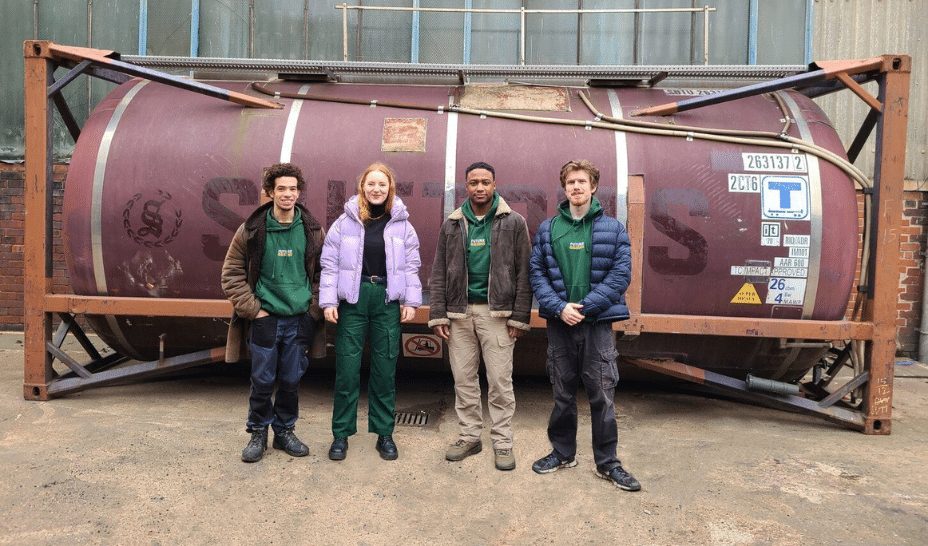
Future Greens is preparing a 2026 rollout for its on-site energy solution after securing €569,000 in funding to convert brewery and food waste into usable power. The move positions the company at the intersection of Europe’s growing push for circular economy infrastructure and the urgent need to cut energy costs and emissions across food and beverage production.
The funding milestone, first reported by EU-Startups, arrives as breweries and food producers face a dual pressure: volatile energy prices and tighter expectations around waste handling. By treating organic by-products as an asset rather than a disposal problem, Future Greens is betting that on-site conversion can deliver both operational savings and measurable sustainability gains.
Why breweries and food waste are in the spotlight
Breweries generate consistent organic residues—spent grain, yeast, and wastewater solids—while adjacent food operations add additional streams such as rejected produce, trimmings, and expired inventory. In many regions, these materials are still hauled away for processing, composting, or disposal, creating transport emissions and ongoing fees.
At the same time, manufacturers are being pushed to document and reduce their footprint. For energy-intensive sites, the cost of electricity and heat can be a top-line concern, particularly for mid-sized producers that lack the capital budgets of large multinationals. Technologies that can produce power on-site from unavoidable waste are increasingly attractive because they can address multiple constraints at once: waste management, energy security, and compliance reporting.
What Future Greens says it is building
Future Greens’ concept centers on converting organic waste into on-site power, aiming to help facilities produce energy where waste is generated. While the company’s full technical configuration and performance figures were not detailed in the provided information, the core promise is clear: transform brewery and food waste into a local energy source that can be consumed directly by the plant.
In practical terms, on-site conversion systems typically seek to reduce dependence on grid electricity and external fuel inputs, while also cutting the logistical burden of moving waste off-site. For operators, the most compelling feature is often predictability—waste output is relatively steady, and that steadiness can translate into a more stable energy contribution than intermittent sources alone.
On-site power as an operational lever
For breweries, energy demand is driven by heating, cooling, and process loads. If even a portion of that demand can be met through on-site generation, it can lower exposure to price spikes and improve resilience during supply disruptions. It can also support corporate goals around decarbonisation by displacing fossil-based energy inputs.
How the €569k funding fits into a 2026 rollout plan
The €569,000 raise suggests a near-term focus on engineering, pilots, and readiness for broader deployment. For climate and industrial-tech startups, this stage is often where teams prove that a system can operate reliably in real production environments—handling variable waste composition, meeting safety standards, and integrating with existing plant utilities without disrupting output.
A 2026 rollout timeline implies that Future Greens is planning a measured path from development to commercialization. In industrial settings, adoption cycles tend to be longer than in software: procurement teams evaluate payback periods, plant managers prioritize uptime, and installations must be scheduled around production realities.
What customers will likely ask before signing
As Future Greens moves toward rollout, prospective customers in brewing and food production are likely to focus on a handful of practical questions:
- What is the expected energy output per tonne of waste, and how consistent is it across seasons?
- What are the installation requirements—space, permitting, utility tie-ins, and safety controls?
- How does the system handle contamination or changes in waste composition?
- What is the expected maintenance schedule, and who provides service?
- What is the projected payback period considering avoided disposal costs and reduced energy purchases?
Answers to these points can determine whether a technology becomes a niche sustainability project or a core operational investment.
The broader European context: circular energy meets industrial pragmatism
Across Europe, policy and market forces are aligning behind solutions that reduce landfill, cut methane emissions from organic waste, and increase local energy generation. Food and beverage manufacturers are also under pressure from retailers and consumers to demonstrate credible sustainability progress, not just marketing claims.
In that environment, converting organic waste into power can be easier to justify than some other climate upgrades because it can link sustainability outcomes to direct operational benefits. If Future Greens can show repeatable performance and manageable total cost of ownership, the company could find receptive customers among breweries, food processors, and industrial parks with shared waste streams.
Competition and differentiation
The market for waste-to-energy and bioenergy solutions already includes established players and multiple technical pathways. Differentiation often comes down to how well a system fits on-site constraints, how quickly it can be deployed, and whether it can operate economically at smaller scales. A solution designed for mid-market facilities—where waste volumes are meaningful but not massive—could fill an important gap if it avoids the complexity and capex that have historically limited adoption.
What to watch next
With funding secured and a 2026 rollout target, the next markers of progress will likely include pilot deployments, customer partnerships, and clearer data on performance, reliability, and unit economics. For breweries and food producers, the most persuasive proof will be real-world operation: steady output, minimal downtime, and measurable reductions in both waste handling costs and energy bills.
If Future Greens can translate its promise into repeatable on-site results, it may help reshape how producers think about organic by-products—less as a liability to be removed, and more as a resource that can keep the lights on.