

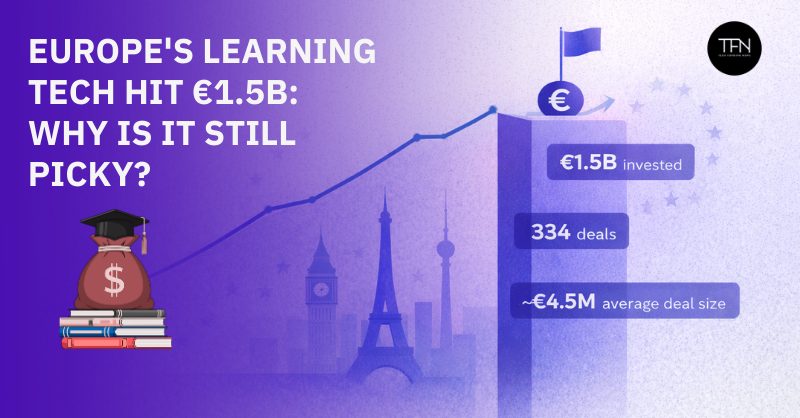
Europe’s learning tech hits new funding peak
Europe’s learning technology sector has crossed the €1.5 billion funding mark, underscoring how fast digital education has matured from a pandemic-era stopgap into a durable market. From AI-driven tutoring tools to enterprise upskilling platforms, investors are backing products that promise measurable impact on how people learn and work.
Yet despite the headline figure, founders across the continent report that venture capital remains unusually selective. Only a small cohort of growth-stage players are capturing the bulk of the capital, while early-stage teams face longer fundraising cycles and tougher terms.
Why capital is still so picky
Post-pandemic reality check
During the COVID-19 boom, many edtech startups grew rapidly on the back of school closures and emergency remote learning budgets. As classrooms reopened, usage patterns normalised and revenues plateaued for products that lacked strong long-term value. Investors are now demanding clear evidence of recurring revenue, retention and learning outcomes before writing large cheques.
Focus on sustainable business models
Funds are concentrating on companies that can prove a path to profitability. Platforms selling into enterprises and professional training – such as workforce reskilling, compliance training and AI-powered learning analytics – are favoured over pure consumer apps with high churn. Unit economics, not just user growth, have become the decisive metric.
Regulation and procurement hurdles
In K–12 and higher education, long sales cycles and fragmented national regulations across Europe make scaling harder. Public-sector buyers often require strict data protection, curriculum alignment and local language support. This complexity pushes many investors to back fewer, more proven teams that already understand procurement and compliance.
Where the next wave of funding will go
Analysts expect future capital to concentrate in three areas: AI tutors that personalise learning at scale, corporate upskilling platforms tied to productivity gains, and infrastructure tools that help institutions manage content, assessment and credentials. As European funds grow more disciplined, founders who can demonstrate clear learning impact, robust security and scalable go-to-market strategies are best placed to capture the next tranche of the €1.5 billion – and beyond.