

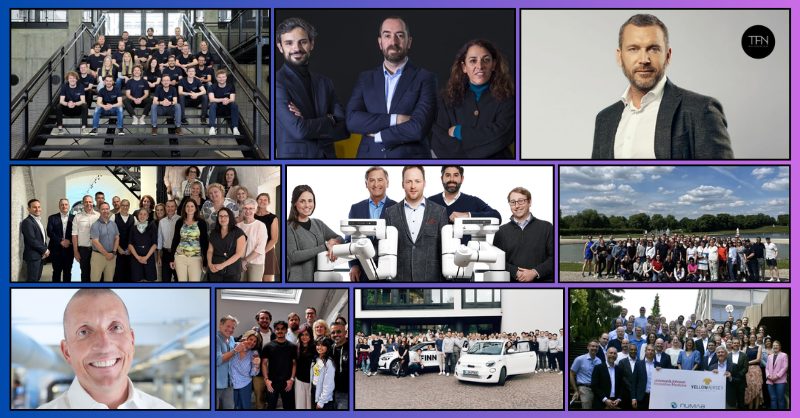
Europe’s deeptech soonicorns are closing in on unicorn status
Across the continent, a new class of fast-scaling deeptech startups is edging toward the coveted unicorn label. Often called “soonicorns” – companies expected to reach a valuation of $1 billion or more in the near term – these ventures are built on breakthrough AI algorithms, advanced semiconductors, climate tech hardware, and other frontier innovations that demand years of R&D before commercial payoff.
Industry analysts and investors now point to a cohort of 10 standout European deeptech soonicorns that could realistically achieve unicorn status by 2026. Their rise underscores how Europe is turning long-standing strengths in research, engineering, and industrial know‑how into globally competitive, venture‑backed businesses.
Why deeptech soonicorns matter for Europe’s economy
Unlike software‑only startups that can scale quickly with relatively modest capital, deeptech ventures typically sit at the intersection of science and engineering. They build defensible IP in areas such as quantum computing, robotics, biotech, and advanced materials, often spinning out from universities and national labs.
For European policymakers and investors, the emergence of deeptech soonicorns is strategically important for several reasons:
- Technological sovereignty: Europe seeks to reduce dependence on imported critical technologies, from chips to batteries.
- Industrial renewal: Deeptech startups can modernise legacy sectors such as manufacturing, energy, and transport.
- Climate leadership: Many soonicorns focus on decarbonisation, grid optimisation, and sustainable materials.
- High‑quality jobs: These companies employ highly skilled engineers, scientists, and operators across the region.
Venture capital firms are accordingly sharpening their focus. Specialist funds and sector‑focused partners are emerging as the preferred backers for deeptech, offering not only capital but also regulatory expertise, industrial partnerships, and long‑term patience.
Common traits of Europe’s 10 deeptech soonicorns
While the specific startups span multiple verticals, they share several defining characteristics that make them strong unicorn candidates by 2026.
1. Strong scientific and IP foundations
Most of these soonicorns began life as university spin‑outs or research projects led by PhD‑level founders. Their core assets are protected by substantial patent portfolios, trade secrets, and proprietary hardware‑software stacks. This IP moat makes them less vulnerable to fast‑follower competition and more attractive to strategic acquirers.
In fields like quantum hardware, fusion energy, and next‑generation batteries, European teams are leveraging decades of public research funding to create commercially viable products. This fusion of academic excellence and entrepreneurial ambition is a hallmark of the current soonicorn wave.
2. Capital‑intensive, but with clearer paths to scale
Deeptech historically struggled with the perception that it required too much capital and time to reach market. The current cohort of soonicorns is challenging that assumption. While still capital‑intensive, these startups now benefit from:
- Dedicated deeptech funds and growth‑stage investors.
- Public co‑investment from programs such as the European Innovation Council and national development banks.
- Corporate partnerships that bring pilot customers, infrastructure, and distribution.
By 2026, several are expected to cross key revenue milestones or secure large commercial contracts that justify unicorn‑level valuations.
3. Focus on mission‑critical problems
Rather than chasing consumer trends, deeptech soonicorns are tackling mission‑critical challenges: decarbonising heavy industry, securing digital infrastructure, enabling autonomous factories, and improving healthcare diagnostics. This focus gives them resilience even in choppy macroeconomic conditions.
For investors, the appeal lies in the combination of large addressable markets and strong barriers to entry. For governments, it aligns with policy priorities around energy security, resilient supply chains, and strategic autonomy.
The sectors where Europe’s soonicorns are breaking out
AI, data infrastructure, and automation
Several soonicorns are building foundational AI infrastructure for industry: from privacy‑preserving machine learning platforms to specialised AI chips optimised for edge computing. Others are developing autonomous robotics for logistics, agriculture, and manufacturing, blending computer vision with rugged hardware.
With enterprises under pressure to increase productivity and cope with labour shortages, demand for industrial‑grade automation is rising quickly. This trend is helping AI‑driven deeptech startups reach scale faster than earlier generations.
Climate tech, energy, and clean industry
Another cluster of soonicorns is emerging in climate tech and energy systems. These startups are working on grid‑scale storage, advanced heat pumps, carbon‑negative materials, and software that orchestrates distributed energy resources. Their technologies are central to meeting the EU’s net‑zero commitments.
As carbon pricing tightens and regulatory pressure increases, industrial players are seeking turnkey solutions to cut emissions. Deeptech companies that can deliver measurable reductions in energy use or carbon intensity are seeing strong pull from customers and investors alike.
Next‑generation computing and cybersecurity
Europe is also home to soonicorns in quantum computing, photonics, and secure communications. These firms are building hardware and software stacks designed to power the next wave of high‑performance computing and cryptography.
While some of these markets are still nascent, early commercial pilots with financial institutions, defence agencies, and cloud providers are validating the technology. By 2026, several of these players could secure large strategic rounds or IPOs, pushing them over the unicorn threshold.
Funding dynamics: from winter to selective thaw
After a relatively quiet period in 2024–2025, European venture funding has begun to stabilise, with capital concentrating in fewer but higher‑quality deals. Deeptech soonicorns are among the main beneficiaries of this selective thaw. Investors are less interested in incremental software plays and more focused on companies with defensible technology and long‑term impact.
Growth‑stage rounds for deeptech now often feature a mix of traditional VC funds, corporate venture arms, and infrastructure investors. This blended capital structure suits businesses that need both R&D financing and large‑scale deployment funding, for example in energy storage or industrial automation.
What to watch between now and 2026
For founders, investors, and policymakers tracking Europe’s innovation landscape, the trajectory of these 10 deeptech soonicorns will be a key barometer of the ecosystem’s maturity. Several indicators will determine whether they achieve unicorn status by 2026:
- Ability to convert pilots into multi‑year commercial contracts.
- Progress on regulatory approvals in sectors like energy, health, and defence.
- Access to non‑dilutive funding and project finance for large deployments.
- Talent acquisition, particularly in specialist engineering roles.
For Europe, the stakes are high. If this cohort succeeds, it will signal that the region can not only generate world‑class research but also build enduring, globally relevant deeptech companies. That, in turn, could attract more international capital, keep top scientific talent in the region, and strengthen Europe’s hand in the global race for technological leadership.
As 2026 approaches, the continent’s deeptech soonicorns will be closely watched – not just for their valuations, but for the long‑term industrial and societal transformations they may unlock.
1 Comment
It’s exciting to see Europe finally getting the recognition it deserves for its deeptech innovations. These soonicorns show real promise in turning cutting-edge research into game-changing industries. Hopefully, this momentum continues and attracts even more investment in the region.