

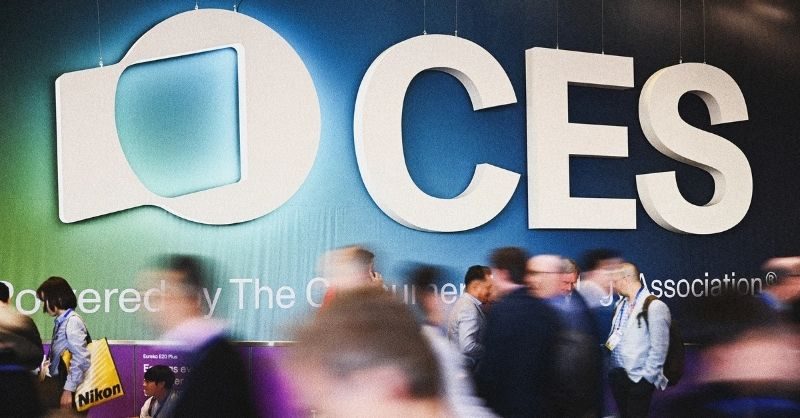
European innovators take center stage at CES 2026
At CES 2026 in Las Vegas, a new generation of European startups is redefining how humans interact with machines. Moving beyond incremental upgrades, these companies are showcasing technologies that tap directly into the human body and senses — from brainwave-based authentication to tactile “vision” systems and next‑generation industrial exoskeletons.
While global tech giants continue to dominate headlines, a growing cohort of European founders is quietly building the infrastructure for more secure, intuitive and inclusive human–machine interfaces. Their work spans neurotechnology, haptics, robotics and advanced wearable devices, positioning Europe as a serious contender in the race to define the next era of computing.
Brainwave passwords: logging in with your mind
One of the most talked‑about concepts on the show floor is the idea of using brain activity as a secure digital key. Several European startups are demonstrating prototypes that replace traditional passwords with unique neural signatures captured through non‑invasive headsets.
These systems rely on compact EEG sensors (electroencephalography) embedded in headbands or lightweight helmets. When a user performs a specific mental task — such as focusing on a visual pattern or recalling a sequence — the device records their brainwave response. Proprietary AI algorithms then convert this signal into an encrypted identifier that can be used for authentication.
Security beyond fingerprints and face scans
Unlike fingerprints or facial recognition, which can be copied or spoofed using high‑resolution images, brainwave patterns are far harder to replicate. European founders argue that this gives brain‑based biometrics a strong advantage for applications where security is paramount, from banking to critical infrastructure access.
Some teams are also exploring continuous authentication. Instead of verifying identity once at login, the system can periodically check that the ongoing brain activity still matches the authorized user. This could protect sensitive workflows in sectors such as defence, healthcare and financial services.
However, the technology raises significant questions around data privacy and the ethical handling of neural information. European startups are positioning strict compliance with GDPR and emerging neuro‑rights frameworks as a competitive advantage, emphasizing on‑device processing, data minimization and explicit user consent.
Haptic vision: feeling the world instead of seeing it
Another standout theme from the European pavilion at CES 2026 is “haptic vision” — systems that translate visual information into tactile feedback, enabling users to perceive their surroundings through touch instead of sight.
Startups in this space are combining miniature computer vision cameras with advanced haptic actuators embedded in wearables such as belts, vests or wristbands. The devices scan the environment in real time and convert objects, distances and motion into carefully patterned vibrations on the skin.
Accessibility and beyond
The most immediate application of haptic vision is assistive technology for people who are blind or visually impaired. By turning spatial information into a dynamic “map” of vibrations, users can navigate complex environments, detect obstacles and even sense the movement of people or vehicles nearby.
European founders are also targeting broader use cases. In high‑risk industrial settings, haptic vision systems can alert workers to hazards without adding visual clutter to already crowded dashboards. In augmented reality and gaming, haptic feedback can deepen immersion by giving players a physical sense of objects and surfaces that exist only in the digital world.
Some startups are partnering with automotive suppliers to explore haptic vision for drivers and passengers. By integrating tactile feedback into seats or steering wheels, vehicles could provide subtle, intuitive alerts about lane departures, pedestrians or changing road conditions without relying solely on visual or audio warnings.
Exoskeletons: augmenting the industrial workforce
Beyond the brain and the senses, European innovators at CES 2026 are also focused on augmenting the body itself. A new wave of industrial exoskeletons — wearable robotic frames that support or enhance human movement — is aimed at reducing workplace injuries and extending the productive careers of manual workers.
These exoskeletons range from passive mechanical supports that redistribute weight to fully powered systems with electric actuators and sensor‑driven control units. They are being designed for sectors such as logistics, automotive manufacturing, construction and warehousing, where repetitive lifting and awkward postures are a daily reality.
Human‑centric robotics
Unlike fully autonomous robots that aim to replace human labor, European exoskeleton startups are emphasizing a human‑in‑the‑loop approach. Their systems are meant to amplify human strength and endurance while preserving human judgment and dexterity.
Advanced models on display at CES 2026 integrate motion‑capture sensors, pressure sensors and onboard machine learning modules that adapt assistance levels to each user. Over time, the exoskeleton learns how an individual moves and automatically adjusts torque and support to minimize strain on joints and muscles.
Several exhibitors are also highlighting the potential for exoskeletons to address demographic challenges in Europe, where aging populations and labor shortages are putting pressure on physically demanding industries. By reducing fatigue and injury risk, these devices could help older workers remain active in the workforce for longer.
Europe’s strategic push in deep tech
The presence of these cutting‑edge startups at CES 2026 reflects a broader strategic shift in the European tech ecosystem. Policymakers, investors and corporates are increasingly backing deep tech ventures that require long‑term research and hardware development, rather than purely software‑based business models.
Many of the companies behind brainwave passwords, haptic vision and exoskeletons have roots in European universities and research institutes. They are supported by a mix of public grants, venture capital and corporate partnerships, often under EU‑level initiatives aimed at strengthening technological sovereignty.
At the same time, European founders are using regulatory compliance and ethical design as selling points. In areas as sensitive as neural data, bodily augmentation and continuous sensing, alignment with European standards on privacy, safety and human rights is framed not as a burden but as a differentiator in global markets.
From showcase to real‑world deployment
As the crowds move through the CES halls, the prototypes from European startups are drawing strong interest from corporates, healthcare providers and industrial players searching for the next wave of productivity and safety tools. Yet the path from trade‑show demo to large‑scale deployment remains complex.
Brainwave authentication systems must prove reliability across diverse populations and environments. Haptic vision devices need to demonstrate that users can learn and trust new sensory languages. Exoskeletons must show clear return on investment, including fewer injuries and higher throughput, to justify integration into existing workflows.
Despite these challenges, the momentum is clear. With brainwave passwords, tactile perception systems and wearable robotics, European startups at CES 2026 are signaling a future in which the boundary between humans and machines grows thinner — not to replace people, but to extend what they can safely and securely do.