

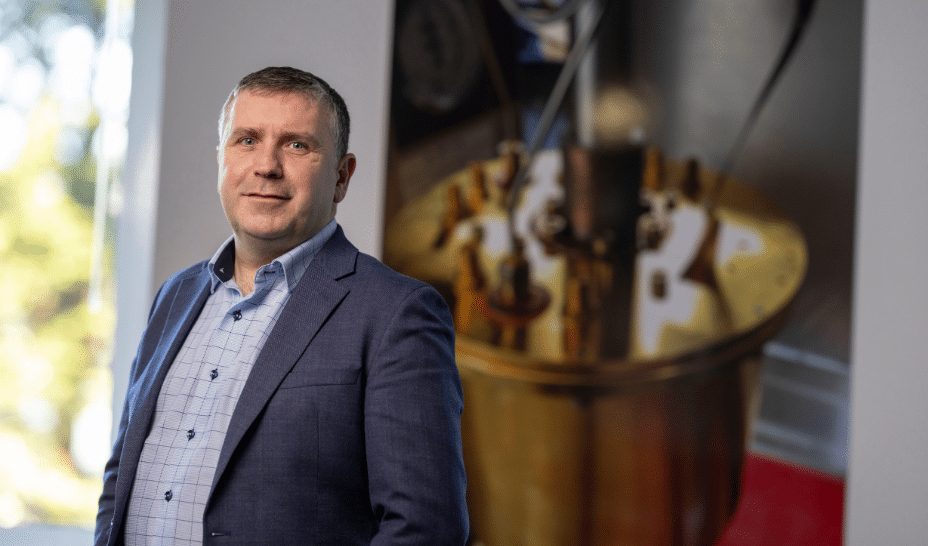
Equal1 lands major funding to scale quantum semiconductor vision
Dublin-based Equal1, a pioneering quantum semiconductor company, has announced a fresh funding round of €51 million (approximately $60 million) to accelerate the development of its scalable quantum computing technology. The new capital is intended to push the company’s integrated quantum chip architecture closer to commercial deployment and bring quantum capabilities into conventional data center environments.
A new approach to practical quantum computing
Equal1 focuses on building fully integrated quantum chips that combine quantum and classical components on a single semiconductor platform. Rather than relying on large, bespoke laboratory systems, the company aims to deliver compact, energy-efficient quantum processors that can be deployed like standard server hardware.
This strategy targets one of the most persistent bottlenecks in the industry: how to move from experimental quantum machines to systems that enterprises can realistically install, manage and scale. By embedding quantum functionality into a familiar semiconductor form factor, Equal1 is positioning itself to bridge the gap between research prototypes and everyday commercial use.
Funding to accelerate development and scaling
The newly raised €51 million will be used to speed up the company’s technology roadmap, expand its engineering teams and deepen collaborations with manufacturing and data center partners. While specific investors were not disclosed in the provided information, the size of the round signals growing confidence in integrated quantum semiconductor approaches as a viable route to scalable quantum computing.
Key priorities for the funding are expected to include:
- Advancing next-generation quantum chip designs with higher qubit counts and improved stability.
- Refining semiconductor fabrication processes in collaboration with foundry partners.
- Developing system-level prototypes suitable for installation in data centers.
- Building software and control stacks to make the hardware accessible to developers and enterprise users.
Why quantum semiconductors matter
Quantum computing has the potential to transform fields such as cryptography, drug discovery, climate modeling, optimization and financial risk analysis. However, current systems are often bulky, expensive and highly sensitive to environmental conditions, limiting their accessibility.
By leveraging mature semiconductor manufacturing techniques, Equal1 and similar players aim to make quantum hardware more compact, repeatable and cost-effective. Integrating quantum components directly onto silicon-based platforms can reduce the complexity of wiring, cooling and control electronics, which are among the most challenging aspects of today’s quantum machines.
If successful, this approach could allow quantum processors to be produced at scale, following a roadmap more akin to traditional microprocessor development. That would enable faster iteration, improved reliability and, ultimately, broader adoption across industries.
Positioning Dublin as a quantum innovation hub
The funding round also highlights Ireland’s growing role in deep-tech innovation. With Equal1 headquartered in Dublin, the company adds to a cluster of research institutions and technology firms focused on advanced semiconductor and quantum computing research.
Such investments can have a multiplier effect on the local ecosystem, attracting specialized talent in chip design, quantum physics and systems engineering, while encouraging partnerships with universities and European research programs. As competition intensifies globally in quantum technologies, regional hubs that combine academic excellence with venture-backed startups are likely to play a decisive role.
Race toward scalable, fault-tolerant quantum systems
The broader industry is engaged in a race to deliver scalable, eventually fault-tolerant quantum computers. Different players are pursuing a variety of hardware approaches, including superconducting qubits, trapped ions, neutral atoms and photonic systems. Equal1’s focus on integrated quantum semiconductors places it in a specific niche that seeks to align quantum hardware with existing chip manufacturing and data center infrastructure.
Scalability remains one of the central challenges. To solve commercially meaningful problems, quantum systems must host large numbers of reliable qubits and maintain coherence long enough to perform complex algorithms. By embedding quantum and classical control elements onto a single chip, Equal1 aims to reduce sources of noise and latency that can degrade performance.
Implications for enterprises and developers
For enterprises, the promise of integrated quantum chips is the possibility of accessing quantum acceleration without overhauling entire IT environments. If quantum processors can be installed in standard racks and managed with familiar tools, adoption barriers will be significantly lower.
Developers, meanwhile, stand to benefit from more predictable, standardized hardware platforms. As companies like Equal1 refine their architectures, software ecosystems including quantum programming frameworks, compilers and middleware will be able to target stable, repeatable chip designs rather than bespoke laboratory systems.
Outlook: from lab prototypes to data center deployment
While many technical hurdles remain, the €51 million funding round gives Equal1 additional runway to demonstrate that its integrated quantum semiconductor strategy can move beyond prototypes. The company’s progress will be closely watched by investors, competitors and potential partners who see integrated quantum chips as a credible path toward practical, scalable quantum computing.
As the quantum sector matures, the balance between breakthrough physics and pragmatic engineering will be critical. Companies that successfully merge both worlds—embedding advanced quantum capabilities into robust semiconductor products—are likely to shape the first generation of widely deployed quantum systems in data centers around the world.