

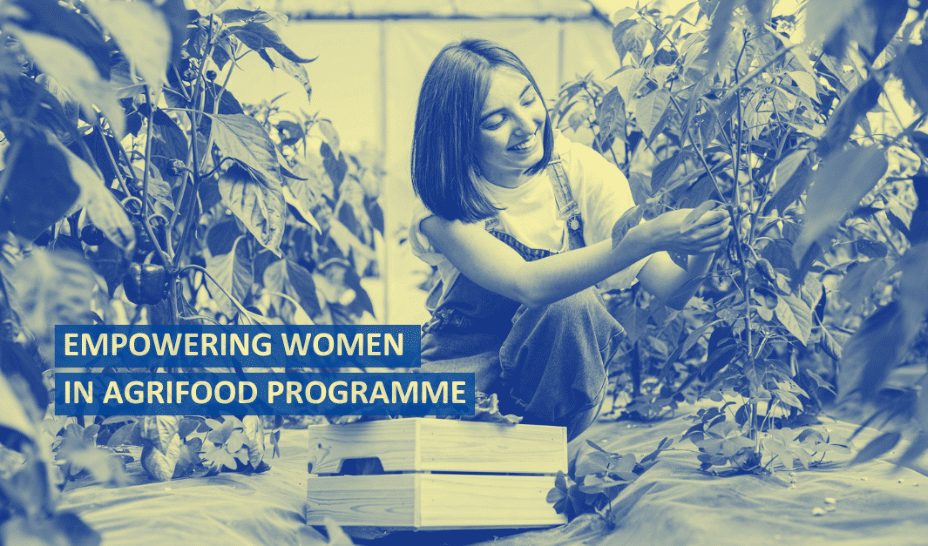
Dailyza has learned that EIT Food is continuing its support for the Empowering Women in Agrifood (EWA) programme, a Europe-focused initiative designed to increase the number of women founders building businesses across the agrifood value chain. The update follows an editor’s note indicating the post was created in collaboration with, and financially supported by, EIT Food, and references activity dated 11 November.
What EWA is and why it matters in agrifood
EWA is positioned as an entry and acceleration pathway for women entrepreneurs working on solutions spanning food production, processing, supply chains, retail, and sustainability. While women play a major role in agriculture and food systems, they remain underrepresented among startup founders and leadership teams—particularly in venture-backed, high-growth segments of agrifood innovation.
The programme’s focus aligns with broader European priorities around food security, sustainable agriculture, and the adoption of agri-tech and food-tech solutions. For early-stage founders, structured support can be decisive: access to mentoring, skills development, and industry networks often determines whether an idea becomes a viable company capable of attracting customers and investment.
How the programme is typically structured
Although programme specifics can vary by year and country, EWA is widely known for combining practical entrepreneurship training with tailored guidance from mentors who understand both startup execution and the realities of agrifood markets. Participants generally benefit from:
- Mentoring from experienced founders, operators, and sector specialists
- Workshops on validating product-market fit, pricing, and go-to-market strategy
- Support on building investor-ready materials, including pitch decks and financial planning
- Opportunities for visibility through demo days, pitch events, and media exposure
For many founders, the most valuable output is not only a refined business model, but also a network of peers and advisors who can unlock pilots, partnerships, and introductions to funders.
Why EIT Food’s backing is closely watched
EIT Food operates as a major innovation community within the European ecosystem, connecting corporates, universities, research centers, and startups. Its involvement signals that EWA is not merely a training initiative but part of a wider strategy to strengthen Europe’s agrifood innovation pipeline.
From an ecosystem perspective, programmes like EWA can help address two recurring bottlenecks: a shortage of diverse founding teams in the investable pipeline, and the difficulty of scaling agrifood solutions that must navigate regulation, long sales cycles, and complex stakeholder environments. By providing structured support early, EWA can improve founder readiness—an important factor for later-stage venture capital conversations.
What this means for women-led startups and investors
Women founders in agrifood often face a layered set of challenges: limited access to capital, fewer warm introductions to investors, and less representation in technical and executive networks. EWA’s model is designed to reduce those barriers by formalising access to mentorship and creating credible platforms for founders to present their solutions.
For investors, the value is equally direct. Better-prepared founders produce clearer metrics, sharper positioning, and more realistic scaling plans—particularly important in agrifood, where unit economics can be shaped by seasonality, commodity price volatility, and operational constraints. A stronger pipeline can also lead to more competition for deals, improving overall market efficiency and encouraging more capital into the sector.
Where EWA fits in Europe’s innovation priorities
Across Europe, policymakers and industry leaders are pushing for innovations that reduce emissions, improve soil health, cut food waste, and make supply chains more resilient. Startups working on alternative proteins, precision farming, novel ingredients, smart packaging, and traceability tools often sit at the intersection of climate tech and food systems.
EWA’s emphasis on founder development complements these priorities by ensuring that innovations are matched with commercial discipline. In practice, that can mean helping teams move from prototype to pilot, from pilot to paid contracts, and from early traction to scalable operations.
Transparency note: collaboration and financial support
The editor’s note attached to the provided input states that the post was created in collaboration with, and with financial support from, EIT Food. For readers, this is a key disclosure: it clarifies the relationship behind the communication and helps distinguish between independent reporting and sponsored or partner-supported editorial content.
In the broader media landscape, such transparency has become increasingly important as innovation organisations and industry bodies use content partnerships to highlight programmes, calls for applications, and startup success stories. Clear labelling enables audiences to evaluate context while still accessing useful information about opportunities in the ecosystem.
What to watch next
For founders considering EWA, the most practical next steps typically include monitoring application windows, eligibility criteria, and the local delivery partners involved in each participating country. For the ecosystem, the key indicators will be how many women-led startups emerge from the programme with validated products, paying customers, and follow-on funding.
As Europe’s agrifood sector faces mounting pressure to innovate—balancing affordability, sustainability, and resilience—initiatives like Empowering Women in Agrifood (EWA) will remain a bellwether for how effectively the region can broaden participation in entrepreneurship and translate research-driven ideas into scalable businesses.