

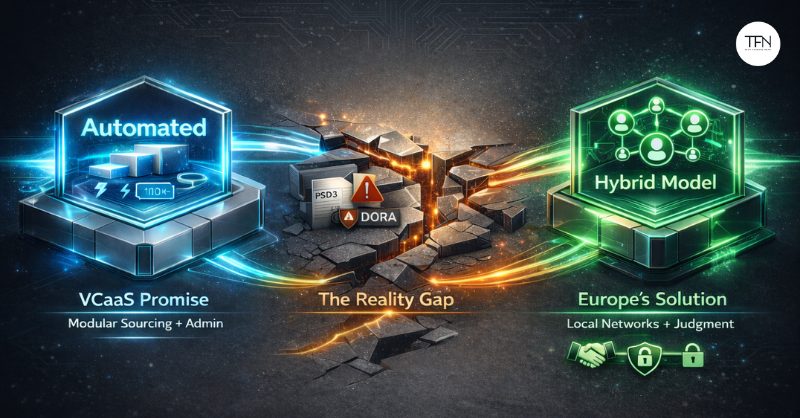
European VCs Push Back as VCaaS Booms to $20.5B in 2025
Despite a record $20.5 billion raised via VCaaS platforms in 2025, several of Europe’s most respected venture capital firms are openly rejecting the model. Funds including Daphni, Serena, FIRSTPICK, Oldenburg Capital Partners and 0TO9 are doubling down on traditional, relationship‑driven investing, arguing that Europe’s fragmented markets still reward deep local networks over automation‑driven deal flow.
The stance highlights a growing philosophical divide within European venture capital: whether scalable, software‑enabled investing can truly replace the nuanced, on‑the‑ground work of backing founders across dozens of languages, legal systems and cultural contexts.
What VCaaS Promises – and Why It Is Surging
VCaaS – short for Venture Capital as a Service – refers to technology platforms that package core VC functions into a productized, often subscription‑based or fee‑based service. These platforms typically combine:
- Automated deal sourcing and screening using AI algorithms
- Standardized due diligence workflows and templates
- Portfolio analytics, benchmarking and data dashboards
- Access to syndicated deals and co‑investment opportunities
By lowering operational overhead and enabling non‑traditional investors – such as corporates, family offices and high‑net‑worth individuals – to behave more like institutional VCs, VCaaS platforms have attracted massive interest. The reported $20.5 billion raised through such platforms in 2025 underscores how rapidly this model has moved from experimental to mainstream in some segments of the market.
Why Leading European Funds Are Saying No
Yet the enthusiasm is far from universal. Firms like Daphni, Serena, FIRSTPICK, Oldenburg Capital Partners and 0TO9 are publicly distancing themselves from VCaaS‑style solutions, arguing that the model is fundamentally misaligned with how high‑conviction venture investing works in Europe.
Local Fragmentation Makes Relationships Critical
Europe remains one of the world’s most fragmented startup ecosystems. Each market features its own mix of language, regulation, tax regimes, labor law, consumer behavior and startup culture. This complexity, senior partners argue, makes it difficult for a centralized, standardized platform to capture the nuances that drive real outcomes.
Partners at funds like Serena and Daphni emphasize that their edge comes from:
- Long‑standing ties with local founders and operators
- On‑the‑ground presence in key hubs such as Paris, Berlin, Stockholm and Tallinn
- Deep familiarity with national regulators and local capital markets
- Trusted relationships with follow‑on investors and strategic corporate partners
In their view, this kind of embedded network cannot be meaningfully replicated through a purely digital interface or an algorithmically generated deal list.
Signal vs. Noise in Automated Deal Flow
Another concern is the quality of deal flow generated by VCaaS platforms. While automation can surface large volumes of opportunities, experienced investors warn that volume is not the same as insight. For early‑stage venture, where imperfect information and founder quality dominate, pattern‑matching based on historical data can be misleading.
Partners at FIRSTPICK and Oldenburg Capital Partners argue that over‑reliance on AI‑driven sourcing risks amplifying herd behavior, pushing capital toward already over‑funded categories and familiar founder profiles. They see this as at odds with the core venture mandate of backing contrarian, under‑the‑radar opportunities.
Alignment and Governance Questions
VCaaS also raises questions about incentive alignment. Traditional VC funds are structured so that partners’ upside is tied to the long‑term success of the portfolio through carry. Many VCaaS models, by contrast, earn fees on assets deployed, subscriptions or transaction volume, regardless of long‑term outcomes.
For funds like 0TO9, this structure risks encouraging short‑term optimization – more deals, faster deployment – rather than patient, high‑conviction investing. There are also governance concerns when investment decisions are partially outsourced to or heavily influenced by a software platform rather than a clearly accountable investment committee.
Europe’s Competitive Edge: Local Networks Over Pure Scale
While the US market, with its relative homogeneity and scale, may be more conducive to platformized venture models, senior European investors insist that the continent’s complexity is precisely where they add value.
Hands‑On Support Beyond Capital
Leading firms stress that their role extends far beyond writing checks. They position themselves as active partners in:
- Hiring key executives and building leadership teams
- Navigating cross‑border expansion within the EU and beyond
- Structuring complex equity and governance arrangements
- Preparing for follow‑on rounds with top global funds
This kind of bespoke, high‑touch support is difficult to industrialize. While VCaaS tools can assist with reporting and workflow management, they struggle to replicate the trust and judgment that experienced partners bring to boardroom decisions.
Blending Data With Human Judgment
Notably, the rejection of VCaaS is not a blanket rejection of technology. Many of these funds actively use internal data platforms, analytics and proprietary AI tools to inform their investment process. The distinction they draw is between using technology as a decision support layer and outsourcing the investment function itself to a platform.
For these firms, the future of European venture is hybrid: data‑driven, but anchored in human judgment, local expertise and long‑term relationships.
What This Means for Founders and LPs
For founders, the divergence between VCaaS platforms and traditional funds creates a clearer choice. VCaaS‑backed capital may be faster to access and more standardized, but often comes with lighter engagement. Traditional firms like Daphni, Serena, FIRSTPICK, Oldenburg Capital Partners and 0TO9 position themselves as slower but more deliberate partners, offering deeper support and stronger local networks.
For LPs and institutional investors, the debate is a reminder that not all venture exposure is created equal. Accessing Europe through a VCaaS product may provide diversification and efficiency, but it may also dilute the very qualities – local insight, differentiated sourcing and active governance – that have historically driven top‑quartile venture returns.
As VCaaS platforms continue to scale, the stance of Europe’s leading funds suggests that the continent’s most coveted deals will still flow through trusted, locally embedded relationships rather than fully automated pipelines. In a region defined by fragmentation, the human network remains the ultimate differentiator.