

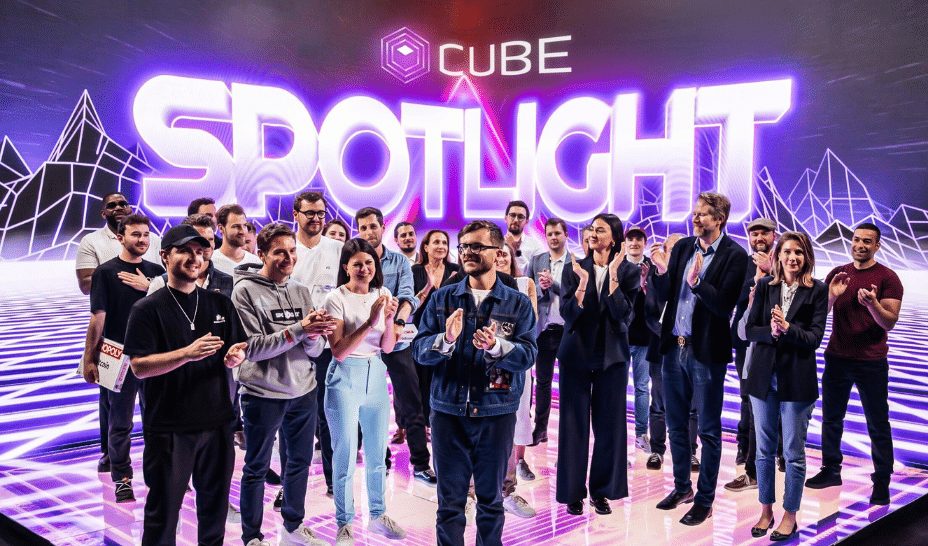
Cube, a French startup accelerator, has secured a €700,000 funding round with an unusual mix of backers: well-known TV personalities and YouTubers. The raise, first reported by EU-Startups, underlines a growing trend in Europe’s early-stage ecosystem as creators and media figures increasingly deploy their audiences—and their capital—into venture-building.
The round is modest by later-stage standards, but it is meaningful for an accelerator model where relatively small amounts of capital can expand programming, increase the number of founders supported per cohort, and strengthen the network that helps startups land customers, pilots, and follow-on investment. It also signals that “creator capital” is no longer limited to sponsorships and merchandise: it is now showing up in the plumbing of the startup pipeline.
Why a €700k round matters for an accelerator
Accelerators typically operate on thin margins: they invest small tickets into many companies, run intensive mentoring and education programs, and aim to build a portfolio where a few winners return the fund. For an operator like Cube, additional funding can translate directly into more founder support and better outcomes.
With €700k, an accelerator can:
- Increase the number of startups admitted per cohort or run additional cohorts per year.
- Improve founder services, including legal and finance support, product coaching, and go-to-market mentoring.
- Offer larger initial checks or provide follow-on capital to the strongest teams.
- Invest in community and events that help startups recruit talent and meet investors.
In practical terms, this kind of round often funds the “platform” around the portfolio—everything from program staff to partnerships—rather than any single startup. That platform can be the difference between founders leaving with a pitch deck and founders leaving with paying customers.
Creators as investors: attention becomes an asset class
The distinctive element of the Cube round is the presence of TV personalities and YouTubers among the backers. In the last decade, creators have built direct-to-audience distribution at scale. What is changing now is how that distribution is being monetized: beyond ads and brand deals, creators are stepping into early-stage venture investing and ecosystem building.
For accelerators and startups, creator investors can offer something traditional capital often cannot: rapid, authentic reach. A well-aligned creator can validate a product, drive early adopters, and attract talent. That influence can be especially valuable in consumer categories—apps, marketplaces, education, wellness, entertainment, and creator tools—but it can also help B2B startups that sell to small businesses or prosumers.
What accelerators gain from media-backed capital
Unlike a purely financial investor, a creator-backed accelerator can package capital with distribution. If structured responsibly, this can shorten the time between “idea” and “traction,” a key metric for follow-on investors evaluating a startup’s momentum.
However, it is not automatic. Audience fit matters, and so does credibility. When creators invest in areas they genuinely understand—or are willing to learn—their support can look like strategic marketing. When they invest opportunistically, it risks being perceived as a publicity stunt. For an accelerator, ensuring that creator involvement is additive rather than distracting becomes part of the operating challenge.
What this signals about France’s startup ecosystem
France has spent years building startup infrastructure, from public initiatives to a growing network of private funds, angels, and accelerators. A round like Cube’s suggests the ecosystem is now broadening into new investor profiles. That diversification matters because it can increase resilience: when one source of capital tightens, another can step in.
It also reflects a cultural shift. European startup communities historically leaned on institutional investors and seasoned entrepreneurs. Today, people who built careers in media are increasingly comfortable with startup risk, and founders are increasingly comfortable using media channels as part of their go-to-market strategy. The boundary between “marketing” and “fundraising” is becoming more porous.
Risks and questions: alignment, governance, and hype
Creator-backed investing carries clear advantages, but it also introduces questions the market will watch closely.
Alignment and founder expectations
Founders may assume that a creator investor will automatically promote their product. In reality, creators must protect their relationship with their audience; they will promote only what fits their brand and standards. Accelerators that rely too heavily on creator promotion may face uneven outcomes across a cohort.
Governance and decision-making
Accelerators need disciplined selection processes, clear investment committees, and transparent terms. When investors come from outside traditional venture circles, the operational bar does not get lower; it arguably gets higher, because the accelerator must translate startup realities—failure rates, timelines, dilution—into a shared understanding.
Hype cycles
Europe’s startup scene has seen hype-driven waves before. The test for Cube will be whether this funding round results in measurable improvements: stronger cohorts, better follow-on rates, and startups that build durable businesses rather than short-lived attention spikes.
What happens next for Cube
Following the €700k raise, the immediate expectation is that Cube will scale its accelerator operations—either by expanding cohort capacity, enriching its founder support, or deepening its network of mentors and partners. For the broader market, the round will be watched as a case study in whether creator-backed capital can consistently improve startup outcomes.
As creator economies mature and more public figures look for long-term wealth creation beyond advertising revenue, Europe may see more accelerators and micro-funds built around distribution-first advantages. If Cube converts this momentum into repeatable founder success, it could help normalize a new kind of early-stage investor in France—one whose primary edge is not just money, but attention deployed with intent.
Dailyza will continue tracking how creator-led investment shapes Europe’s accelerator landscape and whether these hybrid networks translate into sustainable startup growth.