Close Menu
Dailyza | Tech, Investments, Business & World News
  • Startups
  • Venture Capital
  • World
  • Economy
  • Politics
  • Science
  • Technology
  • Travel
  • Culture
Facebook X (Twitter) Instagram
Trending
  • Orcan Energy targets AI data centers with waste-heat power
  • Donald Trump Ousts Pam Bondi Over Epstein Files and Rival Probes
  • Monzo exits US market to double down on Europe and IPO bid
  • Jake Paul’s Anti Fund bets on attention as a VC edge
  • Brilliance secures €6M to advance integrated RGB laser chips
  • Wearable Robotics secures €5M to advance rehab exoskeletons
  • Paysend secures $25M to speed up global money transfers
  • SMEY unveils Lipid Atlas, an AI platform for lipidomics
Dailyza | Tech, Investments, Business & World NewsDailyza | Tech, Investments, Business & World News
Saturday, April 4
  • Startups
  • Venture Capital
  • World
  • Economy
  • Politics
  • Science
  • Technology
  • Travel
  • Culture
Dailyza | Tech, Investments, Business & World News
Home»World
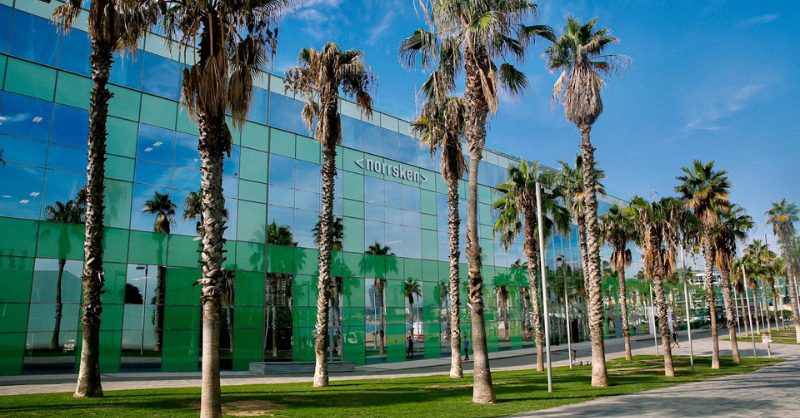
Female startup founders collaborating in a modern Barcelona coworking space

Catalan Startups Lead Europe With 40% Female-Founded Teams

27 March 2026 World No Comments3 Mins Read
Share
Facebook Twitter LinkedIn Pinterest Email

Catalan ecosystem emerges as a European outlier

Catalonia has quietly become one of Europe’s most striking examples of gender progress in tech entrepreneurship. According to new ecosystem data, around 40% of startups in the region now include at least one female founder, placing Catalonia well ahead of most European hubs where women remain a small minority on founding teams.

The figure is notable in a continent where women typically account for less than a third of startup founders and secure only a fraction of available venture capital funding. While overall parity is still distant, Catalonia’s performance suggests that targeted policy, ecosystem design and visible role models can move the needle in a relatively short period of time.

Why Catalonia is pulling ahead

Local stakeholders credit a mix of structural and cultural factors. Public agencies and accelerators in Barcelona and other Catalan cities have launched dedicated programs for women-led companies, from early-stage mentoring to investor matchmaking. Universities and business schools have also integrated entrepreneurship tracks that actively highlight female leadership.

Crucially, a growing roster of successful women founders in sectors such as deep tech, digital health and fintech has created a visible pipeline of role models. These founders are increasingly present on conference stages, in angel networks and on cap tables, reinforcing a culture where mixed-gender founding teams are seen as standard rather than exceptional.

Why much of Europe still lags behind

Across the wider European landscape, progress has been slower. Structural barriers such as unequal access to early-stage finance, limited representation of women in VC partnerships and persistent bias in investment decision-making continue to depress the number of women at the helm of new ventures.

In many markets, support for female founders remains fragmented, consisting of short-term initiatives rather than integrated strategies that link education, incubation, funding and leadership visibility. This patchwork approach contrasts with the more coordinated efforts seen in Catalonia, where regional government, universities and private investors have aligned around the goal of a more inclusive startup economy.

Implications for Europe’s innovation agenda

Analysts warn that Europe’s inability to fully harness female entrepreneurial talent is not only a social equity issue but a drag on innovation and economic growth. Regions that mirror Catalonia’s approach — combining data-driven policy, targeted funding and strong networks for women founders — are more likely to capture new high-growth companies and jobs.

For now, Catalonia serves as a test case: a European ecosystem where nearly half of startups are no longer founded by men alone. The question for the rest of the continent is whether it can replicate those conditions at scale, or risk falling further behind in the global race for inclusive, high-impact entrepreneurship.

Previous ArticleMountly secures €600K to launch Deliveroo-style service in Alps
Next Article Dexory secures fresh British Business Bank backing in Series C
Aron Bowers
  • Website

Keep Reading

Monzo exits US market to double down on Europe and IPO bid

SpaceX quietly files for IPO, targets June 2026 listing

Rupa Popat on Arāya Ventures and the Future of Impact VC

Quantum Frontline Industries Sends First Combat Drones to Ukraine

EU-Startups Summit 2026 spotlights path into China’s market

Dailyza CLUB Membership: Why Exclusive News Access Matters

Add A Comment

Leave A Reply Cancel Reply

Jake Paul’s Anti Fund bets on attention as a VC edge

Venture Capital 3 April 2026

Anti Fund, co-founded by Jake Paul, is pitching a new venture model built on attention, disciplined execution and long-term trust, not celebrity hype.

SMEY unveils Lipid Atlas, an AI platform for lipidomics

Barclays backs £130M ‘Women Backing Women’ VC fund push

European startups secure fresh capital in early April surge

Generare secures €20M from Alven, Daphni to turbocharge drug R&D

Rupa Popat on Arāya Ventures and the Future of Impact VC

Generare raises €20M to decode microbial genomes for drugs

British Business Bank Unites Major Investors in New Fund

Runway Fund backs early AI and media startups worldwide

Connectome secures $2M to detect silent brain decline early

Kleiner Perkins Backs Saronic in $1.75B Bet on US Autonomy

MOVEMENTS secures €300k pre-seed to power values-led campaigns

EU-Startups Summit 2026 unveils leading space innovators

Metafuels wins €1.92M Dutch grant for Rotterdam e-SAF plant

Alice & Bob wins €3.4M ARPA-E grant for quantum magnets

Dailyza | Tech, Investments, Business & World News
  • Startups
  • Contact
  • About Us
© 2026 Dailyza

Type above and press Enter to search. Press Esc to cancel.