

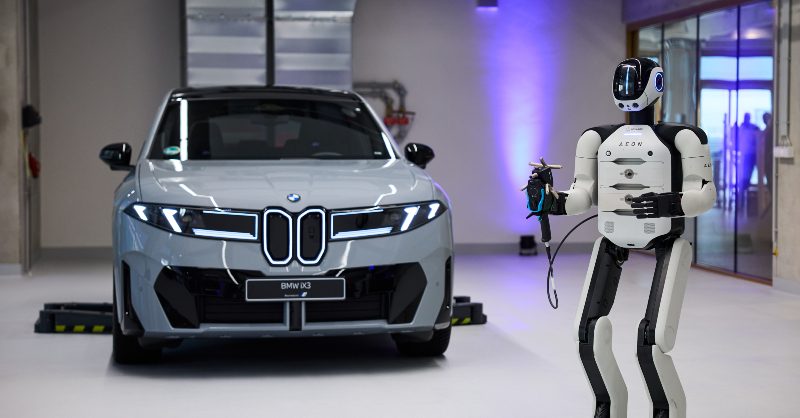
BMW turns to humanoid robots for next‑gen automation
BMW is moving beyond traditional industrial robots by testing humanoid machines from US startup Figure AI on its European production lines, in a pilot that could mark a new phase in factory automation across the continent.
The collaboration brings together Figure AI, known for its general‑purpose humanoid robot platform, and Swedish industrial software specialist Hexagon, whose digital twin and quality‑control tools are widely used in manufacturing. Their joint work is focused on deploying humanoid “pilots” inside BMW‘s car plants, where they will be tasked with complex, repetitive and ergonomically challenging jobs currently handled by human workers or fixed-purpose robots.
Why humanoid robots appeal to automakers
Unlike conventional robotic arms that must be caged and reprogrammed for each new task, humanoid systems are designed to operate safely in the same spaces as people, using AI algorithms, vision systems and dexterous manipulators to handle a variety of roles. For automakers under pressure from rising wages, volatile demand and persistent skills shortages, these robots promise greater flexibility on the shop floor.
By tapping Hexagon‘s virtual modelling and simulation tools, BMW can test humanoid workflows in a detailed digital replica of the plant before deploying them in the real world. This reduces integration risk and allows engineers to measure impacts on productivity, cycle time and workplace safety with high precision.
Implications for Europe’s industrial workforce
The trial is being closely watched across Europe, where manufacturers are looking to maintain competitiveness while navigating strict labour regulations and demographic pressures. Proponents argue that humanoid robots can take on hazardous or physically demanding roles, freeing human employees for higher‑value tasks such as programming, maintenance and process optimisation.
However, the deployment also raises familiar concerns about job displacement, data protection and worker surveillance as more tasks become instrumented and tracked through industrial IoT platforms. Unions and regulators are expected to scrutinise how such systems are introduced, what retraining is offered and how responsibilities are shared between human staff and autonomous machines.
If the BMW, Figure AI and Hexagon partnership proves successful at scale, it could accelerate adoption of humanoid robotics in other sectors, from logistics and consumer goods to energy and construction, positioning Europe as a major test bed for the next generation of factory automation.