

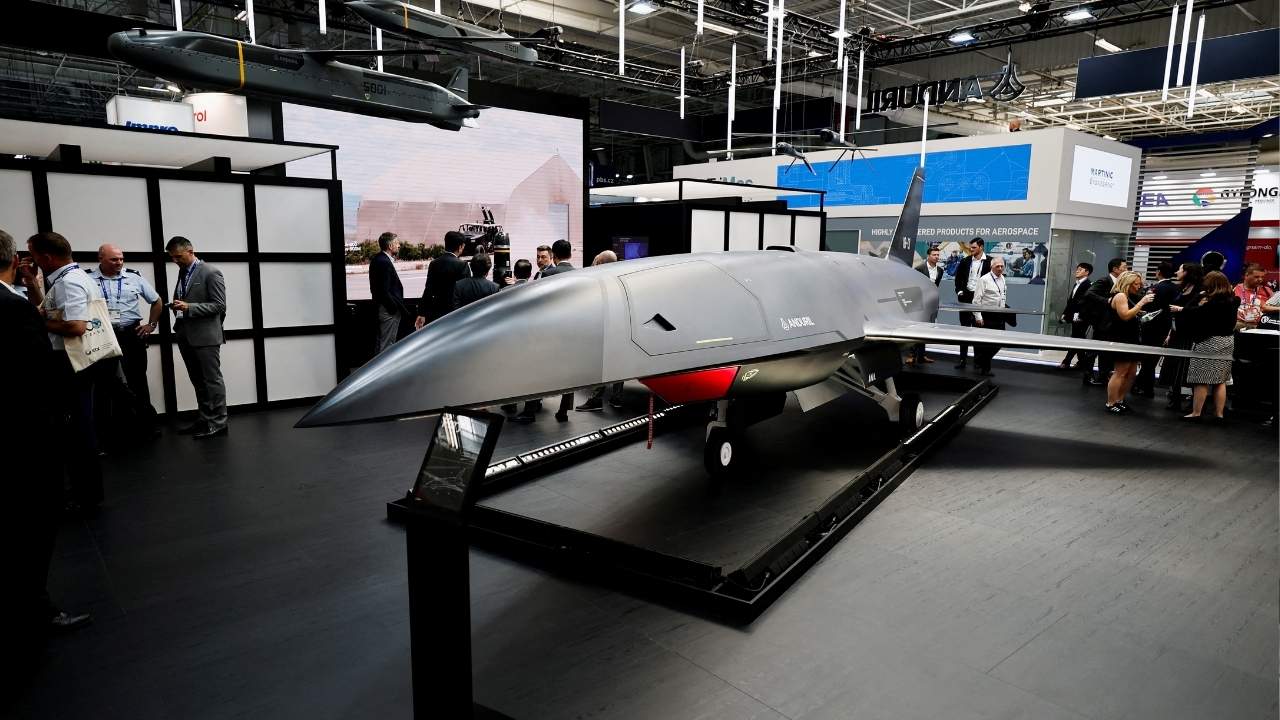
Anduril Industries secures a massive $2.8 billion funding round to accelerate the production of autonomous weapon systems, signaling a shift in Pentagon procurement priorities.
The defense technology landscape has witnessed its largest private capital injection of the year as Anduril Industries announced the completion of its Series F financing on Wednesday. The round, co-led by Founders Fund and Sands Capital, propels the company’s valuation to approximately $22 billion. This financial milestone underscores a broader industry trend where venture-backed defense firms are increasingly challenging traditional prime contractors like Lockheed Martin and Raytheon for major government contracts.
Scaling the ‘Arsenal’ Strategy
Anduril executives stated that the primary allocation of these funds will be toward the construction of “Arsenal-1,” a hyper-scale manufacturing facility designed to mass-produce autonomous aerial and underwater vehicles. Unlike legacy defense production, which often relies on bespoke, labor-intensive assembly lines, Anduril aims to apply software-centric manufacturing techniques similar to those used by Tesla.
Palmer Luckey, the company’s founder, emphasized that the current geopolitical climate requires a “quantity has a quality all its own” approach. The goal is to deliver thousands of relatively low-cost, expendable drones—such as the Roadrunner interceptor and the Dive-LD submarine—that can overwhelm adversary defenses without risking human pilots.
Aligning with Pentagon Initiatives
The raise coincides with the acceleration of the US Department of Defense‘s “Replicator” initiative, which seeks to field thousands of autonomous systems across multiple domains by 2026 to counter China‘s military buildup. Anduril has positioned itself as the lead integrator for this vision. Defense analysts note that the company’s operating system, Lattice, which uses artificial intelligence to fuse data from various sensors into a single 3D view, has become a critical selling point for military commanders seeking real-time situational awareness.
Silicon Valley Meets the Battlefield
This funding round also marks a definitive cultural shift in Silicon Valley. While the tech sector was historically hesitant to engage with military applications, the war in Ukraine and tensions in the Indo-Pacific have altered investor sentiment. Major institutional investors, including Fidelity and Baillie Gifford, participated in this round, betting that software-defined warfare will be the dominant growth sector of the late 2020s.
Anduril plans to double its workforce over the next 18 months, aggressively hiring software engineers and robotics experts to staff its new production hubs in California and Texas. The company is also expanding its international footprint, recently establishing a subsidiary in Australia to support the AUKUS security partnership.