

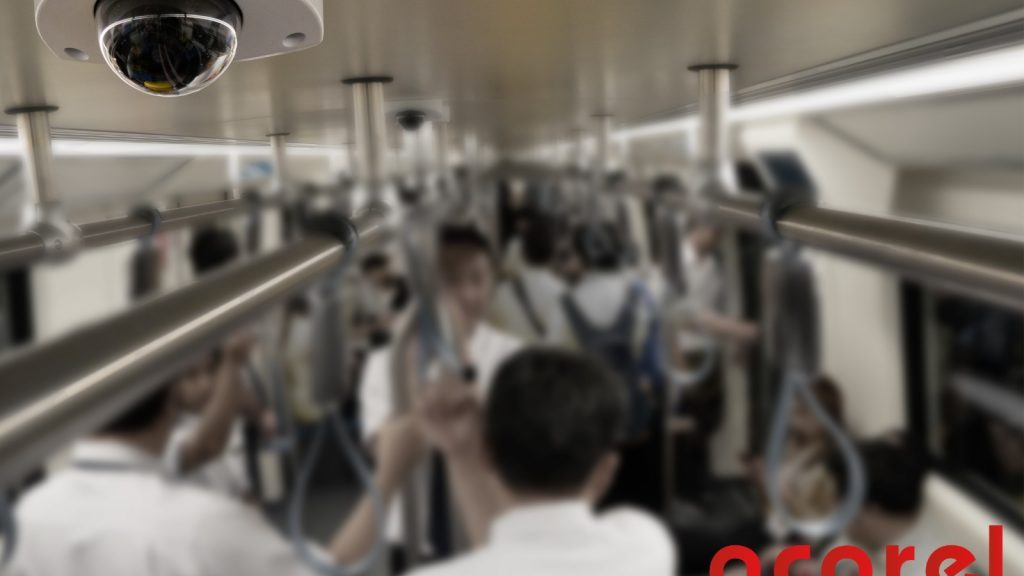
Acorel’s Privacy-First Vision for AI in Transport
French startup Acorel is challenging the assumption that powerful AI algorithms inevitably come at the expense of personal privacy. Specialising in passenger analytics for public transport, the company has developed technology that delivers accurate crowd and flow insights without tracking or identifying individuals.
At a time when cities and operators are under pressure to optimise routes, manage congestion and improve safety, many have turned to camera-based systems that can easily drift into surveillance. Acorel positions itself as a counter-example, showing that data-driven decision-making can be achieved with strict privacy safeguards at the core of the product.
How Acorel’s Technology Works
The startup’s solutions use embedded computer vision and edge processing to analyse passenger movements directly on devices installed in vehicles and stations. Video streams are processed in real time, but raw images are not stored or transmitted. Instead, the system generates anonymised metrics such as passenger counts, occupancy levels and boarding patterns.
By designing its stack around privacy-by-design principles, Acorel avoids the creation of sensitive datasets that could be misused or breached. No facial recognition, no biometric profiling and no individual tracking are involved. This approach makes it easier for transport authorities to comply with strict European data protection rules such as the GDPR, while still benefiting from high-quality operational data.
Why Cities and Operators Are Paying Attention
Public transport networks are increasingly turning to AI-powered analytics to inform planning decisions: adjusting timetables, redesigning routes, and improving crowd management during peak hours or major events. Yet public concern about surveillance has grown just as quickly.
Acorel offers a middle path. Operators gain detailed insights into passenger flows, enabling better use of rolling stock and infrastructure, while citizens retain their anonymity. For municipalities eager to position themselves as both smart and rights-respecting, this balance is becoming a key differentiator.
By proving that advanced AI systems and robust privacy protections can coexist, Acorel is setting a benchmark for how mobility technologies should be built in Europe and beyond. Its model suggests that the future of smart transport does not have to look like mass surveillance to deliver meaningful innovation.