

Accrual raises $75M to rewire accounting services
Fintech startup Accrual has secured a reported $75 million funding round led by venture firm General Catalyst, a move that could significantly reshape how businesses consume accounting and finance services. The capital injection positions the company to challenge traditional accounting firms by delivering always-on, software-led finance operations.
A software-first alternative to traditional firms
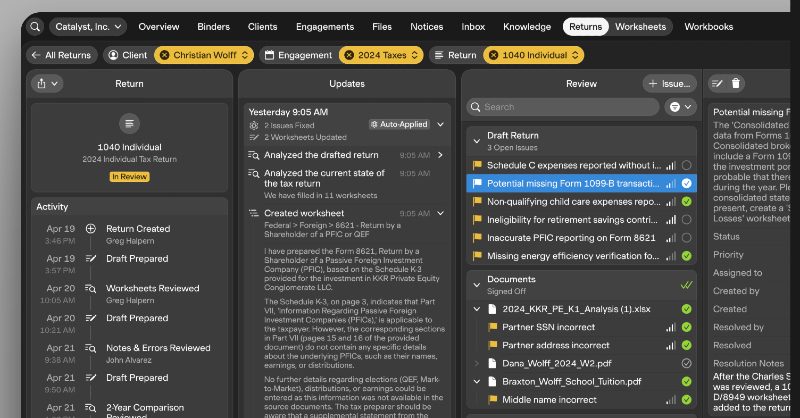
Accrual sits at the intersection of accounting, automation and AI-driven workflows. Instead of relying on manual, partner-heavy service models, the startup offers a platform that combines real-time bookkeeping, management reporting and integrated compliance into a single product experience. Human finance experts are layered on top of the software, but the core value lies in the platform’s ability to standardise and automate repetitive tasks.
This approach directly targets the pain points of small and mid-sized businesses that often depend on fragmented spreadsheets, email threads and legacy desktop tools. By turning recurring financial work into a continuous, data-driven process, Accrual aims to reduce errors, shorten month-end close cycles and provide executives with live visibility into their numbers.
Why the General Catalyst round matters
The participation of General Catalyst signals strong conviction that the future of professional services will be built around AI-powered platforms rather than purely billable hours. The $75M round gives Accrual the resources to accelerate product development, expand its engineering and finance teams, and push into new geographies and verticals.
For established accounting firms, this raises competitive pressure on several fronts: pricing, speed of delivery, and the depth of data analytics they can offer clients. Firms that still depend on legacy on-premise software and manual workflows may find it increasingly difficult to match the responsiveness and insight produced by a cloud-native, API-driven stack.
Implications for the accounting industry
If Accrual successfully scales its model, accounting firms could be forced to rethink their operating structures, investing more heavily in automation, AI algorithms and productised service offerings. Routine bookkeeping and compliance work are the most exposed, while high-value advisory and sector-specific expertise are likely to remain in demand.
The broader trend is clear: as investors like General Catalyst back platforms that treat finance as a continuous data stream rather than a quarterly chore, the competitive line between software companies and professional services firms will continue to blur.