

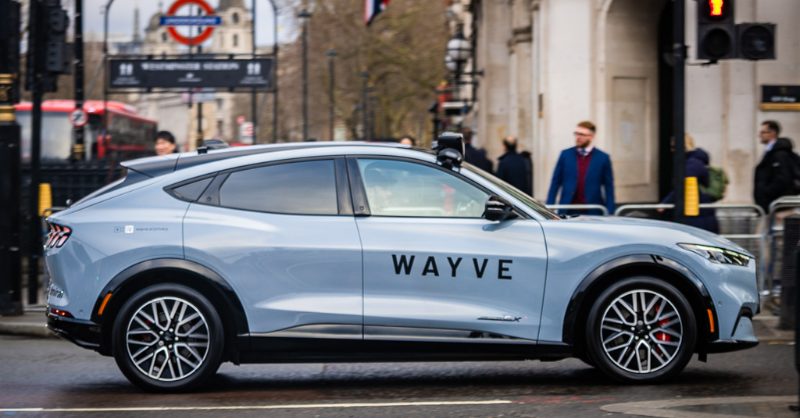
Wayve’s record raise reshapes the UK autonomous vehicle landscape
UK-based autonomous driving startup Wayve has secured an extraordinary €1.4 billion funding round, driving its valuation to approximately $8.6 billion and signaling a potential breakout moment for the country’s autonomous vehicle ecosystem.
The latest capital injection, one of the largest ever for a European deep-tech company, underscores growing investor conviction in AI-first self-driving technology. It also strengthens the UK’s position in a field long dominated by US and Asian players.
An AI-native approach to self-driving
Wayve differentiates itself by developing what it calls an “embodied AI” stack, relying heavily on end-to-end deep learning rather than the traditional rules-based systems used by many rivals. Instead of hard-coding every road scenario, its AI models learn driving behavior directly from real-world data and large-scale simulation.
This approach aims to make deployment more scalable across different cities and vehicle types, potentially reducing the costly, location-specific mapping work that has slowed other autonomous driving projects.
UK’s shot at a global AV champion
The €1.4 billion raise could mark a turning point for the UK, which has strong academic roots in machine learning but has struggled to keep late-stage deep-tech champions at home. With this deal, Wayve joins the upper tier of European mobility and AI companies by valuation.
Industry observers note that the funding may catalyze further investment into UK transport innovation, from software-defined vehicles to advanced driver-assistance systems. It also reinforces London and Cambridge as magnets for top-tier AI talent.
Regulation, safety and commercialization challenges
Despite the momentum, Wayve still faces major hurdles. Regulatory frameworks for self-driving cars remain fragmented, and public trust hinges on demonstrable safety records. The company will need to prove that its AI-driven systems can operate reliably across diverse weather, road and traffic conditions.
Commercially, partnerships with automakers, delivery fleets and urban mobility operators will be critical. If Wayve can convert its technical lead and fresh capital into large-scale deployments, the UK may finally have its first globally recognized autonomous vehicle champion.