

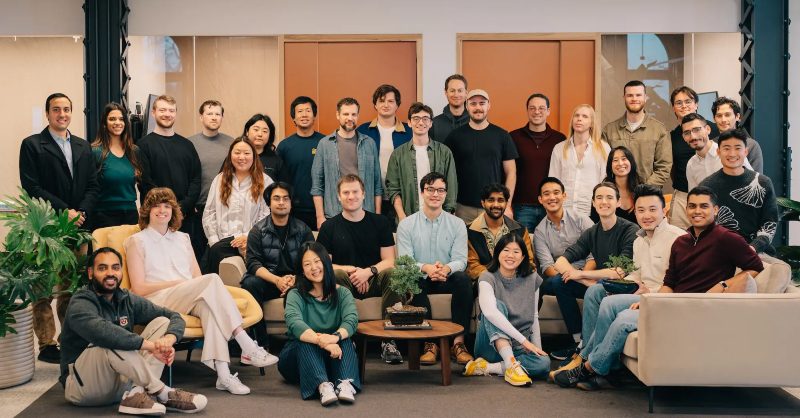
Ex-OpenAI and DeepMind talent targets AI hallucinations
A group of former researchers and engineers from OpenAI and DeepMind has secured a substantial $150 million funding round to build tools that identify and debug AI hallucinations in real time. The yet-unnamed US-based startup is emerging at a moment when enterprises are racing to adopt large language models while struggling to control inaccurate or fabricated outputs.
The founding team, which includes multiple senior alumni from the two leading AI labs, aims to provide an infrastructure layer that sits between foundation models and business applications. Their platform will focus on monitoring, testing and correcting model behavior before it reaches end users.
Building an observability layer for generative AI
The company is developing a suite of tools for AI observability, including automated detection of hallucinated content, root-cause analysis of model failures and guardrails that enforce enterprise policies. By combining model evaluation, prompt testing and continuous feedback loops, the startup hopes to give product teams the same level of control they expect from traditional software systems.
Early product concepts include dashboards that score responses for factual reliability, integrations with popular LLM platforms, and APIs that allow developers to automatically reroute or block high-risk outputs. The goal is to make generative AI safer for use in sensitive sectors such as finance, healthcare and legal services, where hallucinations can carry regulatory and reputational risk.
Backed by top-tier venture capital
The $150 million round places the startup among the best-funded companies in the emerging AI safety and AI infrastructure space. Leading venture capital firms from both Silicon Valley and Europe are understood to have participated, reflecting growing investor conviction that reliability tooling will be critical as enterprises scale AI deployments.
With this capital, the founders plan to expand engineering and research teams, deepen partnerships with cloud providers and model vendors, and launch early pilots with large enterprises already experimenting with generative AI. As organizations move beyond experimentation, the ability to detect and debug hallucinations is likely to become a core requirement for production-grade AI systems.